










Lithuanian PM: Ukraine’s territorial integrity not up for negotiation PHOTO
Lithuanian Prime Minister Inga Ruginienė said that Ukraine’s territorial integrity “is not up for negotiation,” as European allies continue to debate how to accelerate Kyiv’s path towards membership in the European Union.
Speaking in Vilnius, Ruginienė said Ukraine must become a full EU member by 2030 and warned against any settlement that would legitimise Russia’s occupation of Ukrainian territory, LRT reports.
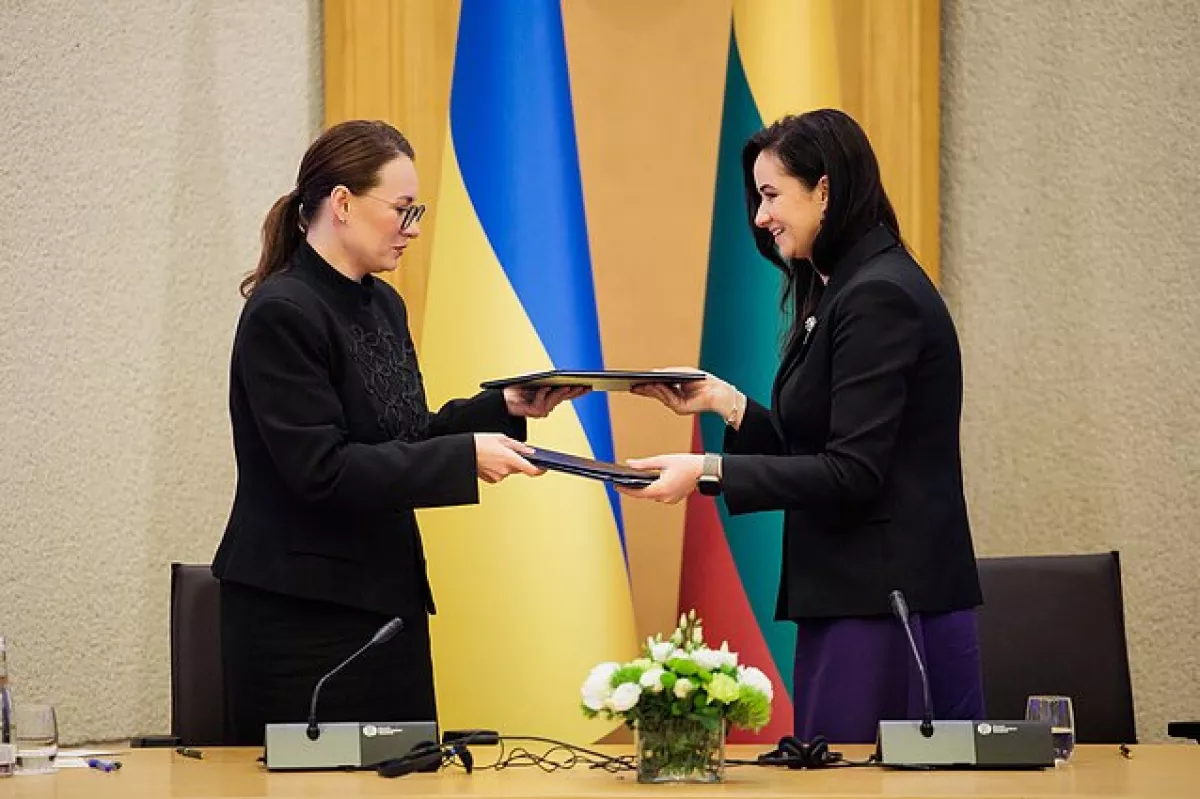
“Ukraine’s territorial integrity is not up for negotiation,” she said, adding that Lithuania would “never recognise” Russia’s annexation of Ukrainian regions “neither de jure nor de facto.” She described Moscow’s war as a “brutal violation of international law” that cannot be accepted as a new geopolitical reality.
Ruginienė called for the rapid opening of all six EU accession negotiation clusters for Ukraine, arguing that the process has already been delayed for too long. She said Ukraine’s integration into the EU is directly linked to broader European security and democratic resilience.
German Chancellor Friedrich Merz has previously suggested granting Ukraine an “associated member” status without voting rights during negotiations. However, Ukrainian President Volodymyr Zelenskyy has rejected the idea as inadequate, insisting on full membership prospects.
Ukrainian Prime Minister Julija Svyrydenko, also speaking in Vilnius, stressed that Ukraine’s sovereignty and territorial integrity remain central to any future peace framework. She called for closer coordination with European partners in addressing ongoing security threats, including drone incidents across Eastern Europe.
Svyrydenko said Ukraine could deploy expert teams to assist allies in improving air defence coordination and building shared radar systems, underscoring the growing regional dimension of the conflict.
Lithuania reaffirmed that it will continue providing military, economic and humanitarian support to Ukraine “until a just and lasting peace is achieved and beyond,” framing Ukraine’s defence as inseparable from Europe’s own security architecture.
By Aghakazim Guliyev







 editor@caliber.az
 +994 55 444-88-98
 Азербайджан, Баку, ул. Низами, 203, Af Business House, 5-й этаж