










Global recognition: WCO commends transformation of Azerbaijan’s customs service Review by Khazar Akhundov
The large-scale reforms launched in 2022 within the activities of the State Customs Committee (SCC) of Azerbaijan have significantly enhanced the transparency of the agency’s operations and streamlined administrative processes through the introduction of digital tools. In recent years, the SCC has also consistently integrated into its operations the international standards, legal instruments, methodological documents, and best practices of the World Customs Organization (WCO).
The achievements of Azerbaijan’s customs service in digital transformation, the implementation of artificial intelligence (AI), and the execution of other innovative projects were discussed on July 13 with WCO Secretary General Ian Saunders during his first official visit to Azerbaijan, including at a meeting with Prime Minister Ali Asadov.
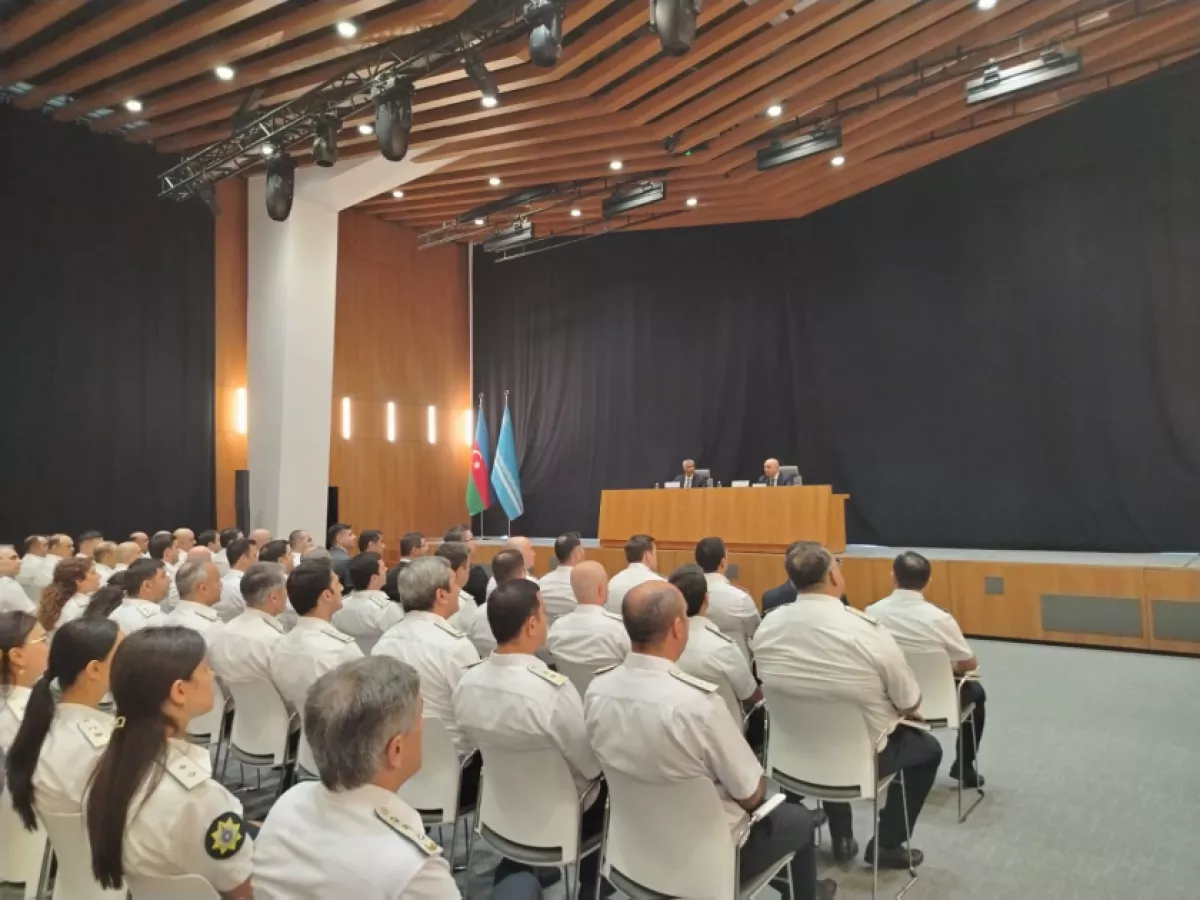
The WCO Secretary General said during a briefing at SCC that the experience accumulated by Azerbaijan's customs service was valuable not only for the country but also for the international customs community. He noted that the activities of Azerbaijan's customs service were closely monitored and highly appreciated at the WCO headquarters in Brussels, expressing hope that the service would continue its work with the same level of professionalism and that its experience would contribute to the development of customs administrations in other countries around the world.
During Saunders' visit, satisfaction was also expressed with the many years of productive cooperation between the WCO and the SCC. Presentations were delivered on the customs service’s digital transformation, AI-based solutions, innovative projects, and modern management approaches implemented in recent years. During the exchange of views on the prospects for further expanding cooperation, it was noted that Azerbaijan actively participates in the work of the World Customs Organization and accredits experts who are involved in international support programs. According to the Secretary General, Azerbaijan shares its experience and provides financial support, thereby contributing to the development of international customs cooperation.
For his part, during the meeting, Chairman of the State Customs Committee Shahin Baghirov emphasized that "today, the international standards, legal instruments, methodological documents, and best practices of the World Customs Organization constitute one of the main areas of our activities in the customs sphere. In our day-to-day work, we also make extensive use of the approaches set out in the WCO Strategic Plan for 2025–2030."

It is worth recalling that Azerbaijan’s productive cooperation with the WCO spans more than two decades and has traditionally been built on the basis of mutual trust and shared strategic objectives. Azerbaijan was among the first countries in the post-Soviet region to implement a comprehensive set of measures following its accession to the WCO’s Kyoto Convention on the Simplification and Harmonization of Customs Procedures.
Nearly two decades ago, the SCC established the Single Automated Management System (VAIS) and has since consistently expanded electronic administration and control mechanisms for foreign trade operations on its basis. Among these tools is the VAIS-RISK system, which provides automated risk analysis during the inspection of goods, containers, vehicles, and the accompanying documentation. Over time, this mechanism was further enhanced with the VAIS – Postal Shipments subsystem.
In 2019, the Green Corridor clearance system was introduced. Thanks to modern digital solutions and electronic processing mechanisms, physical inspections of goods were reduced by 70 per cent, while the throughput capacity of customs checkpoints increased by more than threefold. According to the SCC, 774 business entities currently conduct import and export operations on a permanent basis through the Green Corridor system. Of these, 286 are engaged in export operations, while the remainder operate in the import sector.
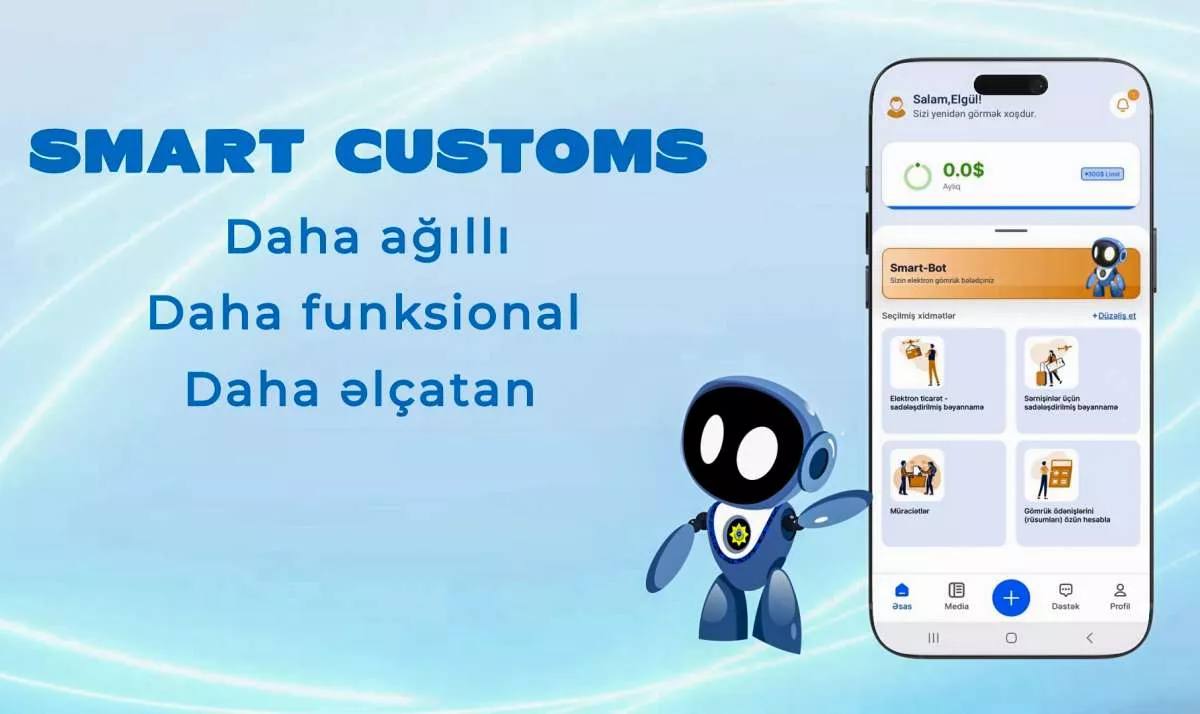
In September 2020, the SCC launched the Simplified Declaration – E-Commerce system (the Smart Customs mobile application), significantly improving the quality of customs services. Through this mobile platform, participants in foreign trade operations have access to such features as electronic queue, fast-track passage, calculation of customs duties related to the import of passenger vehicles, and many other services.
As of June 1 2026, new procedures have been introduced within the Smart Customs system for processing customs declarations for goods purchased through e-commerce. The identification process is now carried out using resources such as ASAN İmza, SİMA, and MyGov QR, enhancing transparency and ensuring greater compliance with the rules governing the use of state-established customs privileges.
Under the SCC's 2025–2030 Strategy, one of the key priorities is the application of a wide range of tools to simplify import and export procedures. This includes the active integration of artificial intelligence (AI) components into the automated risk analysis system. The use of AI reduces inspection times, provides higher-quality risk assessments, and accelerates the release of goods in line with the needs of the business community.
As a result of the implementation of this system, the time required for border-crossing procedures has been reduced by 25 per cent, the time needed for customs clearance of goods by 22 per cent, and the number of physical inspections by 20 per cent.
Another innovation introduced by the SCC is the launch of the Digital Customs Valuation project on June 1 2026. This tool ensures a more accurate customs valuation process and facilitates the application of simplified procedures for businesses.
At the same time, artificial intelligence (AI) will be used to analyze data obtained from X-ray scanning equipment in order to identify potential risks associated with transit and import operations. Another promising area is the implementation of the single window principle on a digital basis, and the SCC is currently working with relevant government agencies to bring this initiative to fruition.
This system is an important tool that directly serves the interests of the business community, as it creates conditions for faster processing of operations, timely dissemination of information to business entities, and the minimization of costs and time losses, among other benefits.
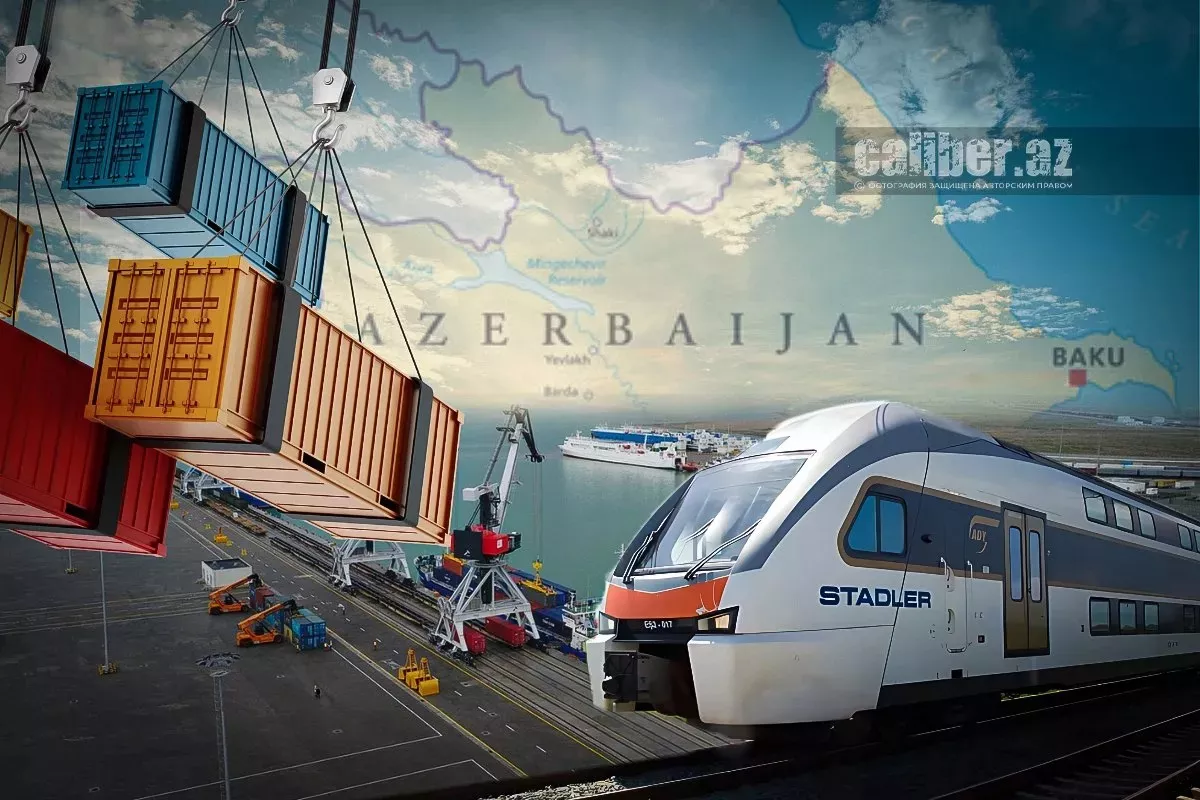
An important area of digitalization is the State Customs Committee’s cooperation with the member states of the Organization of Turkic States (OTS) and other countries participating in transit operations along the Middle Corridor. To develop a simplified customs corridor, the SCC is working jointly with Türkiye, Uzbekistan, Kazakhstan, and Kyrgyzstan on the exchange of advanced customs data.
For example, to ensure seamless multimodal container transportation processed entirely in electronic format, the information systems of the Azerbaijani and Kazakh railways are being integrated with the customs module of the Digital Trade Corridor (DTC) Tez Customs platform. Similar integration is planned with the railways of Georgia.
The partners along the Trans-Caspian International Transport Route are also gradually deploying the Block Digital Corridor platform, which uses blockchain technology to create a unified ecosystem for document processing, customs clearance, and cargo tracking throughout the entire transportation route.
Notably, Azerbaijan’s achievements in the digitalization of customs administration have repeatedly received the highest recognition from experts of the WCO and other international specialized institutions.
For example, in 2025, Azerbaijan ranked fourth among 180 countries worldwide in a survey conducted by the United Nations Economic and Social Commission for Asia and the Pacific (UNESCAP) assessing the implementation of digital technologies and sustainable trade facilitation, the use of paperless trade solutions, and the transition to electronic instruments.







 editor@caliber.az
 +994 55 444-88-98
 Азербайджан, Баку, ул. Низами, 203, Af Business House, 5-й этаж