










Test of resilience: how political crisis is affecting Serbia’s path to the EU Article by Matanat Nasibova
For quite a long period of time, Serbia has been living under conditions of a permanent protest movement, which undoubtedly affects all aspects of the country's life and its international image. The trigger for the large-scale demonstrations was the collapse of the canopy at the railway station in the city of Novi Sad on November 1, 2024, which claimed the lives of 16 people, after which protests swept across the entire country.
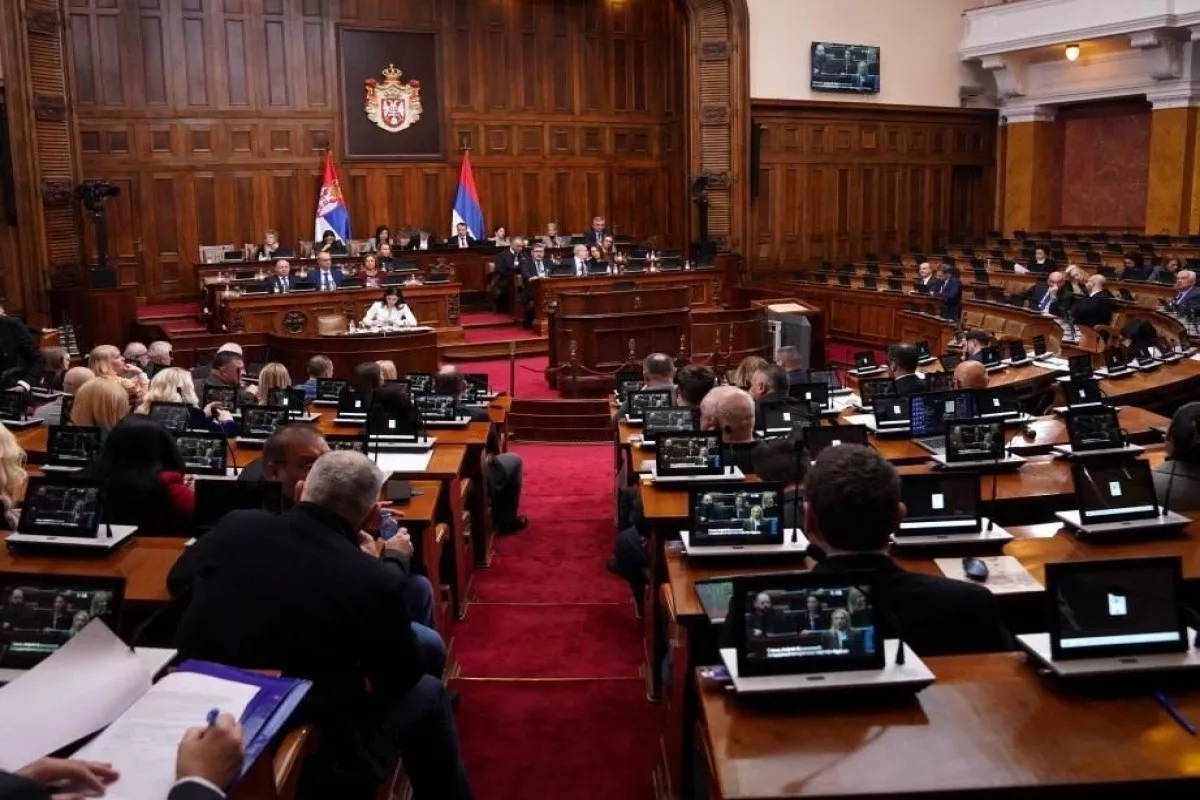
Another stage of this wave of protests was the recent initiative by 65 opposition lawmakers to table a vote of no confidence in the cabinet headed by Đuro Macut. However, despite everything, members of the National Assembly rejected the no-confidence motion by a majority vote: 40 lawmakers voted in favour, 135 voted against, and one abstained.
Such an outcome is indicative of many things. First, the ruling majority is not avoiding parliamentary debate and intends to adhere to the procedures stipulated by law. Second, the coalition led by the Serbian Progressive Party not only retains its parliamentary majority but also enjoys the support of a significant part of the state apparatus and the political establishment. It is also important to note that such resilience is largely attributable to the current President Aleksandar Vučić.
And this assertion is not unfounded. During his time in office, Serbia has indeed made significant economic and infrastructure advances. In the economic sphere, the country overcame the financial crisis, stabilised the state budget, and at certain periods ranked among the leaders in Europe in terms of quarterly GDP growth, making it possible to steadily increase minimum and average wages as well as pensions. Thanks to the creation of a favourable investment climate, this Western Balkan country became the largest recipient of foreign direct investment in the region, contributing to the opening of hundreds of new enterprises and a noticeable reduction in the unemployment rate.
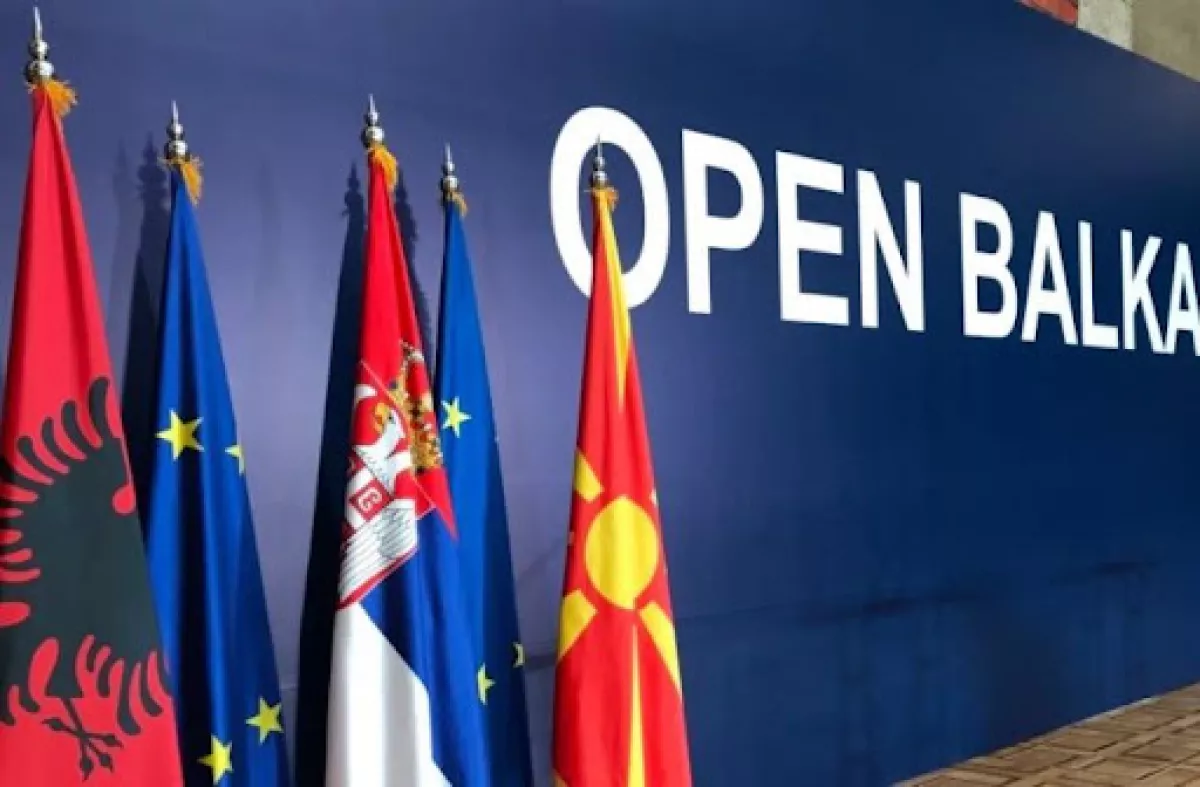
Particular attention was devoted to digitalisation and the development of the IT sector, enabling the Serbian state not only to make a successful transition to a knowledge-based economy but also to become one of the region’s leading technological hubs, with software exports emerging as one of the fastest-growing components of national income. Another key element of Belgrade’s strategy remains the Open Balkan initiative launched by Vučić, which envisions the creation of a single economic area with Albania and North Macedonia. The implementation of the principle of the "four freedoms"—the free movement of goods, services, capital, and labour—has significantly facilitated regional trade and strengthened Serbia’s economic position in the Balkans.
Thus, it is precisely the foundation of tangible socio-economic achievements, felt by the majority of citizens, that enables the current authorities to maintain a substantial reserve of political resilience even amid a prolonged protest movement.
However, it would be a mistake to conclude that the failure of the no-confidence vote signifies the end of the domestic political crisis. The parliamentary vote merely confirmed that the ruling authorities retained the necessary majority, but it did not eliminate the underlying causes that brought tens of thousands of people onto the streets. Moreover, protest activity is gradually becoming a permanent feature of Serbia’s political life, affecting not only the domestic situation but also the country’s standing on the international stage.

In this context, the question of Serbia’s prospects for European integration assumes particular importance. Belgrade has consistently reaffirmed its commitment to joining the European Union; however, Brussels assesses candidate countries not only on the basis of their economic performance. Equally important criteria remain the rule of law, the functioning of democratic institutions, media freedom, and the ability of the authorities and the opposition to engage in constructive dialogue.
Consequently, a prolonged domestic political crisis is objectively capable of slowing down the negotiation process. The EU is fundamentally interested in maintaining stability in the Western Balkans, and Serbia is the largest state in the region as well as one of the key pillars of its security. At the same time, Brussels is unlikely to ignore the political tensions within the country, which will inevitably be reflected in its annual assessments of Belgrade’s progress in meeting the membership criteria.
At the same time, the existence of an external factor cannot be ruled out. The history of the Balkans has repeatedly demonstrated that domestic political crises in the region rarely remain purely internal affairs. Serbia, which pursues an independent multi-vector foreign policy while seeking to maintain relations simultaneously with the European Union, the United States, Russia, China, and other international actors, inevitably becomes the focus of heightened attention from various external players.
Under these circumstances, the protest movement may be used by third parties to increase pressure on Belgrade to influence its foreign policy course or weaken its regional position. In this context, the issue is not so much one of direct interference as of attempts to exploit existing internal contradictions in order to advance their own geopolitical interests in the region.
In light of the above, the failure of the no-confidence vote should be viewed not as the end of the political confrontation, but merely as one of its stages. The current authorities have retained their positions and public confidence; however, the protest potential continues to exist, and consequently, the risks of further political turbulence remain.
Ultimately, the future of Serbia’s European integration will depend not so much on the outcome of individual parliamentary votes as on Belgrade’s ability to ensure domestic stability, preserve public dialogue, and at the same time continue the country’s course of modernisation. It is the successful resolution of these tasks that will become the decisive factor both for the Serbian state’s relations with the European Union and for preserving its role as the key political and economic centre of the Western Balkans.







 editor@caliber.az
 +994 55 444-88-98
 Азербайджан, Баку, ул. Низами, 203, Af Business House, 5-й этаж