










Downing Street’s long game: What does ruling out an early election mean for Britain? Analysis by Matanat Nasibova
Recently, UK Prime Minister Andy Burnham told several media outlets that he intends to put an end once and for all to any speculation about an early vote. According to him, the next general election in the country will be held as scheduled, in 2029. The move sent a strong political signal, demonstrating that the government is putting the actual business of running the country ahead of short-term electoral manoeuvring and party interests.
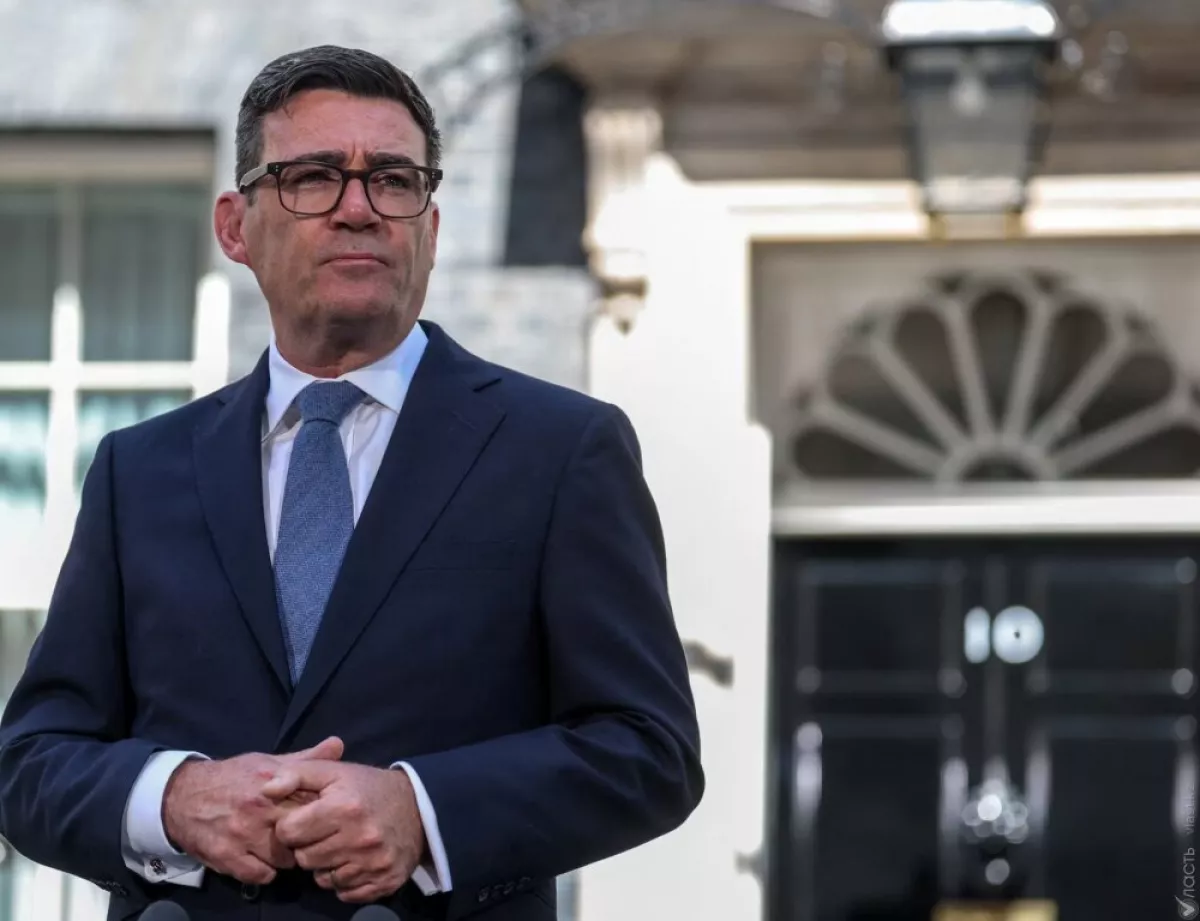
However, behind the public statements about stability lies a subtle yet risky tactical calculation: Burnham’s decision to rule out an early election is a classic long-term strategy, giving Labour the necessary breathing space to implement reforms while simultaneously placing enormous personal responsibility on the prime minister.
Motives and pragmatism
According to analysts, the decision to rule out an early election is driven by a combination of interconnected factors, each carrying a strong pragmatic rationale: the prime minister is seeking to position himself as a pragmatist focused on delivering tangible results rather than chasing short-term polling gains. This allows the public focus to shift from political manoeuvring to concrete government action.
At the same time, according to the latest polling data, the UK’s political landscape remains deeply fragmented: Labour stands at 26.1%, Reform UK at 22.9%, the Conservatives at 20.3%, the Greens at 10.6%, and the Liberal Democrats at 10.3%. In such an arithmetic configuration, an immediate election would result in a deadlock, forcing Labour to form fragile coalitions.
On the other hand, the Cabinet urgently needs to demonstrate tangible progress in reducing the cost of living and improving the situation in healthcare and social welfare before taking voters to the polls. And time is becoming either their greatest ally or their worst enemy.
Opposition within narrow limits
At the same time, Burnham’s strategy fundamentally changes the rules of the game for Labour’s main political opponents, forcing them to rethink their long-term plans.

In particular, Nigel Farage’s right-wing populist Reform UK finds itself in a difficult position: on the one hand, the absence of an early election deprives the party of the opportunity to turn the discontent among the UK’s population into parliamentary seats “here and now”; on the other, the longer timeframe gives it more time to mount sustained criticism of the government and expand its electoral base in various parts of the country.
Meanwhile, the Conservatives, facing an identity crisis, are being forced to urgently rebuild their political agenda, caught between a Labour Party that has shifted to the right and a rapidly rising Reform UK.
Postponing the crisis or a chance for a systemic breakthrough?
Ruling out an early election does not eliminate the contradictions that have accumulated in society; it merely freezes them, placing them in a state of suspended action.
If the government fails to overcome budgetary constraints and the cost-of-living crisis, the Cabinet will face three critical threats. The first is the exhaustion of its political capital, when mounting public discontent eventually spills over in a powerful wave at the ballot box. The second danger is the possibility of an internal party split, driven by economic pressures and the inevitable compromises they entail. The third threat could be described as the erosion of the “Burnham effect”: if voters’ expectations are not met, the party risks entering 2029 from an even weaker starting position than it had in 2026.
Thus, British politics is entering a three-year period whose outcome will be determined not by the electoral calendar but by harsh economic realities. If the government manages to turn the temporary lull into genuine improvements in the living standards of Britons, the strategy could prove highly successful. If, however, socio-economic problems remain unresolved, the decision to rule out an election in 2026 could go down in history as a fatal mistake that merely postponed an inevitable electoral defeat.







 editor@caliber.az
 +994 55 444-88-98
 Азербайджан, Баку, ул. Низами, 203, Af Business House, 5-й этаж