










Cheap Russian wheat and Georgia’s food security challenge Article by Vladimir Tskhvediani
Georgia is heavily dependent on wheat imports. According to the Grain Producers Association, the country’s wheat harvest is expected to reach 180,000 tonnes this year, enough to cover only around 20% of domestic consumption. The remainder of Georgia’s demand is met through imports, which have traditionally been dominated by Russian wheat.

This year, however, Russian wheat has come to dominate Georgia’s imports almost entirely, largely because of its competitive prices. Prices could fall even further after the Russian government waived export duties on wheat until December 31, 2026.
“The decision is aimed at supporting Russian producers and exporters of grain and oilseed crops amid the restructuring of export logistics. The measures will help reduce costs for market participants, make sales conditions more predictable and support the industry’s export potential,” Russia’s Agriculture Ministry said in a statement.
The ministry did not explain what prompted the need to “restructure” Russia’s grain export logistics. However, many observers have linked the move to the war in Ukraine. Before the escalation of hostilities, a significant share of Russian grain exports passed through ports in the Azov-Black Sea region. Ukrainian strikes on Russian port infrastructure have since disrupted shipments through the Black Sea, which accounted for around 90% of Russia’s grain exports in the previous season.

At present, Russian companies are urgently converting terminals at Baltic and Arctic ports that were previously used to handle fertilisers, coal and other types of cargo so they can accommodate grain exports. Ust-Luga, St Petersburg and Murmansk have already been incorporated into the new logistics network. However, fully establishing this alternative route will require considerable time and resources. Moreover, transporting grain by rail makes exports through northern ports less cost-effective than those through Russia’s southern ports.
As a result, Russian exporters are seeking to move as much of the substantial grain surplus accumulated in southern Russia as possible while bypassing Black Sea port logistics. Cheap Russian grain is being actively supplied to countries across the South Caucasus, as well as to Iran via the Caspian Sea. During the current season, Russian grain has reached Armenia not only by road through Georgia, as was previously the case, but also by rail via Azerbaijan and Georgia.
The influx of cheap Russian grain from the new harvest has mixed implications for the food security of Russia’s neighbours. On the one hand, Georgia is unlikely to face food supply problems this season. In August 2026, Georgia nearly doubled its purchases of Russian wheat, bringing imports to their highest level since the summer of 2020.

On the other hand, the influx of cheap Russian wheat has created serious challenges for Georgian producers. “Given the high cost of production, it is unprofitable for Georgian farmers to sell wheat at such low prices. As a result, most of them are storing both last year’s and this year’s harvests in warehouses,” said Nikoloz Beniaidze, head of the Grain Producers Association.
At the initiative of the Grain Producers Association of Georgia, the government has introduced a levy of 100 lari (about $38) per tonne on imported wheat. The measure is intended to support domestic grain producers. At the same time, the Georgian government will need to take these circumstances into account in the coming seasons, particularly if the Russia-Ukraine war continues.
Ukrainian drone strikes are targeting more than just Russian ports. Attacks on oil refineries have reduced the availability of petroleum products in Russia, including diesel fuel. Although Russian farmers managed to complete this year’s harvest, difficulties have emerged in transporting grain to market.
If the Russia-Ukraine war continues and attacks on Russian refineries persist, Russian farmers could face difficulties securing sufficient diesel fuel for autumn and spring fieldwork. This, in turn, could affect the following season’s harvest. If that happens, the volume of cheap Russian wheat available on the Georgian market next year may no longer be as large as it is today.
The fact that Georgia has met only around 20–22% of its wheat needs through domestic production in recent years leaves the country highly vulnerable to external food-supply shocks. By comparison, Azerbaijan meets approximately 55% of its wheat needs domestically, although President Ilham Aliyev has said this figure should be increased.
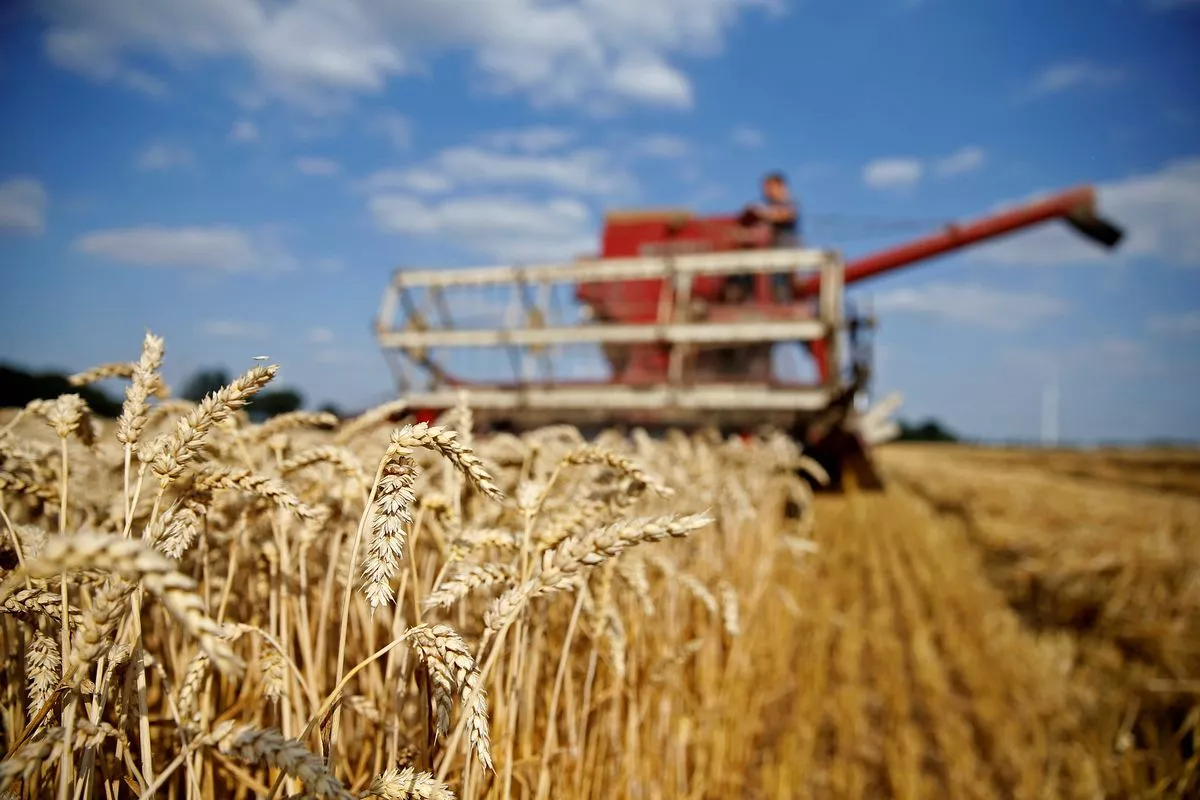
The Georgian government intends to support farmers so that they do not reduce grain production next season but, on the contrary, increase it. The import levy on wheat could be one such measure. Financial assistance is also relevant for farmers whose difficulties in selling their harvests have compounded their problems with loan repayments.
For Georgia, wheat production is not merely an economic issue; it is also closely linked to preserving the country’s agricultural heritage. Georgia is recognised as one of the cradles not only of viticulture and winemaking but also of wheat cultivation. Of the 27 known wheat species in the world, 14 are found in Georgia, five of them endemic to the country. Some were on the verge of extinction for many years, but their populations have recently begun to recover thanks to the efforts of farmers, specialised organisations and government support.
Georgia now faces a dual task: increasing domestic wheat production while restoring its unique native varieties to full-scale commercial cultivation. This would not only help preserve an important part of the country’s agricultural heritage but also gradually reduce Georgia’s dependence on external supplies of food grain.
By Vladimir Tskhvediani, Georgia, exclusively for Caliber.Az







 editor@caliber.az
 +994 55 444-88-98
 Азербайджан, Баку, ул. Низами, 203, Af Business House, 5-й этаж