










New industrial pillar: How Azerbaijan is transforming its regions Overview by Khazar Akhundov
For more than two decades, Azerbaijan has been successfully implementing a number of state programmes aimed at establishing agro-industrial enterprises in the regions and developing energy, gas, water and transport infrastructure. In recent years, these efforts have increasingly focused on accelerating the development of the non-oil sector of the economy. An important step in this direction was a meeting held recently under the chairmanship of President Ilham Aliyev on the “State Program on the Development of Mining (Metal Ores) and Metallurgical Industry in the Republic of Azerbaijan for 2027–2030”. The implementation of the programme is expected to have a broad multiplier effect on the growth of the industrial potential of the regions.
As the head of state noted at the meeting, the new State Programme for the Development of the Mining and Metallurgical Industry is to be fully implemented within just four years. He also stressed that the sector-specific document fully reflects the agenda for the socio-economic development of Azerbaijan’s regions.
“As you know, several State Programs on the socio-economic development of Azerbaijan's regions have been adopted. The first such program was adopted in early 2004. In fact, it was the most significant program adopted following the presidential election held in 2003. Subsequently, several five-year programs were adopted, and key infrastructure projects were effectively implemented in the regions. It is true that the implementation of these projects continues today because the population is growing, employment is increasing, and the economy is expanding,” Ilham Aliyev said, stressing in particular that programmes for the socio-economic development of the regions should not remain static and that additions must constantly be made to them.
It is worth recalling in this context that the implementation of four adopted state programmes for the socio-economic development of the regions has involved total investment of 104 billion manats (approximately $61.2 billion). The impact of these investments has been substantial: from 2004 through the end of 2023, more than 52,000 new industrial, agricultural, service and other enterprises were established in the country’s regions, creating more than 1.8 million new jobs.
Infrastructure and social initiatives were given particular importance under the regional development programmes. In this regard, over the years, nine international airports have been built or reconstructed, more than 17,000 kilometres of roads have been constructed or rehabilitated, over 500 bridges and tunnels have been built, and 3,300 schools, more than 450 kindergartens and 550 medical facilities have been commissioned. In addition, 41 Olympic sports complexes have been built.
Efforts to develop the regions will continue. By the end of 2026, a new State Programme for the Socio-Economic Development of the Country for 2027–2030 is expected to be adopted. The programme will cover all sectors of the economy and set out Azerbaijan’s medium-term development priorities.
At the meeting, Azerbaijan’s leader highlighted the timely implementation of major infrastructure projects over the past 20 years. “At that time, we imported both natural gas and electricity from abroad, as our own capabilities were severely limited. Today, however, the level of gasification in our country stands at 96 percent, and we export more than 25 billion cubic meters of gas. Domestic demand is many times lower than this figure. We have resolved all issues related to electricity and developed substantial generating capacity. Today, our reserve generating capacities are quite substantial. Certain volumes are also exported, but in the coming years, this export will become large-scale,” the President said, pointing to serious concerns and shortages in global energy markets, including electricity, fuel and natural gas — in other words, the resources that underpin global energy security.
The expansion of Azerbaijan’s infrastructure capacity is particularly noteworthy by regional standards. The growth of the energy sector stands out in particular. Gasification in the country has reached 96.6 per cent, while the number of Azerigaz subscribers exceeded 2.716 million at the beginning of 2026. By comparison, the number of subscribers stood at no more than 720,000 13 years ago, meaning that it has increased nearly fourfold. This work is continuing, with a new state strategy and gasification programme for 2026–2030 currently under development.
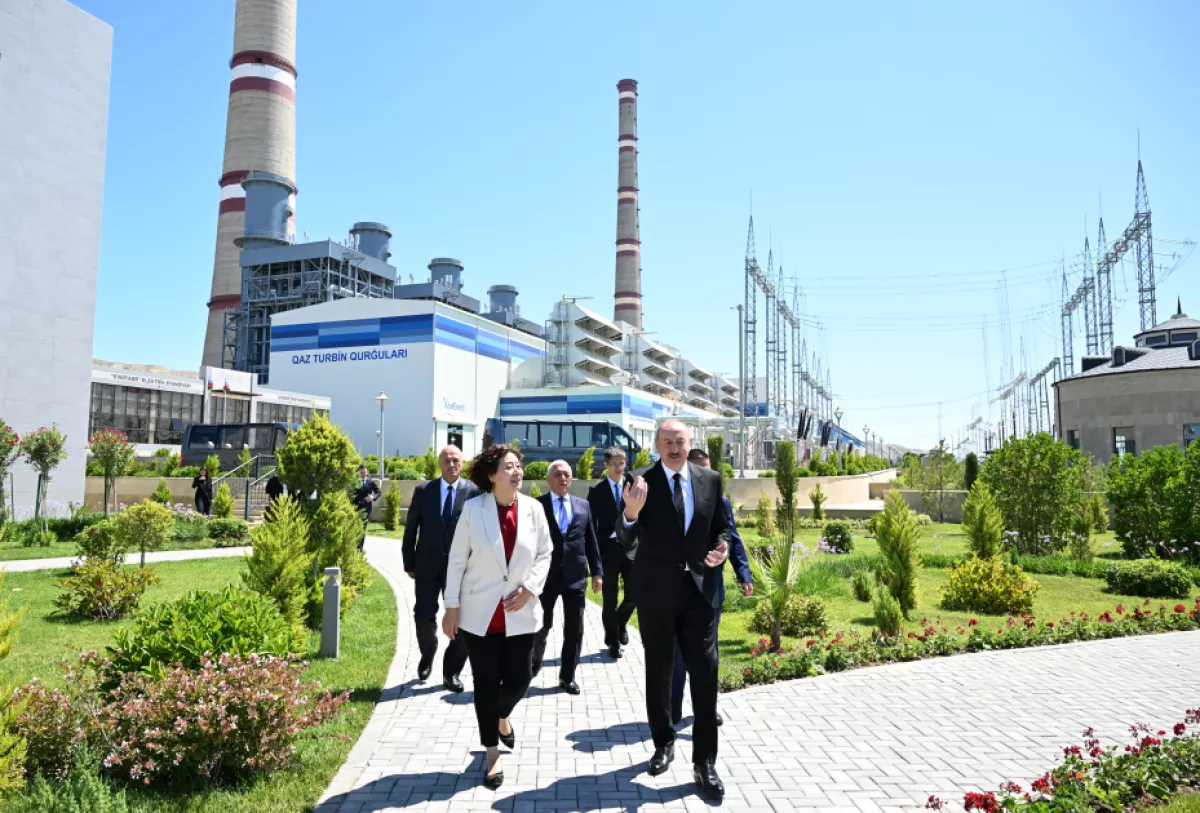
Even greater progress has been achieved in the evolution of Azerbaijan’s electricity system, which is rightly recognised as the most powerful and diversified in the South Caucasus. It is built around 24 large thermal power plants and around 65 hydropower plants of various capacities, most of which are operated by Azerenerji OJSC. With the commissioning of new power plants, the total capacity of the country’s power system exceeded 9.7 GW by the end of last year. A particularly important role in expanding generation capacity was played by the commissioning in June 2025 of the 1,880 MW 8 November Thermal Power Plant in Mingachevir, the largest thermal power plant in the region.
Even greater gains will be achieved as Azerbaijan develops its “green” energy resources. Renewable energy sources already account for approximately 20.8 per cent of the total capacity of the country’s power system. According to estimates by Azerbaijan’s Ministry of Energy, investment in the construction of 11 solar and wind power plants will exceed $2.7 billion by 2027, adding a further 2 GW of capacity to the country’s power system.
According to medium-term plans, by 2030, 6 GW of solar, wind and hydropower capacity will have been integrated into the national power system, with this potential expected to increase to 8 GW by 2032. This will effectively double the capacity of Azerbaijan’s power system through the use of renewable energy sources. The strategy will also make it possible to increase gas exports by freeing up natural gas resources currently used on the domestic market, while expanding renewable electricity supplies to the large and growing markets of Türkiye and Europe.
Notably, in recent years, Azerbaijan has adopted several state programmes covering various sectors of the national economy, and virtually all the projects envisaged under them have a bearing on regional development. Among the largest initiatives is the “First State Programme for the Great Return to the Territories of Azerbaijan Liberated from Occupation”. Under the programme, the state has allocated more than 23 billion manats (approximately $13.5 billion) for the reconstruction of cities and villages, the development of road, energy and utility infrastructure, and the construction of residential, social, administrative and other facilities.
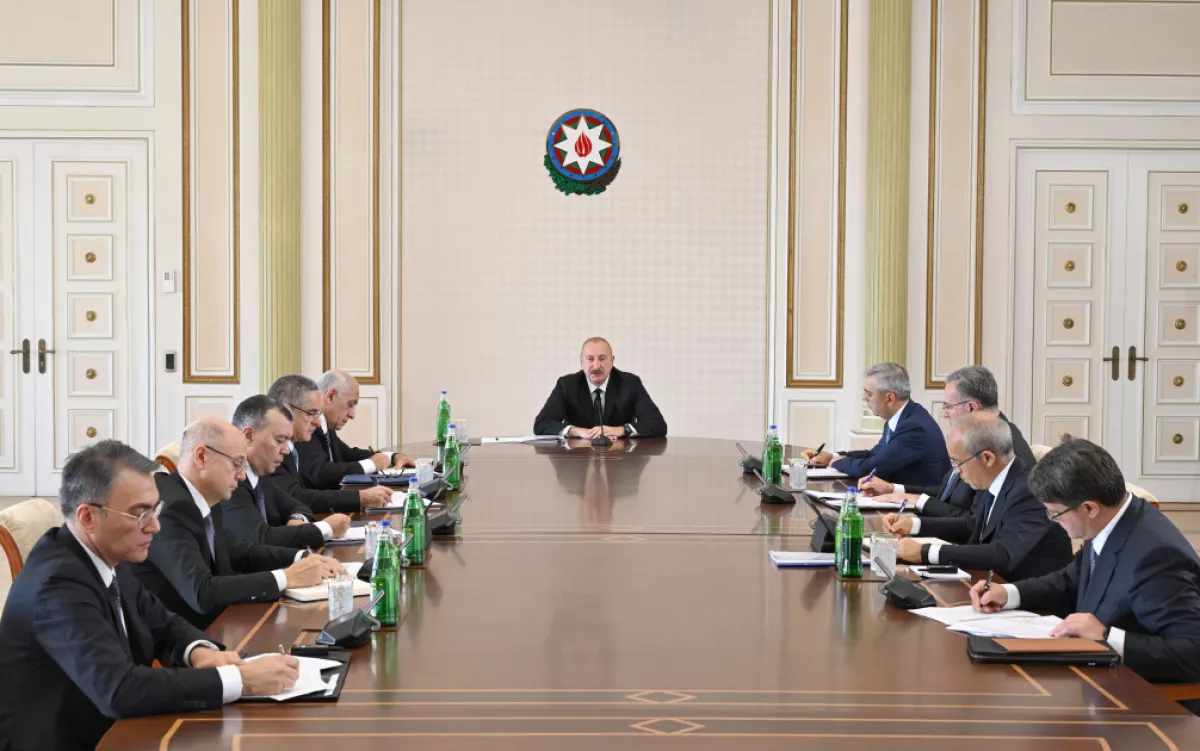
As President Ilham Aliyev stressed at the meeting, all the programmes adopted in recent years are specific in scope and designed for a relatively short period, up to the end of 2030. Sufficient funding has been earmarked for their implementation in the state budget and investment programme for the coming years, while mechanisms for implementing the programmes and monitoring their execution have also been fully put in place.
“Among the adopted programs, I would first and foremost highlight three main directions, although a number of other programs have also been adopted. State programs in the areas of agriculture, transport, and water management—which covers both irrigation and the water supply of Baku and the Absheron Peninsula—naturally require substantial financial resources. However, these programs will strengthen the national economy while simultaneously enhancing the social well-being of our citizens and providing them with modern infrastructure,” the head of state said.
It is worth noting that over the past 20 years, four major reservoirs with a combined capacity of more than 500 million cubic metres have been built in Azerbaijan, including the Takhtakorpu and Shamkirchay reservoirs, which have played an important role in supplying water to both Baku and the western regions. The Jeyranbatan Reservoir has also been reconstructed, a new modern water treatment complex has been built, the infrastructure of the Samur–Absheron Canal has been developed, and the Oghuz–Gabala–Baku water pipeline has been laid.
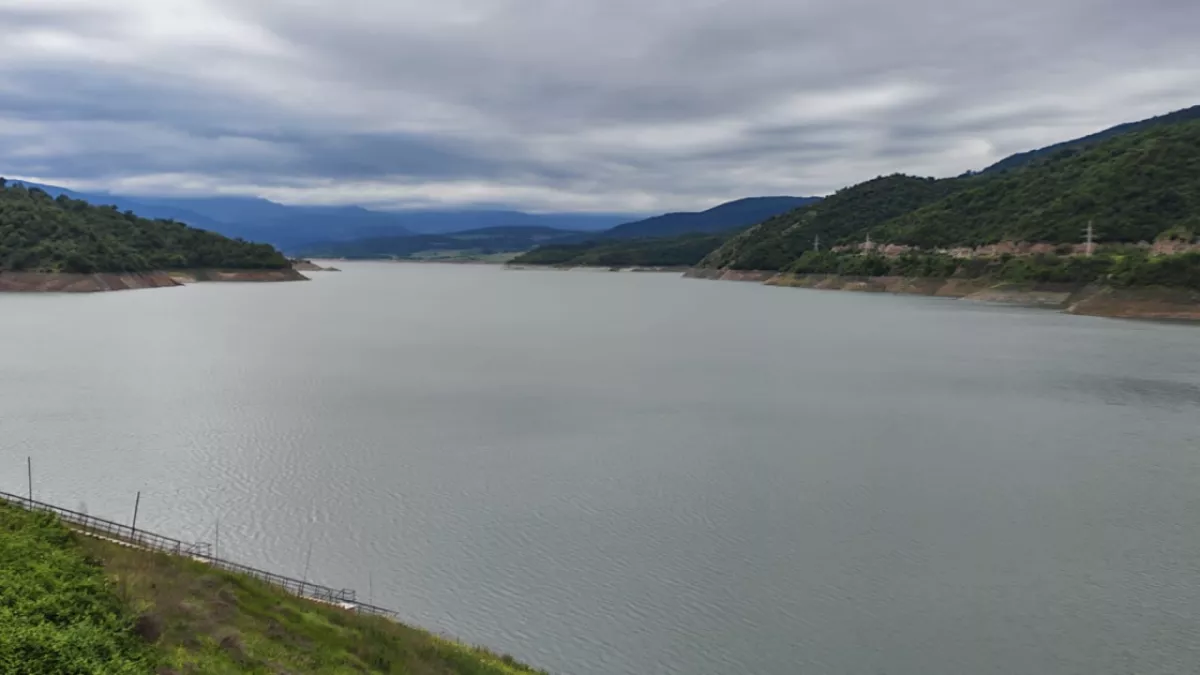
At the same time, over the past five years, the Sugovushan Reservoir and the Left-Bank and Main canals of the Tartarchay River, which had fallen into a state of complete disrepair as a result of the environmental destruction caused by Armenia, have undergone major rehabilitation. Work on the Sarsang Reservoir is planned for this year. In addition, five new water reservoirs have been built in the Karabakh region, while work is under way on the construction of two more major reservoirs.
Meanwhile, the “State Programme for the Improvement of Water Supply, Stormwater and Wastewater Systems in Baku and the Absheron Peninsula for 2026–2035” provides for the modernisation and construction of water infrastructure in Greater Baku, including water supply and sewerage networks, stormwater and wastewater systems, as well as the introduction of modern environmental and technological standards. The programme is expected to be financed not only through state funds but also through foreign loans.
At the same time, the development of Azerbaijan’s agricultural sector through modern water-efficient irrigation solutions and ensuring farmers a reliable water supply have been identified as key components of the “State Programme for the Development of Agricultural Production and Processing, Fisheries and Aquaculture in Azerbaijan for 2026–2030”, adopted in June. The programme also aims to increase crop production through the use of advanced agrotechnologies, digital management systems for assessing land according to soil quality, and measures to improve yields, thereby contributing to the development of Azerbaijan’s non-resource sector.
A special role in advancing the non-oil sector has been assigned to the new State Programme for the Development of the Mining and Metallurgical Industry. Its implementation is expected to have a major multiplier effect on the industrial, energy, transport and many other sectors of the non-oil economy, particularly in the country’s regions.
As Economy Minister Mikayil Jabbarov, who attended the meeting, noted, the programme’s impact will extend beyond the mining and metallurgical sector alone: “As production increases, demand for freight transportation and logistics services will also grow, creating new opportunities for local contractors and suppliers. Expanding the domestic raw materials and semi-finished products base will create conditions for the emergence of new industrial sectors.”
According to the minister, demand for skilled workers will also increase, accelerating the development of technical knowledge and skills and contributing to the country’s scientific capacity. Most importantly, employment and economic activity will increase in the regions, while new value chains will create additional opportunities for private investment and entrepreneurship.







 editor@caliber.az
 +994 55 444-88-98
 Азербайджан, Баку, ул. Низами, 203, Af Business House, 5-й этаж