










Investment in an era of change: AIIF 2026 gets underway in Baku Overview by Khazar Akhundov
Azerbaijan’s substantial oil and gas potential and its advantageous geographical location at the crossroads of Europe and Asia play a central role in attracting foreign direct investment (FDI) to the country. At the same time, maintaining investment appeal in line with the demands of the 21st century presents Baku with new challenges, including the development of industrial clusters and special economic zones (SEZs), the implementation of green energy projects, and the digitalisation of the economy. These achievements by the Azerbaijani state in attracting investment, as well as cooperation with regional countries and international partners in mobilising capital, were discussed at the II Azerbaijan International Investment Forum (AIIF 2026), which got underway in Baku on Friday, September 25.
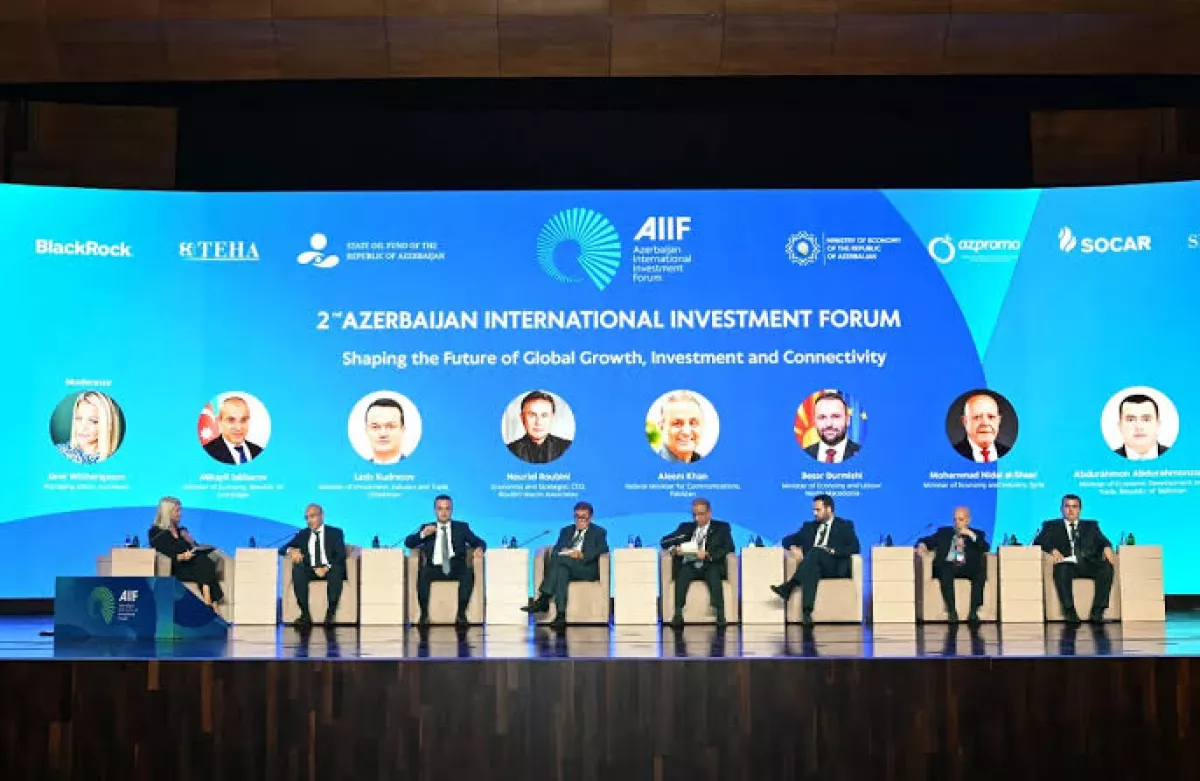
Organised by the Ministry of Economy and the Export and Investment Promotion Agency (AZPROMO), in strategic partnership with European House-Ambrosetti, and held under the patronage of President of Azerbaijan Ilham Aliyev, AIIF 2026 is dedicated to the theme “Rebuilding Trust in a Fragmented World: The South Caucasus as a Pillar of Global Connectivity and Investment Stability”. The two-day event brings together representatives of states and governments, international financial institutions and the media, as well as leading investors and business leaders. This exclusive platform in Azerbaijan’s capital provides an opportunity to explore the investment potential of countries located at the strategic East-West crossroads, contributing to shaping the future of global trade and resilient supply chains.
At the opening of the forum, Deputy Prime Minister Samir Sharifov read out President Ilham Aliyev’s address to the participants of AIIF 2026. In his address, the head of state highlighted the significant opportunities Azerbaijan offers in such areas as transport and logistics, renewable energy, digital technologies, agriculture and many others.

Today, the global economy is facing significant pressure from a range of disintegrative processes linked to geopolitical confrontation, wars, the energy crisis, inflationary risks and tariff pressures. Against this backdrop, many countries around the world, including the states of the Caspian region, are facing difficulties in maintaining sustainable GDP growth and attracting investment. Addressing these challenges requires governments to pursue flexible and balanced policies, build mutually beneficial partnerships, draw on shared geographical and resource potential, and bring together financial, logistical and human capital. Azerbaijan, in particular, is pursuing this path.
As Minister of Economy Mikayil Jabbarov emphasised in his speech at the forum, “Azerbaijan prioritises the development of long-term partnerships built on trust, the strengthening of interregional ties, and the creation of new economic value based on these connections. We are meeting at a time when globalisation is changing its shape: costs and efficiency remain important, but the reliability of partners and the resilience of supply chains are gaining increasing weight in economic decision-making and policy measures.”
He also noted that companies and governments are currently reassessing their investment destinations, priorities and trading partners, with a focus on reliable ties. In this regard, the role of small economies that are committed to maintaining openness in international cooperation and trade is gradually growing. “Governments cannot eliminate all external risks, but they can make their policies more predictable and demonstrate responsibility towards their commitments,” he said.
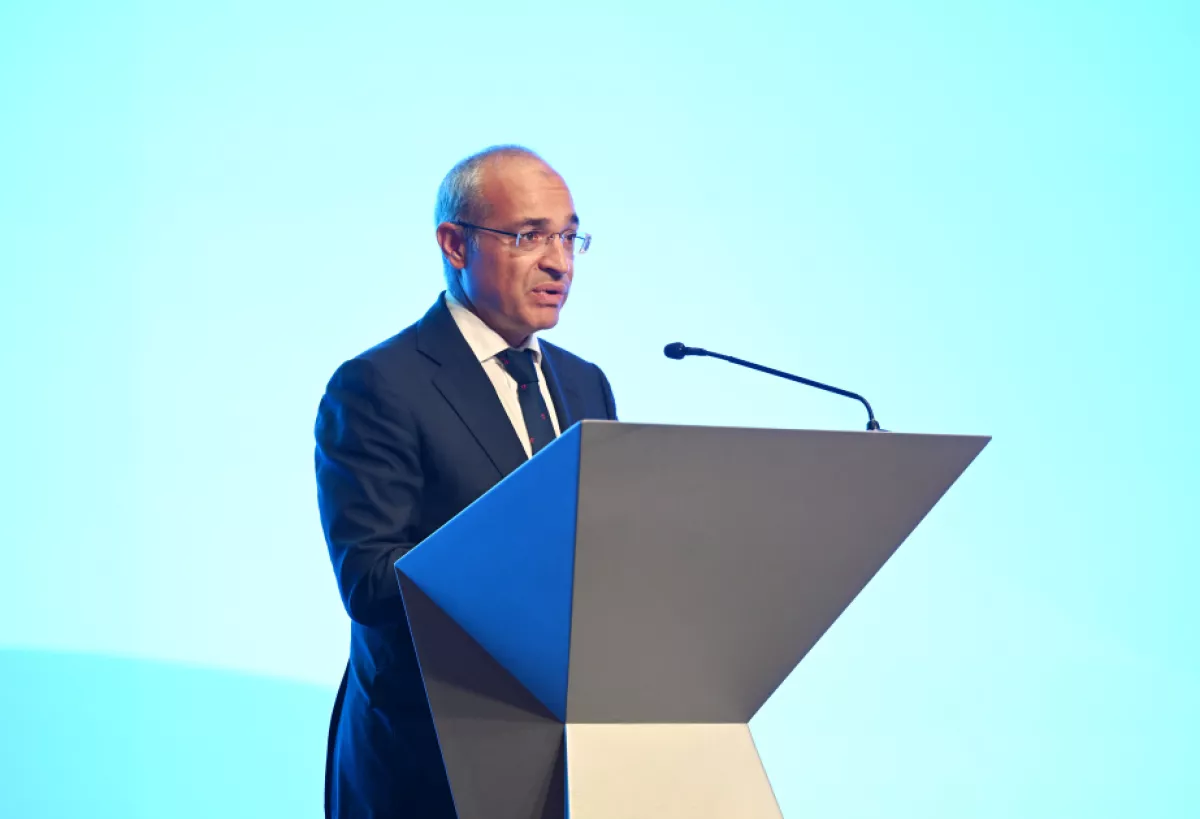
The Minister of Economy emphasised that, thanks to the vision and leadership of President Ilham Aliyev, timely steps had been taken to diversify the economy, increase government revenues outside the oil and gas sector, and ensure macroeconomic and fiscal stability. According to him, the financial reserves accumulated in Azerbaijan played an important role in minimising the impact of external crises in 2016 and 2022. At the same time, efforts to diversify the domestic economy have created new avenues of development that are attractive to foreign direct investment (FDI). In particular, the “Socio-Economic Development Strategy for 2027–2030” currently being developed by the government identifies the expansion of industrial clusters, the acceleration of agricultural reforms, and the development of a digital and green economy as key priorities. These measures are expected to give fresh impetus to the non-oil sector, strengthening its role as the main driver of GDP growth and investment attraction.
“The Trans-Caspian fibre-optic cable line being laid along the seabed between Azerbaijan and Kazakhstan will create a new high-capacity digital connection between Europe and Asia. Together with other investments in the ICT sector, this will provide Azerbaijan with competitive conditions for attracting investment in data centres and AI infrastructure,” the Minister of Economy said in his address to the forum.
Meanwhile, during a panel discussion, UN Resident Coordinator in Azerbaijan Dmitry Shlapachenko said that, to further expand non-oil production and exports, Azerbaijan could seek to integrate into the value chains of major economies in the region.
“In 2025, the European Union’s total imports from non-European countries amounted to around $3 trillion, and this is also a promising avenue for Azerbaijan, leveraging the capabilities of the Baku International Sea Trade Port and the railway network,” he said. He stressed the need for investment in training specialists with skills in demand in the era of the Fourth Industrial Revolution, noting that Azerbaijan had taken important steps in this regard to strengthen its human capital and innovation ecosystem.
Overall, a recurring theme in a significant number of speeches at the forum was the strategic integration of the Caspian countries with a view to developing the potential of the Middle Corridor, implementing infrastructure projects, and expanding transit and logistics capabilities. As the Minister of Economy noted, “Azerbaijan views transport corridors not merely as routes for cargo transportation, but as a broad economic platform facilitating the movement of goods and services, energy, data, capital and more.”
According to him, logistics terminals, digital services and industries emerging around them create additional opportunities for private investment. Thus, the transport and trade potential should be converted into the creation of added value. This approach makes it possible to maximise the potential of the Alat Free Economic Zone (AFEZ), as well as domestic industrial parks and districts, which serve as platforms for attracting investment.
“Our advantage lies in export-oriented manufacturing companies focused on producing goods for export beyond Azerbaijan and generating high added value,” Valeh Alasgarov, Chairman of the Alat Free Economic Zone Authority, said at the forum, highlighting the zone’s advantages. Moreover, new government support mechanisms providing compensation of up to 70% of transport costs for non-oil exports, within established limits, give local producers preferential access to markets along the Middle Corridor and beyond.
Overall, AIIF 2026 proved highly productive in terms of advancing the investment agenda: on the first day of the forum, Azerbaijan and its foreign partners signed 11 memorandums of understanding and other documents envisaging cooperation in various fields, including areas with significant investment potential.







 editor@caliber.az
 +994 55 444-88-98
 Азербайджан, Баку, ул. Низами, 203, Af Business House, 5-й этаж