










The cost of war for Ukraine A host of questions surround Fire Point
Ukrainian Defence Minister Yevhenii Khmara has urged the European Union not to delay the allocation of defence funding until 2027, but to provide the funds this autumn. The minister primarily justified his appeal by saying that Ukrainian defence companies need the money now in order to purchase components in time and manufacture drones without delays.
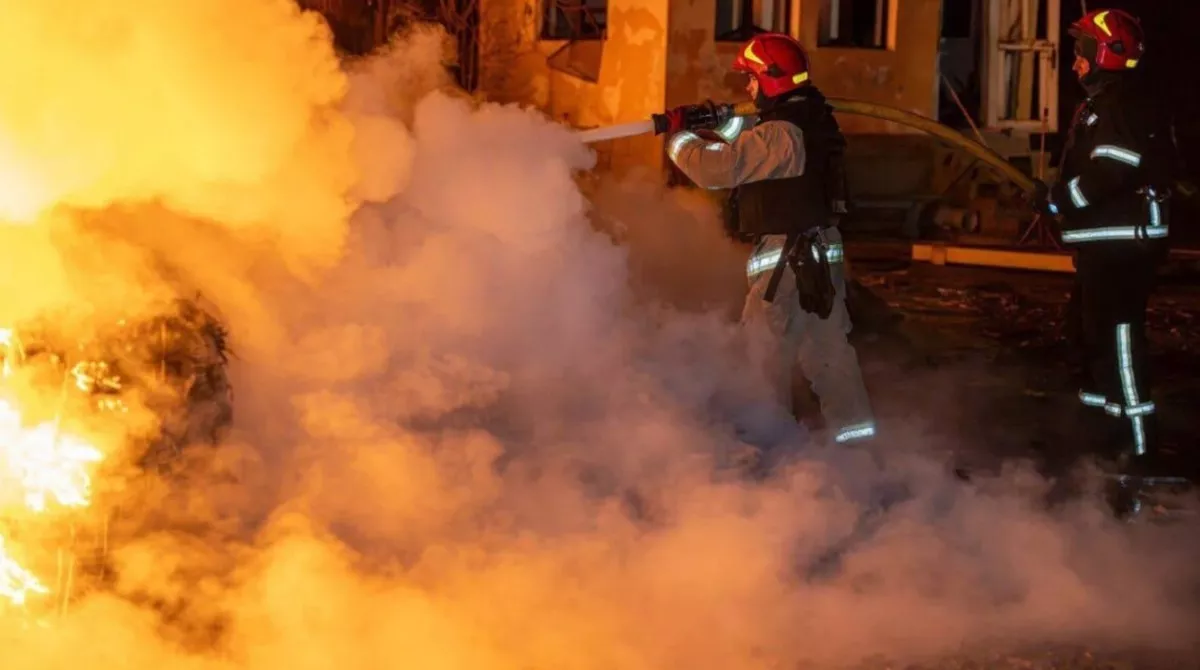
Undoubtedly, in its confrontation with Russia, Ukraine needs even greater quantities of weapons and practically everything — from drones to ballistic missiles, as well as air defence systems, given that Russian missile and drone attacks are destroying residential buildings and hospitals, clinics and schools, petrol stations and shopping centres, data centres and many other facilities in Ukrainian cities on a daily basis.
However, an important issue emerges here. On Monday, Vitalii Shabunin, head of the board of the Centre for Combating Corruption (CPC), posted on Facebook a response from the Defence Ministry’s Department for the Development of Weapons Systems and Technologies to a request from Daria Kaleniuk, the CPC’s executive director. According to the response, state contracts with Fire Point LLC for the procurement of unmanned systems amounted to UAH 56.743 billion in 2025 and UAH 50.700 billion in 2026, bringing the total for the two years to UAH 107.443 billion, or approximately $2.5 billion.
At the same time, the quality and effectiveness of the company’s products have raised serious questions among a considerable number of Ukrainian experts and defence-market participants. They point out that Fire Point’s purported ballistic missiles have yet to demonstrate confirmed successful combat launches against targets on Russian territory. In addition, experts have highlighted the high cost of some drone models, raising questions about the economic efficiency of their large-scale deployment.
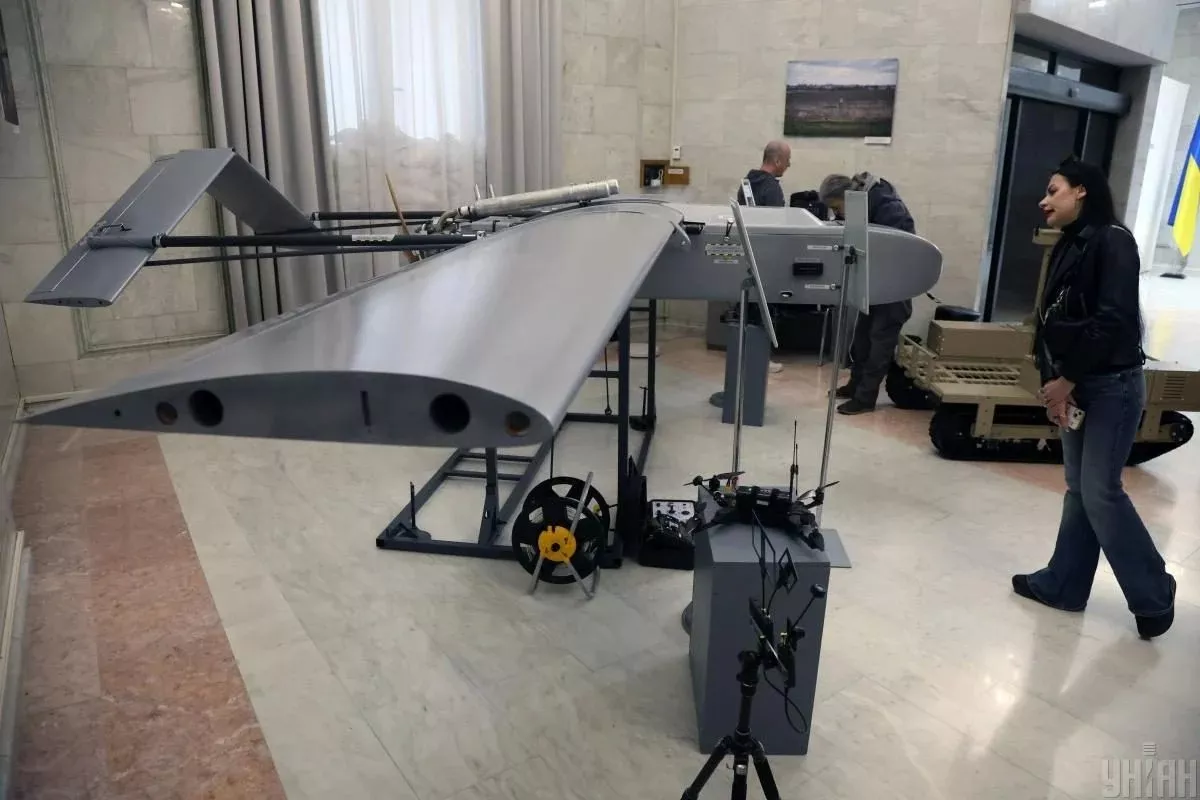
In this context, it is worth citing a post published on Facebook by Ukrainian serviceman and drone specialist Yurii Kasianov. He noted that Fire Point’s official profit for 2025–2026 is not difficult to calculate: approximately $500 million. “In my estimate, the actual profit could be three times higher, since the components of the FP-1 drone are known, as are their prices. In just one day, Fire Point receives at least $4 million from the state for its drones alone. In one hour, Fire Point receives $165,000 — precisely the amount we are short of to complete the development of a new low-observable drone using Stealth technology,” he wrote.
Against this backdrop, it seems relevant to look at the backgrounds of the company’s senior management. Denis Shtilerman is Fire Point’s chief designer and majority owner. Previously a Russian citizen, he was involved in business and real estate before entering the defence sector and had no prior experience in drone manufacturing.
Fire Point Technical Director Iryna Terekh was an entrepreneur and architect before the full-scale war. She was involved in the production and sale of benches, planters and other elements of urban infrastructure, and likewise had no previous experience in the defence industry. She became known for saying that the engine cover of the Flamingo missile is attached with ordinary door hinges purchased from the Epicentr retail chain, as well as for displaying an openly inappropriate cheerful demeanour during interviews with Ukrainian media.
Then there is Yehor Skalyha, Fire Point co-owner and head of military liaison. He, too, had no previous involvement in weapons manufacturing before the war. His background is in the film industry: he headed At Point, a company specialising in location scouting for film shoots, which is listed in the credits of Eight Best Dates, starring Volodymyr Zelenskyy.

It must be said that, to put it mildly, we are looking at a rather remarkable gallery of people running a company receiving the largest amount of state funding for the production of drones and missiles. Most strikingly, they have virtually “taken up residence” in the Ukrainian media space. Shtilerman and Terekh, who would logically be expected to focus on immersing themselves in the production of drones and missiles, regularly make promises to the Ukrainian public in interviews with sympathetic journalists.
It has become almost awkward to point out that Ukrainians need real results, not promises, just as it is difficult to ignore the fact that the country’s rampant corruption is acknowledged not only by many foreign media outlets but also by ordinary citizens, who openly indicate in opinion polls that President Zelenskyy bears responsibility for corrupt practices among those around him.
In this context, it is worth recalling that Artem Shylo, a former adviser to the Office of the President and former head of the Department for the Protection of National Statehood at the Security Service of Ukraine (SBU), who once oversaw the so-called “economic counterintelligence” division, reached a plea agreement in a case involving the embezzlement of funds from Ukrzaliznytsia, Ukraine’s state railway company. At a hearing of the High Anti-Corruption Court (HACC), a prosecutor from the Specialized Anti-Corruption Prosecutor’s Office said that an agreement had been reached to conclude plea deals with Artem Shylo and Konstantyn Melnyk (another defendant in the case — author’s note).
The court separated the proceedings concerning Shylo into a separate case, and the HACC is subsequently expected to approve the agreement, details of which have not been disclosed. According to investigators, in 2021–2022, an organised group allegedly headed by Shylo misappropriated Ukrzaliznytsia funds during the procurement of cables and transformers at inflated prices. The total damage is estimated at approximately UAH 240 million.

Against the backdrop of such news and corruption scandals, calls for the EU not to delay the allocation of defence funds will inevitably raise the fundamental question of how effectively and transparently those funds will be spent. The reaction of European countries to Ukraine’s announcement of a $27 billion “hole” in its budget may serve as an indication of how this could unfold. It can reasonably be seen as a sign that the trust of those on whom further assistance to Ukraine directly depends is not unlimited.







 editor@caliber.az
 +994 55 444-88-98
 Азербайджан, Баку, ул. Низами, 203, Af Business House, 5-й этаж