










Ukraine’s mounting troubles Debt, corruption and Brussels’ growing frustration
Ukraine is a country where so many events unfold in its domestic and foreign policy life every day that another European state might not experience as many in an entire month. And once again, we have witnessed a whole range of developments that are of considerable importance and warrant close discussion.
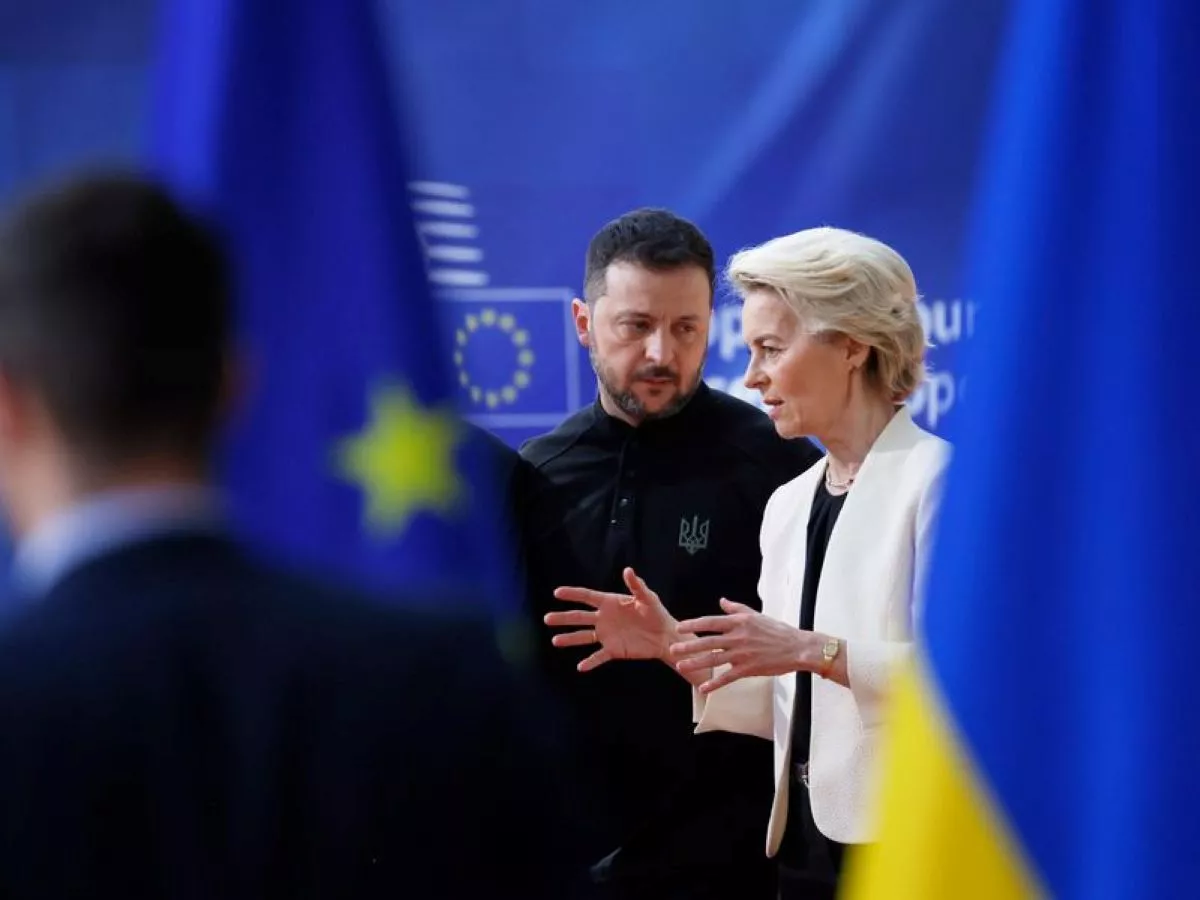
Let us begin with the meeting between Ukrainian President Volodymyr Zelenskyy and European Commission (EC) President Ursula von der Leyen on the sidelines of the high-level week of the 81st session of the UN General Assembly. The meeting took place in a notably tense atmosphere, due to several factors. The first was Kyiv’s concern that Russia could escalate the war in winter, taking advantage of Ukraine’s limited air-defence capabilities.
Of course, there is little reason to expect a different course of events, given that Moscow has never concealed its intention to use any means necessary to achieve the “goals stated at the beginning of the special military operation”. At the same time, everyone remembers the Ukrainian president’s repeated promises to inflict highly painful strikes on Russian territory, as well as his recent statement that Ukraine would force Russia to stop the war within the next 40 days.
Against this backdrop, the statement made by the Ukrainian president at his meeting with the European Commission president is, to put it mildly, surprising. However, there is another side to the matter: in response, the European side said that before providing additional funds to Kyiv, Brussels would like to see progress in combating Ukraine’s shadow economy, increasing tax revenues and bringing Ukrainian legislation into line with European standards. These demands are entirely justified, since Kyiv is indeed failing to fulfil its obligations to its partners, while the Verkhovna Rada is not adopting the necessary legislation.
In this context, it is worth noting that on September 18, a number of MPs travelled to Bukovel for the Carpathian Summit, resulting in the cancellation of the scheduled parliamentary sitting and the “Question Time with the Government”. In effect, parliament took a 26-day break from plenary sessions, from September 17 to October 13, although Speaker Ruslan Stefanchuk insists that this is not a holiday, but rather time for MPs to work in committees on draft legislation.
At the same time, a vivid illustration of the MPs’ “diligent work” in the Carpathians can be found in social media posts by Dmytro Kostiuk, a member of the Servant of the People faction. He posted photographs on Instagram from the MAVKA water park in Bukovel, captioning them: “Behind the scenes of the Carpathian Summit.” As we can see, at a time when the Ukrainian state is facing a succession of problems of various kinds, MP Kostiuk is openly showing ordinary Ukrainians how well he is enjoying himself at the ski resort.
After such blatant disregard — there is simply no other way to describe it — for Ukraine’s looming economic woes on the part of the MP, the Ukrainian side’s appeal to its allies at the UN General Assembly session sounded particularly ambiguous. Kyiv asked for help in covering an unexpected budget deficit of around €26 billion, equivalent to $30 billion, and for the €90 billion loan to be disbursed more quickly.
The Europeans’ response was akin to a stinging slap in the face. According to media reports, “The European Union questioned Ukraine’s calculations regarding the size of its budget deficit, suggesting instead that additional funding be provided by other international partners, specifically Canada, Norway, and Japan.”
Put simply, the EU no longer appears to believe the Ukrainian leadership’s claims about a “budget hole” and is openly suggesting that Kyiv look elsewhere for another round of financial assistance.
Another curious episode involving official Kyiv is its outrage over the lifting of European sanctions against Russian billionaires Alisher Usmanov and Mikhail Fridman. Credit must be given to European Commission President Ursula von der Leyen for showing restraint and not reminding Zelenskyy how David Arakhamia, leader of the Servant of the People faction in Ukraine’s Verkhovna Rada, once went to great lengths to have sanctions against Russian oligarch Roman Abramovich lifted. He even wrote letters to European leaders portraying Abramovich as a saviour of thousands of Ukrainian citizens. It came to nothing — the sanctions against Abramovich were not lifted.
Against this backdrop of a series of strategic missteps by the Ukrainian authorities, the Ministry for Restoration, Infrastructure and Transport reported that investigative actions were being carried out at the ministry’s offices concerning the director of its Restoration Policy Department, who had been appointed to the position in April this year.
It later emerged that the official in question was Viktor Steblinenko, an appointee of former Head of the Office of the President of Ukraine Andriy Yermak. Steblinenko is suspected of taking a bribe in exchange for lifting sanctions against business entities during his previous tenure at the Secretariat of the Cabinet of Ministers, where he headed the sanctions policy division.
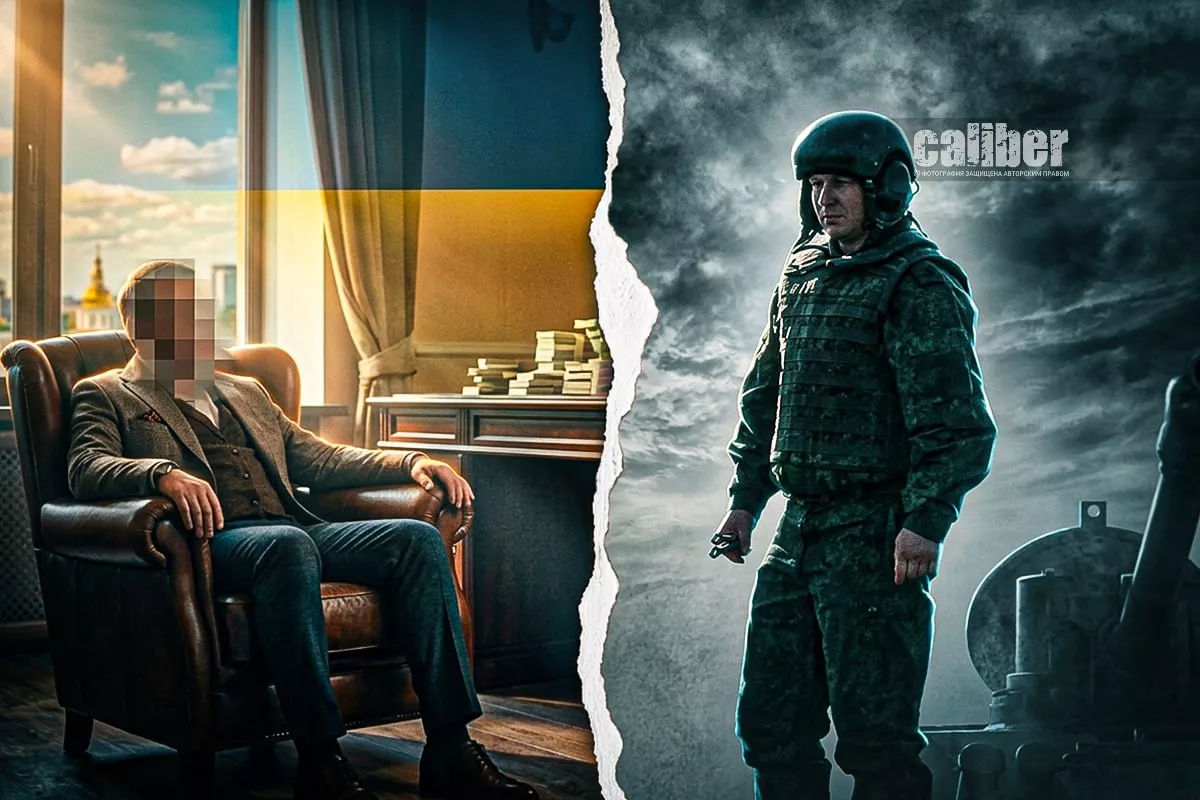
In this context, a particularly noteworthy post was published on Facebook by former MP Boryslav Bereza. He wrote: “I want to remind everyone that, during my programme, Serhii Vahanyan spoke about how, under the leadership of Zelenskyy’s friend, Lieutenant Ivan Bakanov, and his appointee, General Naumov, sanctions were being traded at the Security Service of Ukraine (SBU) as if they were pastries. This information was subsequently confirmed to me in private conversations by people who had been offered the opportunity to pay in order to avoid being placed under sanctions. So we are now watching yet another disgraceful act by this government being exposed. And this is explosive information on the eve of the PACE session, where human rights violations in Ukraine will be discussed. Trading in sanctions, as well as imposing them on Ukrainian citizens, is not only a crime but also a violation of the European Convention on Human Rights.”
Thus, Ukraine’s list of corruption scandals may well continue to expand and develop. Against this backdrop, it is hardly surprising that the attitude of Ursula von der Leyen, as well as the presidents and prime ministers of a number of EU member states, towards the Ukrainian leadership is rapidly changing in a sharply negative direction, despite their evident and unequivocal respect for the heroism of Ukrainian Armed Forces soldiers and officers and their compassion for the Ukrainian people, who have endured the horrors of Europe’s bloodiest war since the Second World War for four and a half years.







 editor@caliber.az
 +994 55 444-88-98
 Азербайджан, Баку, ул. Низами, 203, Af Business House, 5-й этаж