










From ore to metal: Azerbaijan builds its own metallurgical industry Overview by Khazar Akhundov
The absence of a full-cycle ferrous metallurgy industry has left the country’s steelmaking sector fully dependent on imported steel and the use of scrap metal as raw material. To overcome this inertia, AzerGold CJSC established its subsidiary, Dashkasan Iron Ore LLC (DDF), and research into the Dashkasan iron ore deposit began several years ago. In January 2026, President Ilham Aliyev signed a decree establishing the Western Industrial Park in the territory of Ganja city and the Shamkir District. Together with the recently adopted State Programme for the Development of the Mining and Metallurgical Industry, the park will serve as a foundation for building Azerbaijan’s mining and metallurgical industries.
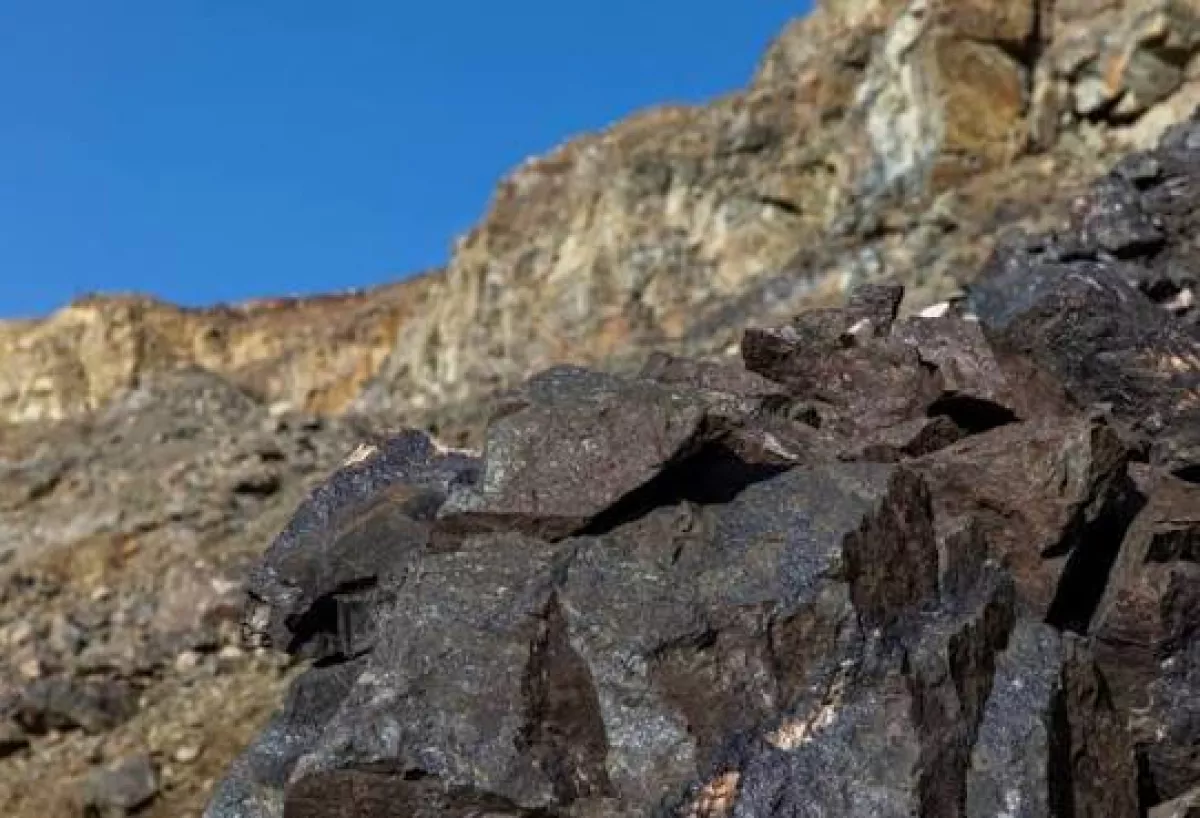
Historically, despite having the largest iron ore deposits in the South Caucasus, Azerbaijan lacked a full-cycle metallurgical industry. During the Soviet period, iron ore extracted from the most economically viable section of the Dashkasan deposit was processed into iron ore concentrate and, together with locally produced fluxes and bentonite, sent to the Rustavi Metallurgical Plant in Georgia for smelting. In the opposite direction, pig iron and steel billets were supplied to Azerbaijan from Georgia, as well as from Russia, Ukraine and Kazakhstan.
This inefficient system managed to function, albeit barely, within the Soviet framework of mutual settlements and subsidised energy and transport services. However, amid the disruption of economic ties and the market realities of the 1990s, Azerbaijan’s domestic metallurgical industry, with its technologically outdated mines and unprofitable plants, essentially ceased to exist. In the years that followed, the ferrous-metal processing companies operating in Azerbaijan became fully reliant on imported steel, while Baku Steel Company (BSC), a steelmaking plant established a quarter of a century ago, used not ore or concentrate but scrap metal as its raw material, producing rebar, channels and other products.
It is also worth recalling that previous attempts were made to privatise the Dashkasan Mining and Processing Complex and attract portfolio investors. Several years ago, Dashkasan Iron Ore LLC (DDF) began conducting studies to assess ore resources at two deposits within the Dashkasan complex — the North-West and South-East deposits. Exploration results confirmed an additional 70 million tonnes of resources at the two deposits. Following a reassessment of mineral resources in accordance with international standards, the total volume of ore reserves increased to 309.16 million tonnes.
Under a 21-year development plan for these deposits, work was launched to prepare the sites for mining and begin extraction, while stockpiling of ore reserves also got under way. Based on these findings and laboratory studies, DDF specialists also prepared a preliminary project roadmap.
A major breakthrough in this area began to take shape at a meeting held on September 22 under the chairmanship of President Ilham Aliyev, devoted to the State Program on the Development of Mining (Metal Ores) and Metallurgical Industry in the Republic of Azerbaijan for 2027–2030.
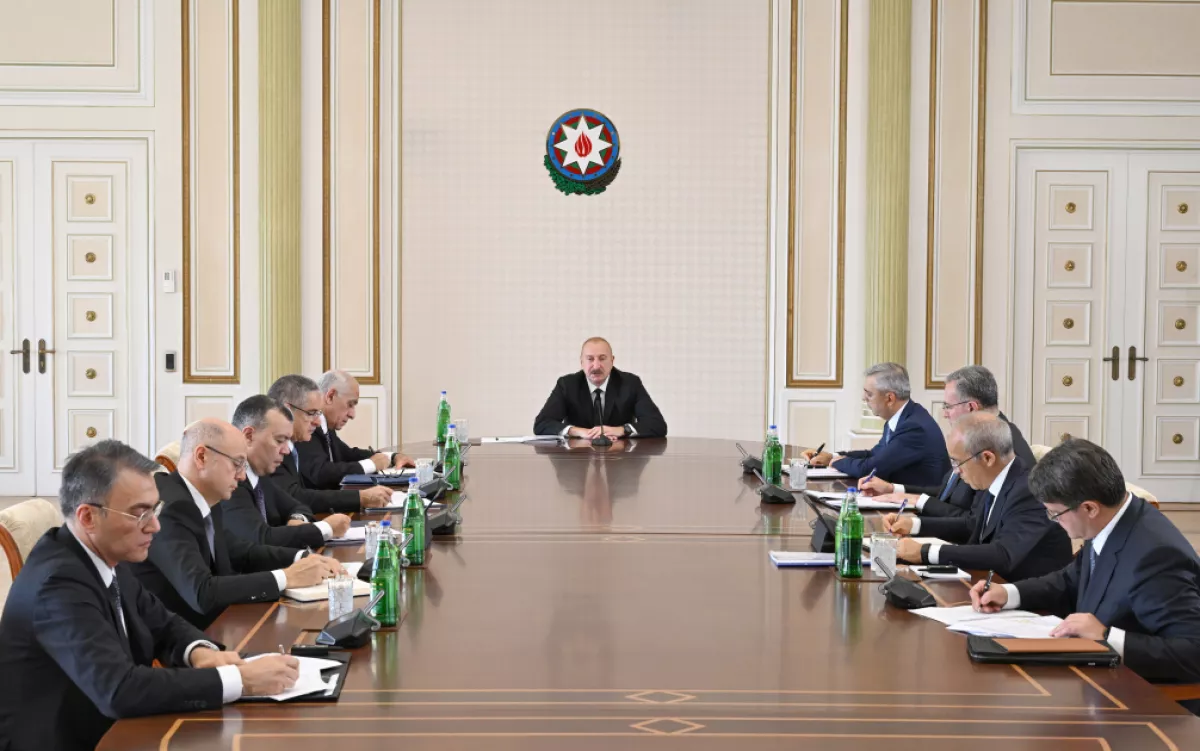
As the head of state said during the meeting, “the main purpose behind creating the West Industrial Park is precisely the development of the mining industry.” Ilham Aliyev also stressed that the infrastructure needed for the exploitation of the Dashkasan iron ore deposit and the implementation of other projects in the surrounding areas should be established at the industrial park as soon as possible, with the necessary funds allocated in the state budget.
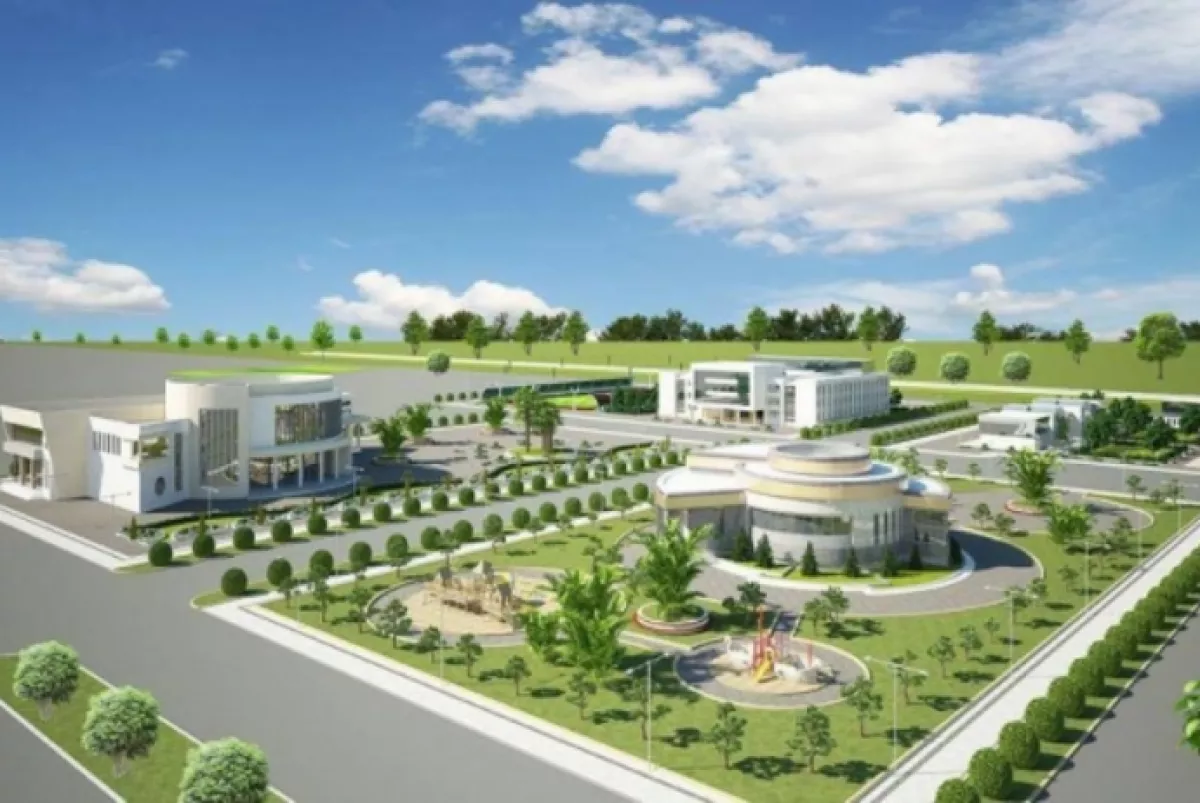
It is worth recalling that, under the decree signed in January, plots of land covering 81.8 hectares in Ganja and 100 hectares in the area of Konullu village in the Shamkir District were designated for the development of the West Industrial Park. The park is intended to have external and internal infrastructure to facilitate the production of competitive products using modern technologies. External transport links will be extended to the industrial park, while electricity and heating, gas and water supply facilities will be built, along with communications and fire-safety systems.
Under the presidential decree, responsibility for managing and developing the industrial park was assigned to the Economic Zones Development Agency under the Ministry of Economy. Other government bodies will also be involved in the project. In particular, the Ministry of Ecology and Natural Resources will support the improvement of geological standards and reporting systems, as well as geological exploration; SOCAR is to establish the necessary gas infrastructure for the project and the relevant industrial cluster; and AzerGold will oversee the direct initiatives related to iron ore extraction.
The head of state identified the ultimate goal of the planned measures as establishing a complete mining and metallurgical value chain — from raw materials to finished products with a high level of added value. “Indeed, this entails ore extraction and the establishment of several plants. Beneficiation, pelletizing, and hot briquetted iron plants must be constructed. Naturally, the transportation of this ore occupies an important place here; therefore, concessions should be made on transportation tariffs to ensure economic efficiency,” President Ilham Aliyev said, stressing the need for the most thorough environmental assessment and strict compliance with all environmental standards by both foreign investors and AzerGold CJSC.
Economy Minister Mikayil Jabbarov, for his part, said at the meeting that “the iron ore extraction project is planned to be implemented in stages: capacities will be established for extracting local iron ore, beneficiating it and producing pellets.” He also stressed that one of the main objectives was to use the iron produced as raw material at metallurgical plants within the country, while the country’s export opportunities would also be expanded in parallel.
In this context, one point is worth highlighting: as part of the modernisation of the mining and processing complex, the ageing cableway to the settlement of Gushchu is planned to be replaced, while the concentrate will be transported through a 45-kilometre slurry pipeline to the pellet production facility. Another key stage of the project is the construction of a hot briquetted iron (HBI) plant, with an annual production capacity of up to 2 million tonnes of product containing 95% iron. At the initial stage, around 1.7 million tonnes of HBI is planned to be sold on external markets.
As Zakir Ibrahimov, Chairman of the Board of AzerGold CJSC, stated during the meeting, “production under the Dashkasan iron ore project is scheduled to begin in 2030. The required investment is estimated at 1.95 billion manats [$1.14 billion], with financing to be provided through the state budget, borrowed funds and investor participation.”
At subsequent stages, Azerbaijan plans to establish facilities to remelt the high-grade semi-finished product produced in Ganja in electric arc furnaces. The resulting steel is expected to be used to manufacture pipes, construction rebar, channels, rails, steel wire and other types of structural steel products.
Thus, through public-private partnerships and the attraction of foreign investment, Azerbaijan plans to develop the Dashkasan iron ore deposit and establish a complete domestic production chain — from ore to finished products.







 editor@caliber.az
 +994 55 444-88-98
 Азербайджан, Баку, ул. Низами, 203, Af Business House, 5-й этаж