










Broken system: infant mortality as a symbol of France’s crisis Analysis by Artem Kirpichenok
The period of Emmanuel Macron’s presidency has been marked by a series of crises in France, affecting virtually all key areas of the state system. Pension reform, mass protests, a growing budget deficit, and challenges in education and security have increasingly been accompanied by alarming signals from the healthcare sector.
One of the most troubling indicators of its condition is the rise in infant mortality — a measure that largely reflects the effectiveness of social policies, access to medical care, and a state’s ability to protect its most vulnerable groups. Recent statistics suggest that infant mortality in the Fifth Republic has reached a level that requires not merely acknowledgement of the facts, but urgent action.

Traditionally regarded as one of Europe’s leading powers, France today ranks only 23rd out of the 27 European Union member states in terms of infant mortality, according to a report by the French National Institute for Demographic Studies (INED). This reflects a significant setback compared with the 1990s, while the increase in early neonatal mortality from 1.5‰ to 2.0‰ over the past 13 years clearly highlights the scale of the problem.
Data from INSEE and INED paint a worrying picture: social inequality, geographical disparities, overcrowding in major maternity hospitals, and staff shortages in smaller facilities are all links in the same chain, contributing to the death of one in every 250 infants in France before their first birthday. The stark statistical figures speak for themselves: in 2024, 2,700 children under the age of one died in France, representing 4.1 deaths per 1,000 live births.
Meanwhile, journalist Anthony Cortes, co-author of the investigative book “4.1: The Scandal of Births in France”, notes that high infant mortality rates are particularly prevalent in rural areas, disadvantaged suburbs, and overseas territories, where communities face severe social challenges. The situation is further exacerbated by the financial crisis affecting the budgets of France’s departments, which traditionally fund the Maternal and Child Protection Service (PMI). Cuts to these budgets are depriving PMI centres of the ability to provide adequate prenatal monitoring and support for families at risk.

At the same time, the French Court of Auditors has highlighted in its reports the challenges facing small maternity hospitals, which struggle to ensure the mandatory 24-hour presence of a core team of three specialists: an anesthesiologist, an obstetrician-gynaecologist, and a paediatrician. Due to acute staff shortages, these facilities have been forced to rely heavily on temporary medical personnel (interimaires). High turnover among such specialists and their frequent replacement undermine the stability of medical teams and make it more difficult to ensure patient safety.
Anthony Cortes also draws attention to perinatal centres. According to him, the closure of smaller medical facilities has left major maternity hospitals overcrowded and operating under constant pressure. Medical staff themselves describe such hospitals as “baby production lines,” criticising the relentless pace of work, which significantly increases the risk of negligence and tragic incidents. Alongside systemic factors, biological factors also play a key role in infant mortality: boys face a 20% higher risk of dying during their first year of life than girls, while multiple births increase this risk fivefold.
Geographical and social factors are also of major importance. Infant mortality rates are significantly higher in France’s overseas territories and among children whose mothers were born in African countries, including the Maghreb region. As INSEE notes, this trend is directly linked to social deprivation, which results in women from vulnerable groups being more likely to experience health problems and less likely to receive regular medical monitoring during pregnancy.

Experts, meanwhile, point to the multifaceted nature of the infant mortality problem. However, both statistics and professional assessments indicate a direct link between the issue and shortages of medical staff, the closure of maternity units, and the lack of a comprehensive approach within the healthcare system. This is particularly evident in economically disadvantaged regions of the Fifth Republic: recent studies show that in the poorest municipalities, the risk of neonatal death is 1.7 times higher than in wealthier areas. Infant mortality rates are also higher among unemployed mothers and women employed in low-skilled occupations.
Age is another significant factor: the risk increases among very young mothers (under the age of 21) and older mothers (over 44), for whom suivi médical (medical monitoring) is often more difficult or complicated by health conditions. “By contrast, infant mortality is lowest among mothers aged between 26 and 37, at fewer than four cases per 1,000 live births,” the authors of the report add.
INSEE notes that the statistics may also be influenced by “advances in medicine.” Modern technologies allow babies who in the past would have been classified as stillbirths and excluded from live birth statistics to survive for several hours or days after birth. Researchers believe this factor may have contributed to the increase in reported infant mortality rates in recent years.
In response to this worrying trend, Health Minister Catherine Vautrin announced an initiative to establish a national infant mortality registry, which would allow authorities to examine each tragic case in detail and accurately determine the causes behind the phenomenon.
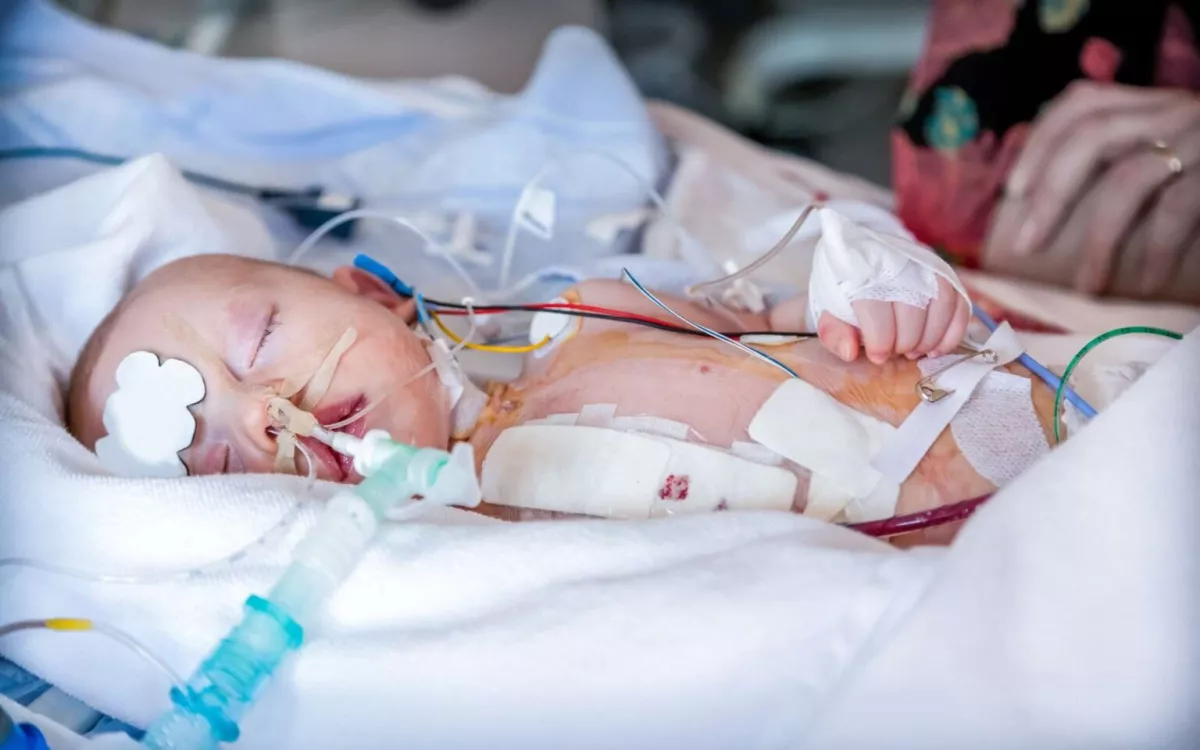
It would be informative to compare the current situation with that in the United Kingdom, where infant mortality stands at 3.9 deaths per 1,000 children under the age of one. Although this rate is lower than in France, in the UK these figures have prompted large-scale investigations and the establishment of government commissions.
The public debate over the crisis was triggered by the story of the British Hawkins family, which lost a newborn child in 2016. As independent experts began collecting data, they received testimonies from 2,500 families whose children had died or suffered harm due to systemic failures within the Nottingham University Hospitals NHS Trust.
It became clear that this was not an isolated problem affecting a single institution. In recent years, the total value of outstanding legal claims and compensation payments that the British state is required to pay families due to medical errors during childbirth has reached the equivalent of €30 billion. For comparison, the net budget allocated by the UK healthcare system specifically for maternity and perinatal care amounts to approximately €20 billion.
Of course, rising infant mortality cannot serve as the sole measure of the effectiveness of state policy. However, when combined with growing social inequality, it becomes one of the clearest indicators of a systemic crisis.
If several decades ago France was regarded as one of the European countries with the most efficient healthcare systems, it is now losing that standing. Much of the responsibility for the current situation lies with domestic policies pursued in recent years, as budgetary constraints and the lack of timely structural reforms have created a cumulative effect whose consequences are now measured not only in economic terms but also in human lives.







 editor@caliber.az
 +994 55 444-88-98
 Азербайджан, Баку, ул. Низами, 203, Af Business House, 5-й этаж