










Lithuania's initiatives that seek to protect Ukraine's art from war
Since the outbreak of Russia's war on Ukraine began in 2022, Lithuania has quietly become a sanctuary for hundreds of artworks from the country, undertaking a years-long effort to protect cultural treasures from destruction while preparing its own museums for the possibility of attacks.
The Baltic nation, which borders both Belarus and Russia's Kaliningrad exclave, has already amassed a history of transferring valuable works from Ukraine to secure storage facilities at the Lithuanian National Museum of Art, with an article by the Foreign Policy journal accompanying the journey taken by the museum's curator.
Skaistis Mikulionis, who has made nearly two dozen trips into Ukraine since the war began to evacuate artworks threatened by Russian attacks. His first mission came just nine months after the military actions erupted in 2022, when an opportunity arose to remove two paintings by Dutch master Frans Hals from the Odesa Museum of Western and Eastern Art. Before the war, Mikulionis had already arranged to exhibit the works in Lithuania and was determined not to let the conflict derail those plans.
With Odesa under regular bombardment, the operation served a second purpose: protecting the paintings until they could eventually be returned to Ukraine.
“Only idiots aren’t afraid,” Mikulionis told the journal. “But it is simply our duty to help.”
Since then, he estimates he has helped evacuate more than 1,500 artworks and organised around 20 exhibitions in Lithuania featuring works rescued from Ukraine.
“I can’t even remember the exact number,” he said of his trips to the country.
Mikulionis described the project as a joint effort involving more than 80 Lithuanian museum professionals, alongside dozens of Ukrainian curators, conservators and specialist art transporters who volunteered their expertise.
Delicate task of transporting art through a war zone
Moving valuable artworks is a highly regulated process even in peacetime, requiring agreements between museums, customs documentation, insurance, security escorts and specialists to supervise every stage of transportation.
In a country under constant missile and drone attacks, those challenges become significantly greater.
For that reason, Mikulionis has travelled with members of the Lithuanian Riflemen's Union, a government-backed volunteer paramilitary organisation whose members train to support national defence in the event of war.
Using specially equipped vehicles with air-ride suspension and carefully controlled temperature and humidity, the team transported artworks across Ukraine, Poland and Lithuania.
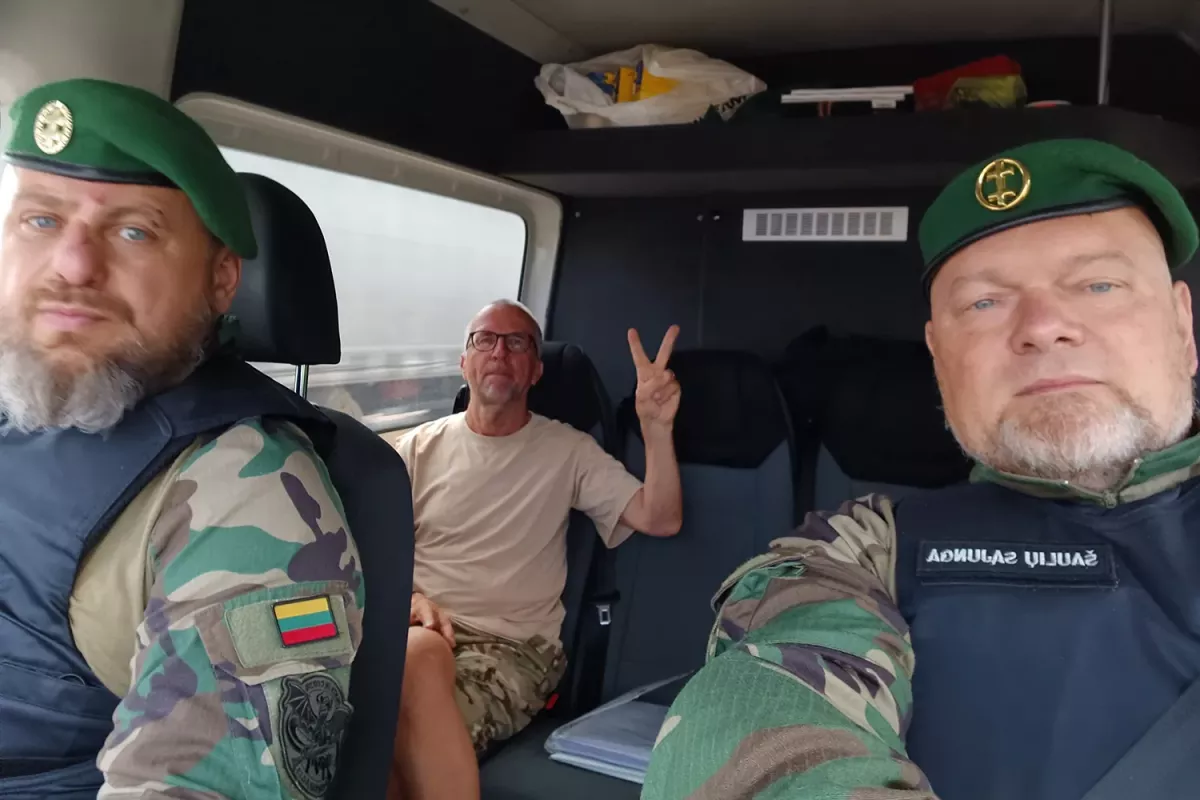
Within Ukraine, police escorted the convoy to the border. After customs clearance into Poland, the Lithuanian Embassy in Warsaw helped ensure the shipment continued without unnecessary delays. At Lithuania's border, armed members of the Riflemen's Union accompanied the convoy to secure museum facilities in Vilnius, where the artworks were allowed to acclimatise before being unpacked in the presence of Ukrainian representatives.
Protecting culture from destruction
Ukraine's cultural heritage has suffered extensive damage since military hostilities broke out.
According to UNESCO, 540 cultural sites have been damaged or destroyed during the conflict, including 155 religious sites and 43 museums.
Among the most significant early losses was the Ivankiv Local History Museum, which housed more than 20 works by celebrated Ukrainian folk artist Maria Prymachenko. After the museum was struck during the opening weeks of the war, local residents reportedly entered the burning building and rescued several paintings before the roof collapsed, though others were lost.
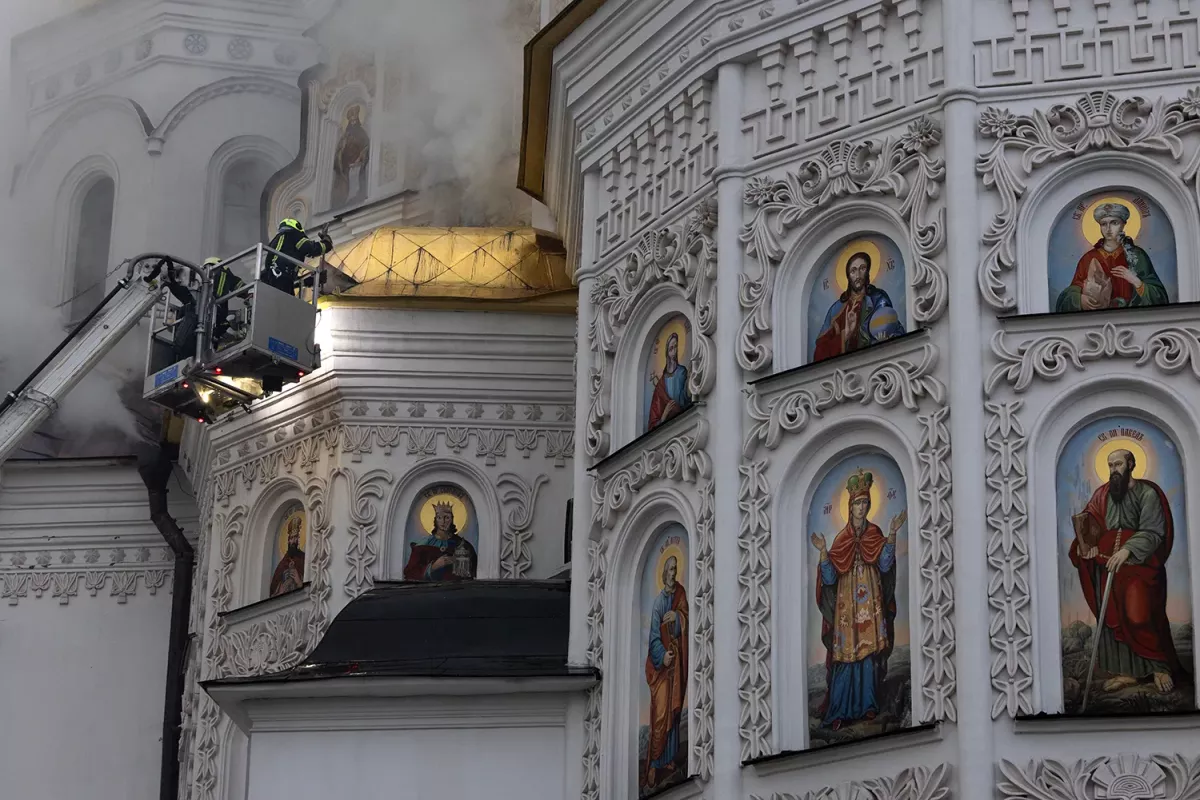
More recently, a Russian strike on Kyiv on June 15 severely damaged parts of the Pechersk Lavra monastery complex, a UNESCO World Heritage Site. The attack killed five people and damaged the Dormition Cathedral, prompting Ukrainian President Volodymyr Zelenskyy to describe it as “one of Russia's most serious crimes against Christian culture to date.”
Preparing for the future
Lithuania's support extends beyond protecting artworks.
The country has also hosted Ukrainian conservators for specialist training in advanced restoration techniques and equipment that remain difficult to access during wartime. Twenty-seven restorers participated in the programme in 2025, with dozens more expected to attend this year.
For Mikulionis, safeguarding cultural heritage from conflict is not a new undertaking.
In 2008, during the Georgian war, he helped evacuate works by Georgian painter Niko Pirosmani. More than a decade later, following Russia's annexation of Crimea but before 2022, Lithuania collaborated with Ukraine on the exhibition "Civilisations of Ukraine", displaying more than 80 artefacts from the National Museum of the History of Ukraine.
Those experiences have helped shape Lithuania's current approach: preserving Ukraine's cultural heritage today while ensuring its own collections are prepared for whatever the future may bring.
By Nazrin Sadigova







 editor@caliber.az
 +994 55 444-88-98
 Азербайджан, Баку, ул. Низами, 203, Af Business House, 5-й этаж