










China's red lines: Will Beijing really arm Iran? Article by Matanat Nasibova
Against the backdrop of the ongoing military confrontation in the Middle East, reports of possible Chinese arms supplies to Iran have given rise to numerous speculations. The main assumption is that, if these reports are true, such a scenario would fundamentally alter the balance of power and the course of events, not only in the Middle East but beyond.
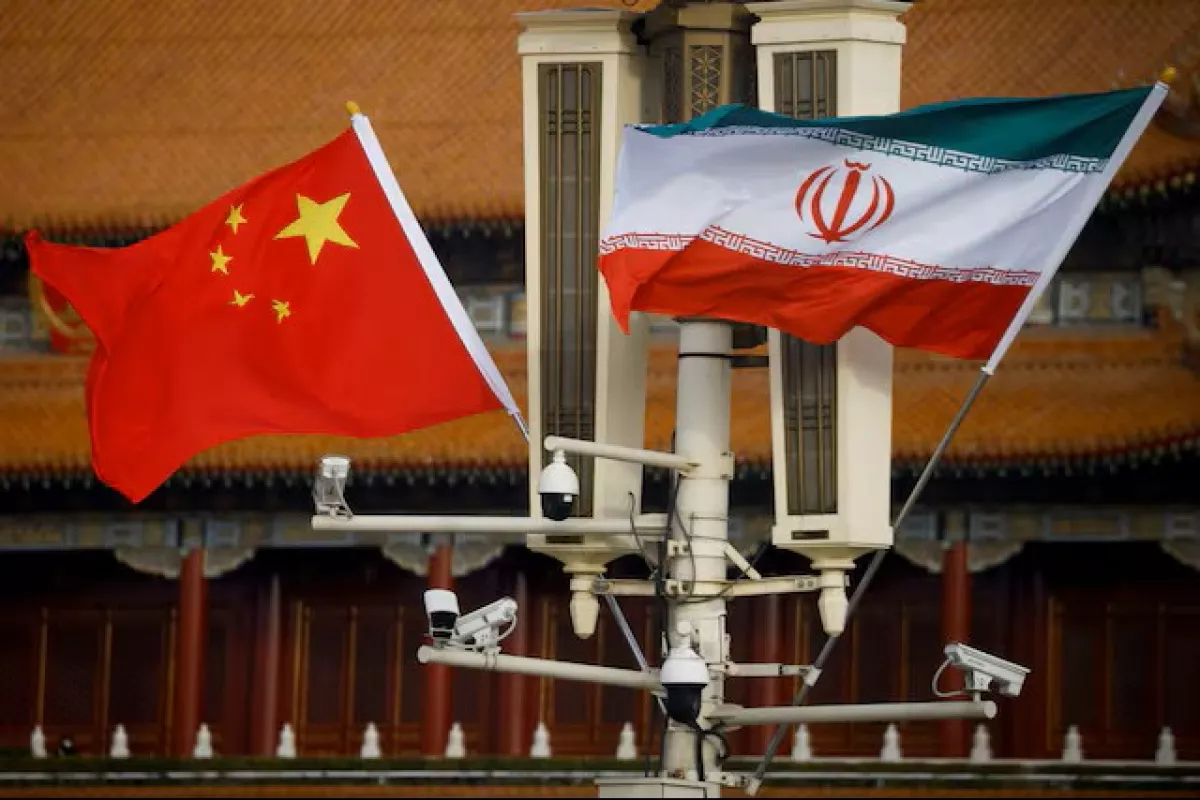
Recently, the Reuters news agency, citing its sources, reported that the Islamic Republic is expected to receive the first shipment, within the coming weeks, of up to 400 Chinese-made QW-12 and FN-16 man-portable air defence systems (MANPADS). The deal, estimated at between $60 million and $70 million, is one of Tehran's largest initiatives aimed at strengthening its short-range air defence system since the war with the United States and Israel, which exposed gaps in Iran's ability to protect military facilities and strategic infrastructure. It is also reported that the deliveries will be transported by air from Ürümqi in western China to Iran via Pakistan.
The Public Relations Department of the Pakistan Armed Forces (ISPR) responded immediately, stating that "speculations of Pakistan being involved in supply of Air Defense weapons to Iran from China are absolutely concocted and false." China's Ministry of Foreign Affairs issued a similar response: "The relevant reports are completely groundless. China has consistently played a role in promoting peace and ending the conflict." Nevertheless, despite these statements, military experts are already assessing various scenarios and believe that the delivery of hundreds of MANPADS would significantly expand Iran's arsenal of short-range air defence systems and underscore the deepening military ties between China and Iran.
In this highly controversial situation, the following questions come to the forefront: “Does China really intend to supply weapons to Iran, and if so, what exactly prompted the Chinese authorities to make such a decision?” and “What risks does such a course of events entail?” To arrive at the most accurate conclusion, let us examine the current realities from different perspectives.
First, Beijing seeks to preserve Iran as its strategic partner, since the latter serves as one of the key pillars of China's policy in Eurasia. By supplying military equipment, China is effectively securing its right to the priority purchase of Iranian oil in the long term, while also—quite possibly—counting on the unconditional participation of Chinese companies in Iranian infrastructure projects once the war is over.
The second aspect lies within the framework of the global U.S.-China rivalry, which the expert and analytical community has already described as historic. As is well known, at the beginning of June, Washington expanded its blacklist of Chinese companies that, according to the U.S. position, are linked to the Chinese military. The Department of War added such major technology corporations as Alibaba, Baidu, BYD, and NIO to this list. In response to these measures, China imposed export controls on 10 American companies operating in the defence, aerospace, and rare earth mining sectors—AVEOX, Red Cat Holdings, Teal Drones, IMSAR, Jaia Robotics, Ball Aerospace & Technologies, Oshkosh Defense, L3Harris Maritime Services, MP Materials, and USA Rare Earth. At the same time, China's Ministry of Finance announced that government agencies would be prohibited from purchasing products from 46 U.S. companies, including subsidiaries of Lockheed Martin, Raytheon, and General Dynamics.
As can be seen, Beijing and Washington have once again embarked on a path of intense economic confrontation, and it is therefore reasonable to assume that the decision to supply Iran with QW-12 and FN-16 surface-to-air missile systems—which, despite all the reports, still remains hypothetical—has also been influenced by these circumstances. These, then, are the factors that could motivate China to take such a step.

As for the risks, they are largely geopolitical and reputational in nature. To begin with, China has deliberately adhered to a foreign policy model based on parity and the image of a state seeking to prevent the escalation of confrontation. With regard to the Middle East, Beijing has consistently advocated a ceasefire and political dialogue, regularly calling on all parties to exercise restraint. Therefore, any confirmation that China has supplied Iran with weapons of any kind would immediately trigger a wave of negative reactions, including from the Arab states with which Beijing seeks to maintain mutually beneficial relations, and would automatically undermine China's reputation as a supporter of the peaceful resolution of all existing conflicts around the world.
Such an outcome is unlikely to align with the long-term objectives of the Chinese leadership, which are focused on achieving technological self-sufficiency, transitioning the economy toward high-quality growth, and implementing the strategy of the “Two Centenary Goals,” whose key milestones include the 15th Five-Year Plan, the 2035 target, and transforming the country into a great power by 2049.
In summary, it can be concluded that China is unlikely to supply Iran with weapons. Instead, Beijing will most likely continue expanding the supply of materials that will enable Tehran to restore its military-industrial complex. By pursuing this approach, China will achieve all of its objectives: it will reinforce its long-term strategic partnership with the Islamic Republic, preserve its image as a proponent of peace through the concept of plausible deniability and the distinction between direct arms supplies and other forms of assistance, while at the same time avoiding a direct confrontation with the United States by not crossing Washington’s official “red lines.”







 editor@caliber.az
 +994 55 444-88-98
 Азербайджан, Баку, ул. Низами, 203, Af Business House, 5-й этаж