










From boos to Beatles: stadium DJs hijack World Cup tension
A quiet but highly visible cultural clash is unfolding inside World Cup stadiums, where match interruptions have become an unexpected stage for competing crowd dynamics and carefully timed musical interventions.
What might look like simple entertainment is, in reality, a developing pattern of crowd management and atmosphere control. According to CNN, stadium DJs are responding in real time to growing fan frustration during hydration breaks by transforming vocal discontent into mass sing-alongs that reshape the mood within seconds.
Across venues in the United States, the two mid-half hydration pauses—introduced alongside advertising windows—have triggered increasingly loud boos from sections of the crowd. Many fans argue that FIFA’s implementation effectively alters the rhythm of matches, making them feel closer to structured four-quarter contests than traditional two-half football.
The reaction, however, has been swift and unconventional. In the second half of Thursday’s match (June 18) between South Africa and the Czech Republic, boos erupted as play paused. Within moments, “Take Me Home, Country Roads” by John Denver filled the stadium, converting the negative reaction into a 67,000-person singalong. A similar pattern emerged during Sunday’s match (June 21) between Spain and Saudi Arabia.
Elsewhere, the musical responses have varied but followed the same principle. During England-Croatia in Dallas, The Killers’ “Mr. Brightside” was deployed to counter the “boo birds.” In Seattle, where the USA defeated Australia 2-0, a brass band replaced the crowd’s discontent with rhythm and participation. During the Argentina-Austria Group J match in Dallas, the 1993 global hit “Macarena” by Los del Río triggered a synchronised crowd response.
The strategy aligns naturally with football’s broader cultural identity. Globally, football stadiums are traditionally loud, communal spaces where singing plays a central role—whether celebrating stars, mocking rivals, or pushing teams forward. This musical identity stands in contrast to many American sporting environments, where atmosphere is often directed through structured prompts rather than spontaneous chanting.
In many U.S. venues, spectators are routinely guided by large screens instructing them to “Make some noise!”, “EVERYBODY CLAP YOUR HANDS!”, or encouraged into rhythmic chanting such as “De-fense!” accompanied by drumbeats. Within this context, stadium DJs appear to be blending two traditions: the spontaneous singing culture of global football and the orchestrated entertainment style common in American sports arenas.
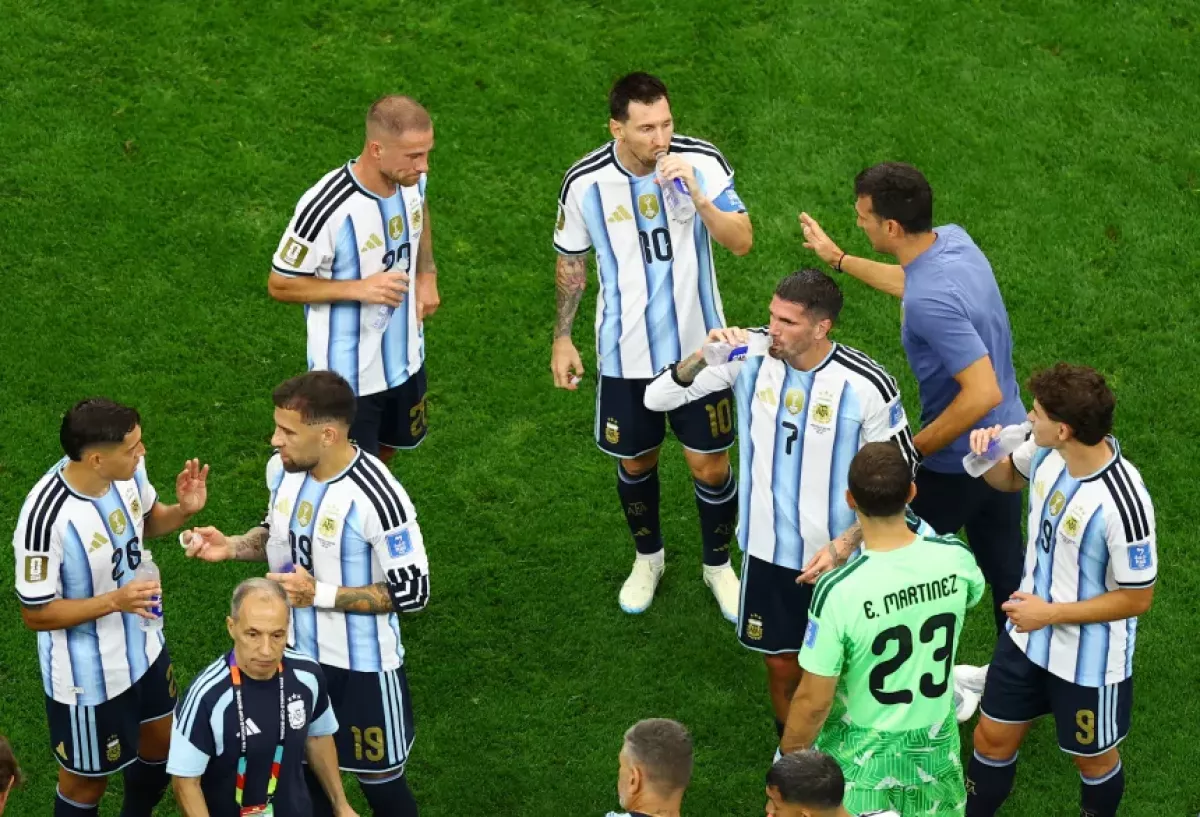
The broader tournament environment has amplified this shift. Fan zones, pre-match gatherings, train rides, shuttles, and post-match celebrations have all contributed to a highly vocal atmosphere, with songs such as “Wonderwall” and “Country Roads” becoming recurring communal anthems among travelling supporters. This momentum has extended into stadium operations, where DJs are increasingly quick to deploy familiar tracks at the first sign of unrest.
Hydration breaks themselves remain a polarising feature of the tournament. Opinions among fans range between “kinda dislike” and “severely loathe.” During England’s opening match against Croatia, English supporters were among the first to vocalise opposition, effectively crossing what some described as a metaphorical Rubicon. Since then, discontent has spread across host cities, often intensifying when broadcasts shift to commercial breaks.
While hydration pauses were initially introduced for player safety in warm conditions, their mandatory application in venues with climate control—including Dallas, Houston, and Atlanta—has intensified criticism. Some fans argue the format resembles “Americanization” of football, fragmenting the traditional 45-minute halves into shorter segments that disrupt flow and intensity.
Despite the criticism, the DJ-led response has proven largely effective. The transition from boos to collective singing typically occurs within seconds, turning potential tension into shared spectacle. In practice, the outcome reflects a simple dynamic: while the interruptions divide opinion, the music unites the crowd, even if only temporarily.
By Jeyhun Aghazada







 editor@caliber.az
 +994 55 444-88-98
 Азербайджан, Баку, ул. Низами, 203, Af Business House, 5-й этаж