










Cities turn to animal kingdom's skilled engineers as natural defence against flooding
Britain is famous for its rainy weather, but climate change is making showers heavier, more erratic, and increasingly destructive. Areas that rarely flooded in the past are now regularly waterlogged — prompting scientists and conservationists to turn to one of nature’s most skilled engineers for help.
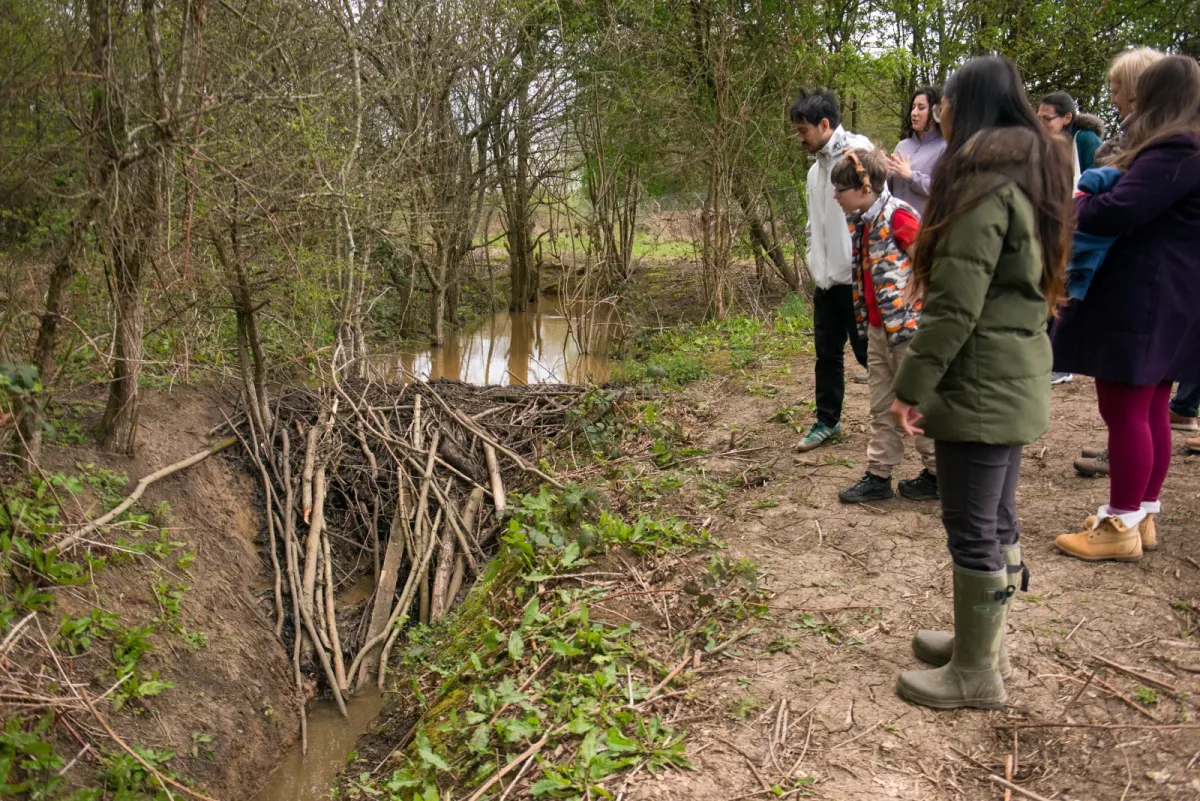
In West London, a single family of beavers introduced near the busy Greenford Tube station has helped dramatically reduce flooding by transforming a former golf course into a natural water management system, as highlighted in an NPR article.
The project began after a conservationist project secured a government license to relocate five beavers into an 8-hectare urban park in the London borough of Ealing. The area sits close to Tube infrastructure that frequently floods during heavy rainfall, forcing authorities to deploy sandbags in repeated — and only partially effective — attempts to control the water.
The territory used to be a golf course with a creek running through it. Today, this wetland became the beavers’ new workplace. Within weeks of arriving, the animals built dams that created ponds capable of holding excess rainwater and preventing it from spilling into nearby urban areas. They also redirected the creek into smaller tributaries, forming wetlands that absorb and slowly release water, significantly lowering downstream flood risks.
“They effectively turned this site into a giant sponge that can take heavy rainfall and slowly release water back into the landscape, creating a lot more resilience for flooding,” explained Sean McCormack, the veterinarian behind the Ealing Beaver Project.
The benefits have gone well beyond flood prevention. According to McCormack, the area around the station has stopped flooding, while biodiversity in the park has surged since the beavers arrived.
“By felling trees, they've also opened up the canopy, and we've seen an abundance of biodiversity,” he said.
Freshwater shrimp have returned to the creek, along with eight newly recorded bird species, two bat species, and rare brown hairstreak butterflies, which lay their eggs on blackthorn branches chewed by beavers.
The success of the project has also allowed local authorities to abandon expensive plans to build a reservoir and levee system.
Human hunt for nature's skilled engineers
“We said the beavers can do it for a fraction of the cost, certainly more sustainably,” McCormack said.
The Ealing Beaver Project is now one of dozens of similar initiatives across Britain using beavers to restore wetlands, improve biodiversity, and reduce flood risks naturally.
The return of beavers marks a remarkable turnaround for a species that was hunted to extinction in Britain more than 400 years ago.
By the early 20th century, only around 1,200 native beavers remained across Europe and northern Asia, surviving in isolated areas of countries including Norway, France, Germany, Belarus, Ukraine, Russia, Mongolia, and China.
Sweden began reintroducing beavers in the 1920s, with other European countries later following suit as part of broader rewilding efforts.
In the UK, beavers were officially reintroduced to Scotland in 2009, and since then, dozens of restoration projects have emerged across the country.
Their role may become increasingly important as climate patterns continue to shift. Although the UK overall is becoming wetter, some regions — including parts of Scotland — are experiencing hotter, drier conditions and growing wildfire risks.
By creating wetlands and slowing water loss, beavers help landscapes retain moisture and remain resilient during dry periods. Conservationists say this is particularly important at a time when wetlands are disappearing rapidly because of urban development and land drainage.
By Nazrin Sadigova







 editor@caliber.az
 +994 55 444-88-98
 Азербайджан, Баку, ул. Низами, 203, Af Business House, 5-й этаж