










EU commissioner outlines vision for Europe's post-US defence strategy Andrius Kubilius talks to Foreign Policy
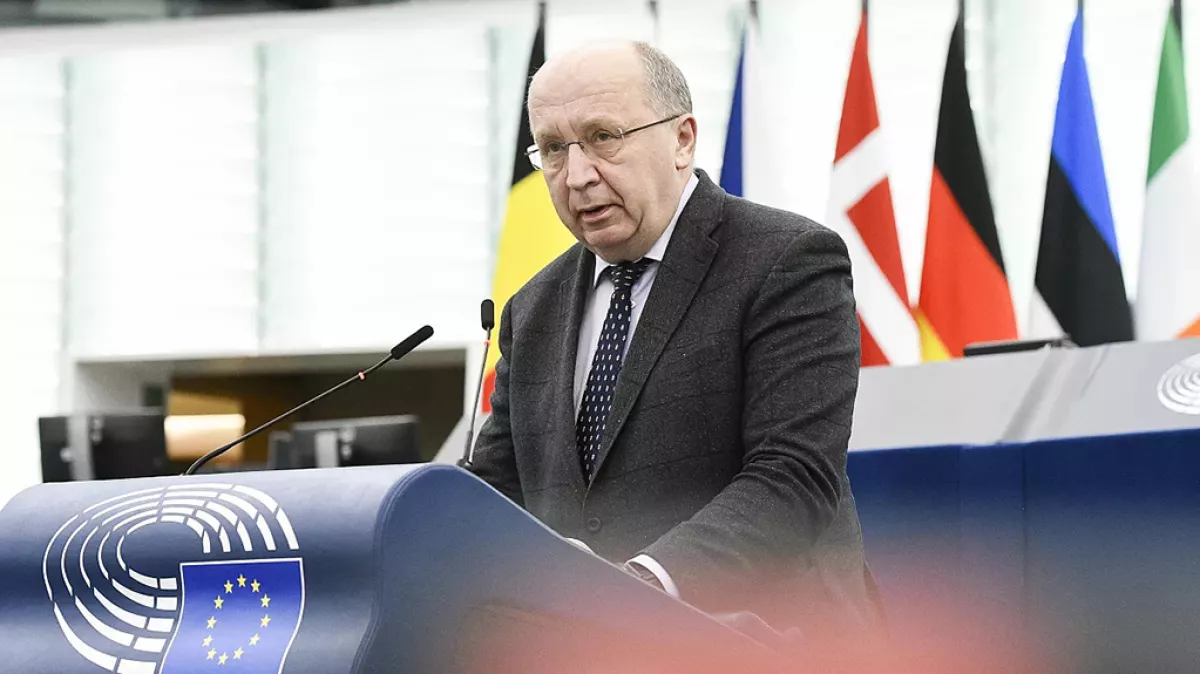
European Commissioner for Defence and Space Andrius Kubilius has said the European Union must increasingly look to Ukraine not only as a partner in need of support but also as a source of military expertise, as Europe prepares to assume greater responsibility for its own defence.
Speaking to the Foreign Policy journal for an interview published on July 27, the former Lithuanian prime minister outlined the challenges facing Europe's defence strategy, including shifting US priorities, rapid technological change on the battlefield and the need to modernise Europe's defence industry.
Kubilius argued that Europe is confronting a strategic transformation unlike anything seen in more than a century. According to the EU official, the bloc is facing growing security challenges from Russia and China, while its traditionally strongest ally, the United States, was gradually reducing its military focus on Europe as it redirects resources toward the Indo-Pacific under a strategy he referred to as "NATO 3.0."
At the same time, he said, the widespread use of drones and autonomous systems in modern warfare is forcing governments to reassess decades-old defence doctrines and procurement priorities.
According to Kubilius, the EU is not only continuing to invest billions of euros in supporting Ukraine but is also increasingly "tying its fate closer to Ukraine through joint-production agreements", viewing the country's highly experienced defence sector as an important strategic asset for Europe.
“We were looking at how to support Ukraine—now we are looking at how Ukraine can support us,” he said.
He said that securing funding represents only part of the challenge, while difficult political decisions remain over which weapons to purchase, where to source them and how they should be deployed. Those decisions, he noted, are further complicated by pressure to purchase American equipment and by defence industries that remain focused on traditional weapons systems rather than newer technologies.
NATO 3.0
Kubilius identified two immediate strategic challenges for Europe: Russia's continued pressure on NATO's collective defence and the expectation that the United States will increasingly shift military resources toward the Indo-Pacific in response to China's growing influence.
"I do not have any rational arguments against this strategy of NATO 3.0, which means that we Europeans need to take primary responsibility for conventional European defence," Kubilius said.
At the same time, he added that Europe would benefit from greater clarity regarding future US military plans.
He said he would prefer to know "much more clearly" which capabilities Washington intends to reduce in Europe so that EU member states could be "ready to invest into those capabilities."
Defence procurement
Kubilius also addressed what the publication described as a contradiction in US policy towards Europe, namely that Washington has encouraged European allies to assume greater responsibility for their own defence, but it has also continued to promote the purchase of American-made weapons.
The commissioner said he would welcome greater US procurement of European defence equipment, noting that American systems currently account for around 40% of EU defence procurement, while the United States purchases only about 1% to 2% of European-produced military equipment.
"Especially after the war in Iran, stockpiles are empty—so it’s not a question of who will buy from whom. The question will be what to buy. Who is able to produce?," Kubilius asked.
He also stressed the importance of modernising defence inventories rather than simply replacing older equipment.
"What is now going on [happens] once in 100 years. Trans-Atlantic collective defence is shifting toward more of European collective defence of Europe. So, this is one thing. The second thing, of course, is big technological changes," the commissioner noted.
Kubilius also acknowledged that governments often seek to protect domestic defence industries, even when battlefield realities suggest different priorities.
"There is a lot of national willingness to protect their own industries," Kubilius noted.
Highlighting lessons from the war in Ukraine, he warned that Europe must rapidly adapt to the growing role of unmanned systems in warfare.
"What we shall face is the Russian capability to use 10 million drones per year. And that means that we need to be ready to defend ourselves against that.
The question is, are we ready? At the moment, I would say, if I compare ourselves with Ukrainians, we need to learn a lot. So that is why we are really looking at how to [integrate] Ukrainian industry with the European defence industry," the Lithuanian defence specialist said.
By Nazrin Sadigova







 editor@caliber.az
 +994 55 444-88-98
 Азербайджан, Баку, ул. Низами, 203, Af Business House, 5-й этаж