










Dialogue without illusions: what can the world expect from US–China talks? Article by Matanat Nasibova
A wave of speculation has followed the announcement that Chinese President Xi Jinping will visit the United States on September 24, which President Donald Trump personally disclosed.
It is reasonable to assume that the Chinese leader's visit will serve as a continuation of the May summit between the two leaders in the Chinese capital, a possibility also hinted at by the U.S. president during his remarks at the Environmental Protection Agency: “President Xi is coming over on September 24th, and we talked about it (artificial intelligence) when I was over in Beijing, and we'll be talking about it again.” However, the White House chief’s statement is likely only the tip of the iceberg when it comes to the upcoming negotiations, especially considering the wide range of disagreements between Beijing and Washington, varying both in scope and intensity. It is precisely for this reason that the meeting between Chinese Foreign Minister Wang Yi and U.S. Secretary of State Marco Rubio on the sidelines of the ASEAN Summit in Manila lasted about an hour and a half. Therefore, taking into account the long-standing rivalry between these two powers on the global stage, let us examine the range of issues that will undoubtedly receive close attention during Xi Jinping’s planned autumn visit to the United States.
Over the past several decades, China has become the world's second-largest economy and the planet's largest manufacturing hub. It possesses strategic petroleum reserves exceeding 1.3 billion barrels, produces around 70 per cent of the world's electric vehicles, and controls a significant share of the supply chains for renewable energy components. In addition, Beijing has been systematically advancing the Belt and Road Initiative, enabling it to establish itself as a leader in the transport and logistics sector by developing economic and political ties with a large number of countries across a broad geographic area.
Taken together, these developments have produced precisely the outcome Beijing originally sought—they have significantly reduced the United States' economic advantage. In response, Washington's strategy of containing China is centred on supporting Taiwan and strengthening alliances with countries across the Asia-Pacific region. Economically, the United States has countered Beijing through the gradual imposition of tariffs and trade restrictions, as well as efforts to limit China's access to advanced technologies.
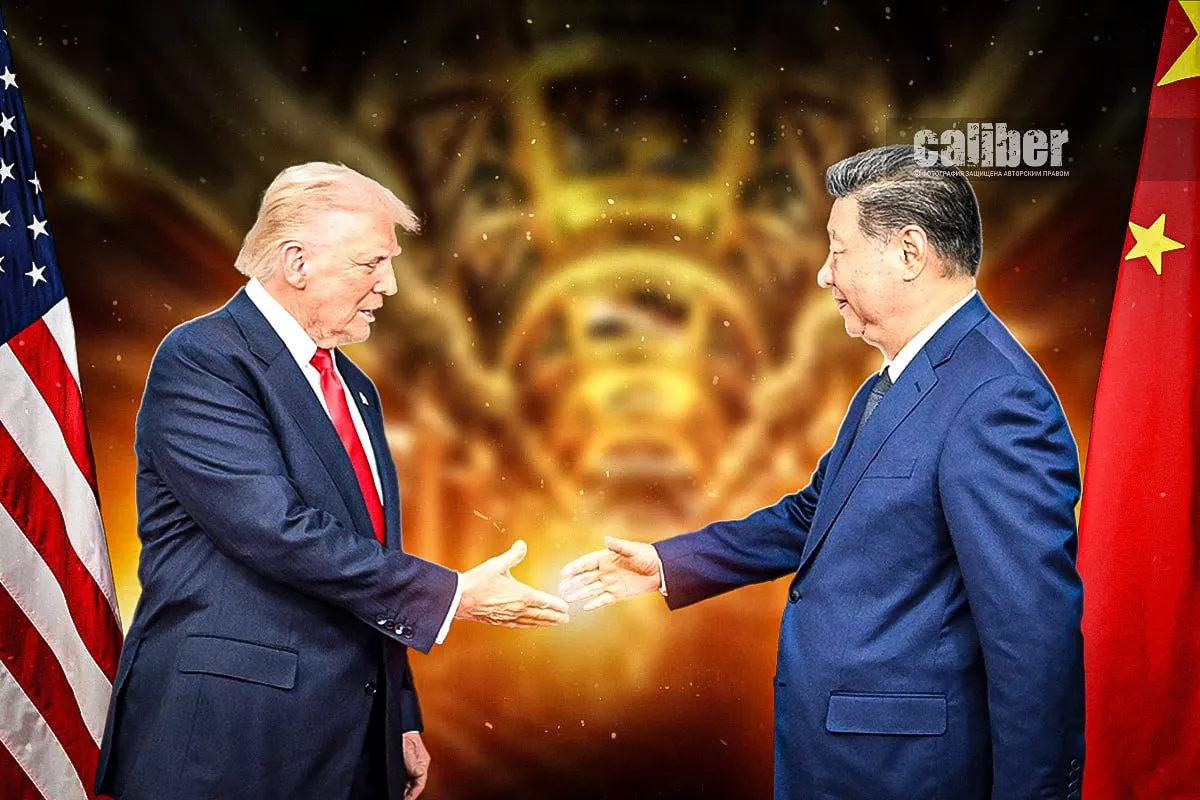
However, despite firmly defending their respective interests and showing little willingness to make fundamental concessions, both sides have sought to preserve dialogue, as evidenced by Donald Trump's state visit to China in May 2026. Nevertheless, although the two countries adopted the concept of a relationship of "constructive strategic stability" during the visit, they did not sign a single major agreement. The only tangible outcome was their intention to maintain the stable development of bilateral relations over the next three years. Assessments of the Beijing talks also varied considerably: Trump described them as "a tremendous success," while Beijing limited itself to stating that the negotiations had yielded "significant results." International experts, for their part, offered a much more restrained assessment, noting that the meeting's principal achievement was the shared desire to avoid direct confrontation rather than to conclude concrete agreements.
Against this backdrop, the noticeable shift in the White House's rhetoric also deserves attention. Whereas Donald Trump previously accused China of unfair trade practices, currency manipulation, the militarisation of maritime areas, and undermining the American economy—accompanying these accusations with threats of large-scale trade wars—his approach now appears considerably more pragmatic. Washington is gradually moving away from a policy based solely on maximum pressure toward a more flexible negotiating model, combining tariff leverage with efforts to find compromises on global issues. There are grounds to believe that this shift in U.S. policy is aimed at reducing global economic instability. This logic is further reflected in the fact that, following his May visit to Beijing, Donald Trump specifically emphasised his good relations with China's leadership.
At the same time, it is of great importance for the Trump administration to secure concessions from Beijing in the trade sphere, strengthen the protection of American technologies—particularly in the field of artificial intelligence—and demonstrate its ability to maintain a constructive dialogue with its principal geopolitical rival amid continuing tensions in the Middle East.
Meanwhile, for Beijing it is of fundamental importance to avoid a new round of trade and technological confrontation, preserve access to global markets amid slowing global economic growth, and prevent the emergence of a unified anti-China bloc in Asia led by the United States. It is therefore highly likely that these issues will dominate the agenda during the autumn talks between Xi Jinping and Donald Trump. However, there is little reason to expect a major breakthrough on the most sensitive geopolitical issues.
While the two sides may still be able to find common ground in the trade and economic sphere, a compromise on Taiwan appears highly unlikely. The United States is not expected to abandon arms sales to the island, as they remain a key instrument of its strategy to deter Beijing. China, for its part, continues to insist that Taiwan is an inalienable part of its territory and firmly opposes any military cooperation between Washington and Taipei. As can be seen, the positions of the two sides remain unchanged and fundamentally opposed, making any significant agreement on the Taiwan issue highly improbable.
It is also possible that Washington will once again raise the issue of Russia–China cooperation, seeking to limit military and technological collaboration between Moscow and Beijing. The United States views the growing partnership between the two countries as a factor facilitating the circumvention of anti-Russian sanctions and therefore continues to impose restrictions on Chinese companies doing business with Russia. Most likely, however, little mutual understanding should be expected on this issue as well.
Overall, the exchange of high-level visits between the United States and China can be viewed as a signal to the international community that the world's two largest powers are committed to maintaining political dialogue despite their strategic rivalry. It is reasonable to assume that Xi Jinping's September visit follows the same logic. Yet, as with previous meetings, its outcomes will undoubtedly reverberate across the international landscape.







 editor@caliber.az
 +994 55 444-88-98
 Азербайджан, Баку, ул. Низами, 203, Af Business House, 5-й этаж