










30,000-year-old baby mammoth found in Canadian gold mine
Workers at a gold mine in Canada's Yukon province have found a 30,000-year-old woolly baby mammoth with almost all of its body intact.
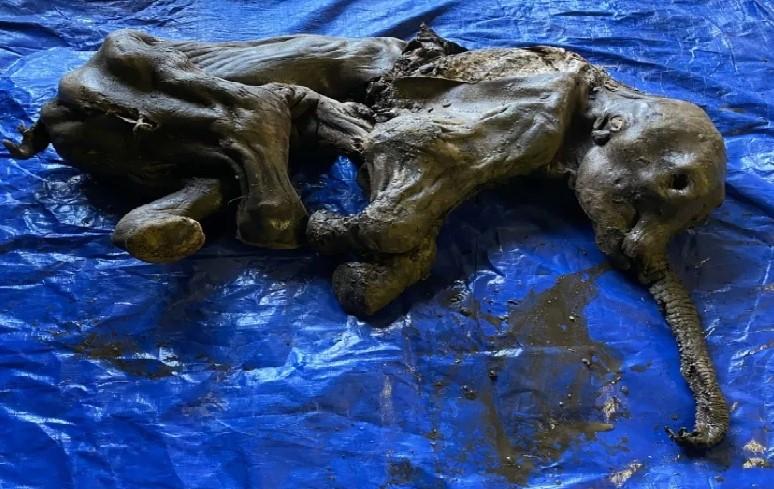
Miners working at gold prospecting sites in the First Nation Indigenous region of Tr'ondek Hwech, Yukon, in Canada, have unearthed the "most complete" woolly mammoth fossil ever found in North America, TRT Haber reports.
"The Yukon has always been an internationally renowned site for Ice Age and Beringya research. We are excited about this important discovery of the woolly mammoth," Yukon Tourism and Culture Minister Ranj Pillai said in a statement. used the phrase.
The mamuta was named "Nun cho ga", meaning "big baby animal"
A joint statement from the Yukon Government and the First Nation Indigenous community of Tr'ondek Hwech shared the information that the woolly mammoth cub found in the traditional Indigenous region of Tr'ondek Hwech was named "Nun cho ga", which means "big baby animal" in the Native Han language.
Paleontologists and geologists from the University of Calgary and Yukon Geological Research Institute, who traveled to the area after the discovery to study the mammoth, believe that the mammoth was frozen during the Ice Age more than 30,000 years ago.
A 42,000-year-old baby discovered in Siberia in 2007 is the same size as a woolly mammoth
"Coming face to face with a real woolly mammoth was one of the longest dreams of my life. That dream came true today. The Nun cho ga is beautiful and one of the most complete ice age animals ever discovered in the world," said Grant Zazula, a University of Calgary paleontologist. he said.
Experts said the woolly mammoth looked like a female and was the same size as a 42,000-year-old baby woolly mammoth named "Lyuba" discovered in Siberia in 2007.
The extinct mammoths, distributed in Eurasia and North America, belong to the family of the phyllidae.







 editor@caliber.az
 +994 55 444-88-98
 Азербайджан, Баку, ул. Низами, 203, Af Business House, 5-й этаж