










Archaeologists discover ancient school linked to Alexander the Great
The school where Alexander the Great was educated by Aristotle more than 2,300 years ago is believed to have been uncovered in the ancient Macedonian city of Mieza, in what is now northern Greece.
The discovery was announced by the Hellenic Ministry of Culture earlier this month, as highlighted in an article by LiveScience.
Archaeologists unearthed a building complex featuring two banquet halls, a sporting arena, a stadium, a roofed porch and a lecture hall with stone desks, according to the ministry. The complex was decorated with mosaic floors and columns, while the banquet halls contained raised platforms where nearly a dozen couches would originally have been placed.
The architecture and decoration of the school are similar to those of the Macedonian royal palace at Aigai, modern-day Vergina in northern Greece, where Philip II and his son Alexander the Great lived.
The ruins date to the fourth century B.C. and yielded coins, ceramics and four styluses used by ancient pupils for writing, providing further clues about the people who may have been educated there.
According to the ancient writer Plutarch, who lived around A.D. 50 to 120, Alexander the Great was educated at a school in Mieza where Aristotle, the great Greek philosopher, taught. This was recorded in an episode in the biography "Life of Alexander" written by the author.
Angeliki Kottaridi, an archaeologist and director emerita of antiquities with the Hellenic Ministry of Culture who is leading excavations at the site, therefore believes the complex is the school where Alexander studied.
According to Plutarch, Philip II had the school built "for the education of his son Alexander and the children of the noble Macedonians," Kottaridi told Live Science in an email.
Schools in the ancient Greek world, known as "gymnasia," taught students a range of subjects while also providing physical training.
The discovery of the school was made somewhat indirectly, Kottaridi said. "A few years ago, I identified the ancient remains next to the ancient theater of Mieza," she said, adding that her team began excavating the complex in 2024.
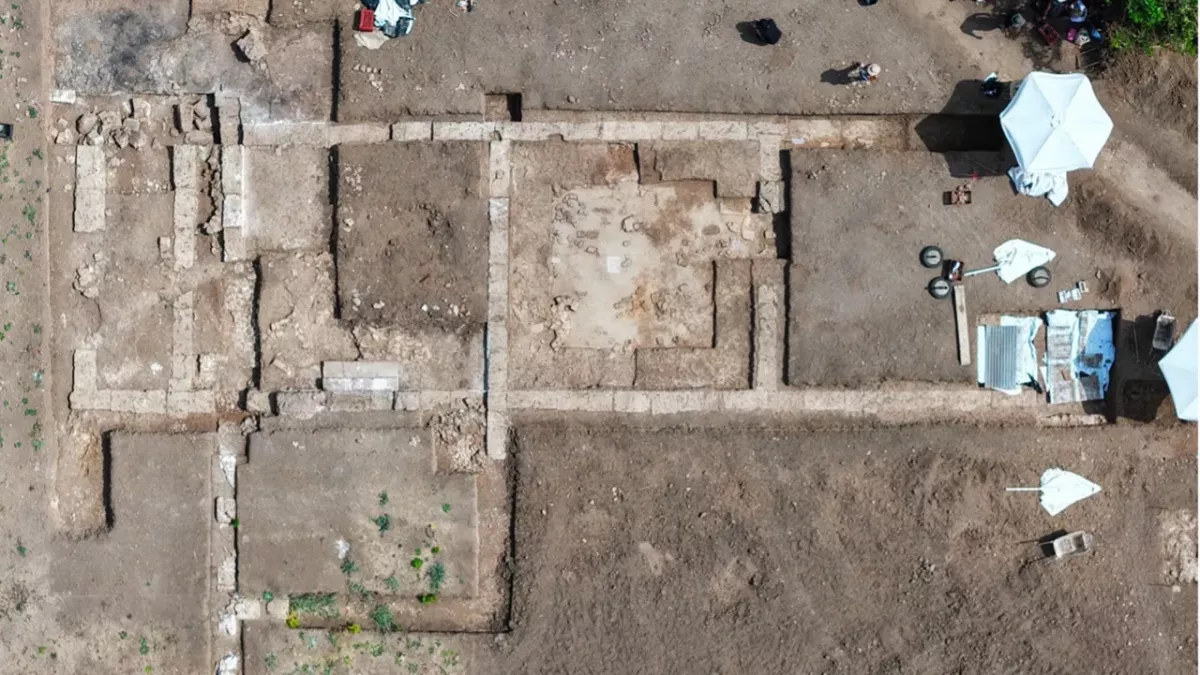
Some excavation work had already been carried out more than 20 years earlier, she explained, when a monument dedicated to the nymphs was discovered nearby.
Jeanne Reames, director of the Ancient Mediterranean Studies program at the University of Nebraska at Omaha, also believes the evidence points to the site being the school where Aristotle taught Alexander and other young Macedonians.
“I agree that all the evidence suggests this is the school Philip provided for Aristotle to tutor the young Alexander and his fellow students," Reames told Live Science in an email.
Reames said she hopes further information will be released and that the discovery will "shed more light on elite education in Macedonia in the second half of the 4th century" B.C.
By Nazrin Sadigova







 editor@caliber.az
 +994 55 444-88-98
 Азербайджан, Баку, ул. Низами, 203, Af Business House, 5-й этаж