










Armenia’s dilemma and America’s long game Caliber.Az weekly review
The Caliber.Az editorial team presents a new edition of the programme “Events” with Murad Abiyev.
Azerbaijan – Armenia
Parliamentary elections in Armenia. According to the preliminary results, the ruling Civil Contract party secured nearly 50 per cent of the vote, which provisionally gives it 61 seats in the National Assembly. This result allows Prime Minister Nikol Pashinyan to retain his position and form a government composed of members of his party.
As a reminder, the Strong Armenia bloc of Russian-Armenian oligarch Samvel Karapetyan won 28 seats, while the Armenia Alliance led by Robert Kocharyan secured 16 seats.
However, this outcome does not provide Pashinyan’s party with a constitutional majority—that is, the two-thirds of parliamentary seats required to initiate constitutional amendments. This means that the issue of holding a referendum on Armenia’s new draft constitution, which is believed to no longer contain territorial claims against Azerbaijan, could remain in limbo for an indefinite period.
That said, there is a possibility that some opposition lawmakers may agree to join forces with the Civil Contract to form the necessary two-thirds majority required to launch a referendum. Such a development could result either from a political deal between part of the opposition and the ruling party or from a deliberate tactical calculation by the opposition itself.

The latter scenario is plausible if opposition forces conclude that a referendum campaign would keep Armenia’s political landscape in a state of permanent tension, thereby undermining public confidence in Pashinyan.
There is, however, another possible scenario in which no movement occurs on this issue at all. In a certain sense, the absence of a constitutional majority works in Pashinyan’s favour, as it gives him grounds to avoid taking responsibility for initiating a referendum. This would allow him to sidestep a potentially damaging confrontation with the most radical segments of Armenian society while continuing to implement domestic reforms and further consolidate his political position.
The problem, however, is that in such a scenario, Pashinyan is unlikely to be able to count on the trust of official Baku. For the full normalisation of relations, Azerbaijan insists on the removal of territorial claims against it from Armenia’s Constitution. This requirement is not contingent on Armenia’s domestic political situation; it is a fundamental condition.
Moreover, peace with Azerbaijan was one of the key pledges in Pashinyan’s election programme. Therefore, if he hopes to meet the expectations of half of active Armenian voters who supported him, he will have little choice but to work towards securing the parliamentary support necessary to initiate a constitutional referendum.
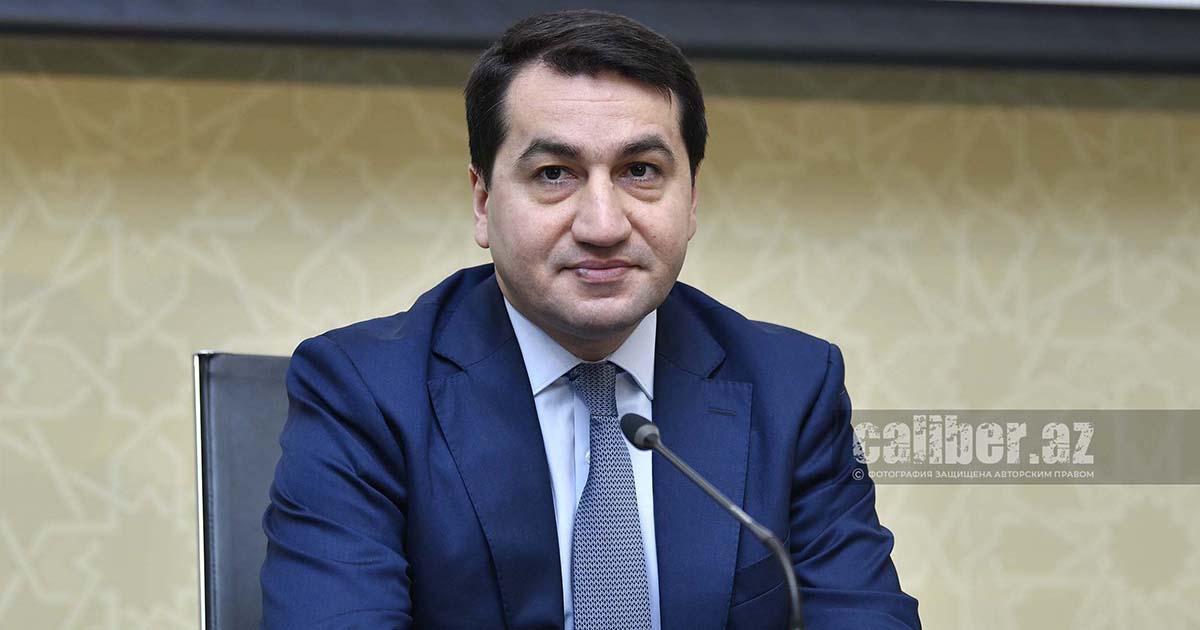
Meanwhile, Assistant to the President of Azerbaijan and Head of the Foreign Policy Affairs Department of the Presidential Administration, Hikmet Hajiyev, participated online in the 2026 Trans-Caspian Forum. In his remarks, he highlighted Azerbaijan’s growing role as a key hub of Eurasian transport and economic connectivity.
Particular attention was devoted to the Middle Corridor, which is evolving from a transit route into a strategic geo-economic system linking Europe, the South Caucasus, and Central Asia. Hajiyev underscored the importance of the Baku–Tbilisi–Kars railway and the emerging Zangezur Corridor in strengthening regional connectivity.
He also noted that, through large-scale investments in transport, maritime, aviation, and digital infrastructure, Azerbaijan is reinforcing its position as a natural bridge between regions and a reliable partner in the development of secure and sustainable transport routes across Eurasia.
US – Iran
After Iran and the United States exchanged military strikes, both sides began issuing statements suggesting that they are relatively close to reaching an agreement. However, the content of the proposed deal differs significantly between the parties—each version, naturally, reflecting its own interests.
Moreover, the discrepancies between these versions are so substantial that they do not allow for any realistic expectation of an imminent peace agreement. Two key issues deserve particular attention: the status of the Strait of Hormuz and Iran’s nuclear programme.
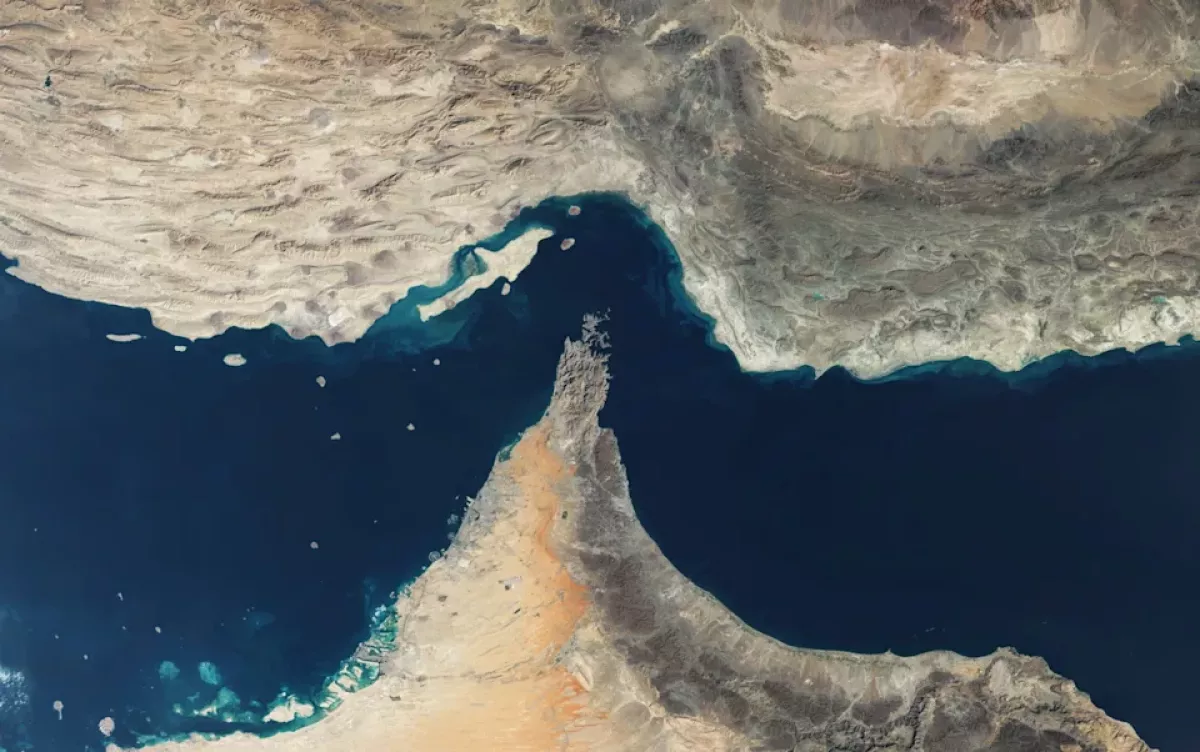
According to the Iranian position, the Strait of Hormuz would operate under Iranian regulations, while the nuclear programme is not addressed at all, with discussions on it proposed to be postponed to a second phase of negotiations. In general, the Iranian side insists not on a final agreement but on a memorandum of intent, after the implementation of which a full peace settlement could be considered. This approach stems from Tehran’s distrust of Washington and Tel Aviv, which Iranian officials describe as unreliable negotiating partners.
According to the American position, Iran’s nuclear programme would be dismantled entirely, and its existing enriched uranium would be transferred to the United States. As for the Strait of Hormuz, it would remain open without conditions.
As can be seen, the positions of the two sides on key issues are irreconcilable, making it difficult to speak of any breakthrough in negotiations. Rather, what we are witnessing is the entrenchment of a diplomatic practice by both sides aimed at continuously reaffirming the firmness of their respective positions.
The dynamics of the conflict indicate something we have noted before: Iran’s threshold of sensitivity in this war has turned out to be higher than that of the United States. In order to try to push through its terms for peace, the Americans would have to escalate the conflict. However, they cannot afford this, as it would trigger new Iranian strikes against their allies in the Persian Gulf, with the prospect of undermining the entire security architecture in the Middle East.
Moreover, a failure of such escalation—for example, a ground operation—would cause domestic political shock within the United States itself, with highly unpredictable consequences for the Republicans.
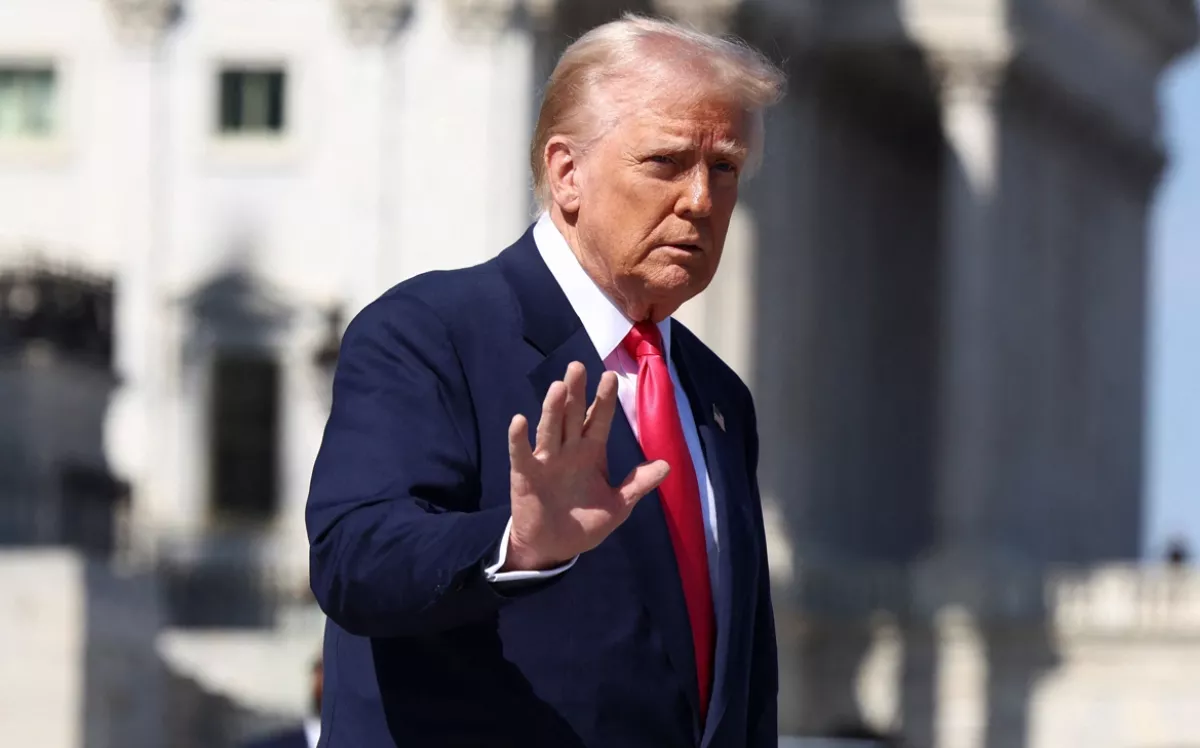
The situation is such that while Trump himself may be inclined toward bold and extreme actions, he is predictably restrained by influential members of his own party. Hence the constant threats directed at Iran, which are not followed by any concrete actions.
Therefore, for Washington, the most realistic, if not ideal, option is to leave the situation as it is—for now: a low-intensity negotiation process accompanied by periodic bursts of limited military activity. The guiding principle in such a scenario is to avoid further damage to an already fragile situation.
Interestingly, this status quo is also beneficial for Iran. It allows Tehran to strengthen its international position as a state successfully resisting a global hegemon.
How long such a situation can last is difficult to say. Clearly, the first major point of pressure for the Americans will be the midterm congressional elections scheduled for November 3. It can be assumed that after this event, the White House will begin considering more conceptual steps toward ending the war with Iran.







 editor@caliber.az
 +994 55 444-88-98
 Азербайджан, Баку, ул. Низами, 203, Af Business House, 5-й этаж