










The new multipolar world is rising: the West’s own allies are building it Serhey Bohdan’s analysis
The United States is scaling back its military presence in the Middle East, and against this backdrop, the date for the withdrawal of U.S. troops from Iraq was agreed on Wednesday. Meanwhile, Western media and experts spent the entire week hyping the idea of a “Sunni NATO,” portraying in stark sectarian terms the military bloc recently established by Türkiye, Pakistan, and Saudi Arabia. This step toward regional cooperation without superpowers or former empires is being presented as a harbinger of interfaith conflict—one that Western ideologues have been trying to impose on the non-Western world for decades. After all, only a regional conflagration could allow yesterday’s global hegemons to restore their former grandeur.

Who is so relentlessly pushing the narrative of a “Sunni alliance against Iran”?
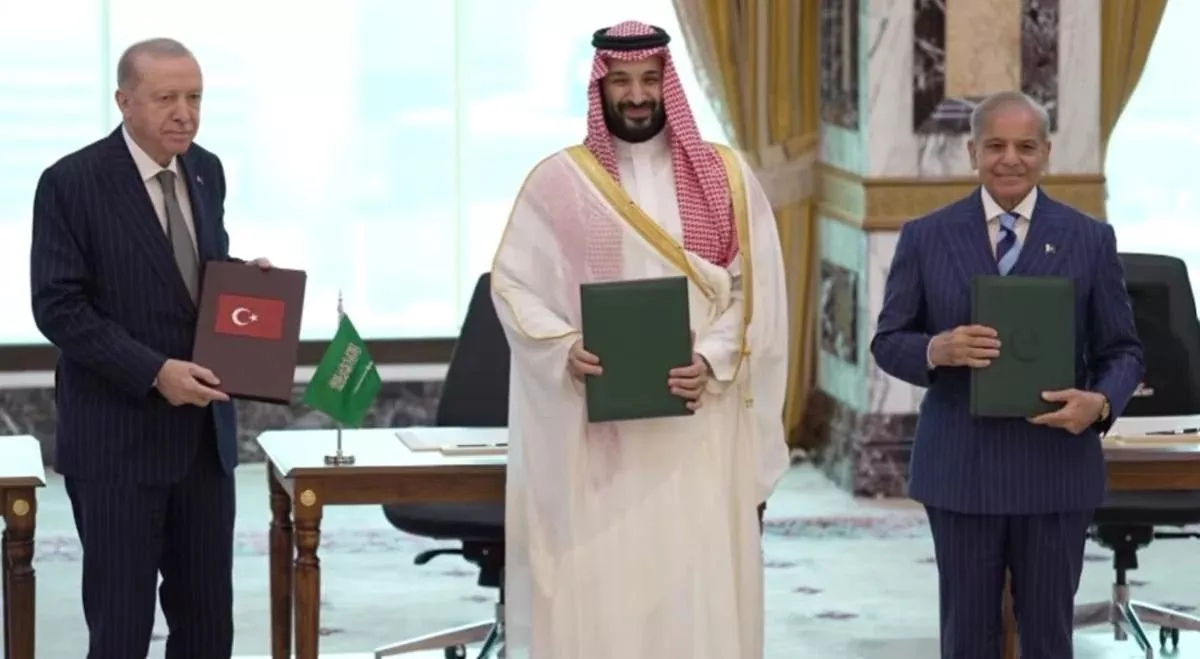
Saudi Arabia, Türkiye, and Pakistan signed a defense cooperation agreement in Mecca on August 7. It includes a collective defense clause stipulating that an armed attack against one member of the alliance would be considered an attack against all three. The news immediately became the subject of manipulation: Western think tanks and media outlets rushed to fit it into their theoretical frameworks, portraying the Middle East as a perpetual “powder keg,” where countries and peoples are supposedly just waiting to turn on one another and can cooperate only through structures built by the West or with Western mediation. As a result, the Mecca agreement has increasingly been described as the creation of a “Sunni NATO.”
Yet none of the agreement’s participants described it that way—not even indirectly or in purely descriptive terms. Nor did experts close to the authorities in the participating countries refer to the Mecca alliance as a “Sunni NATO.” It is a label being attached to the new pact solely by Western think tanks and media outlets affiliated with Western states. Naturally, the narrative is then echoed by pro-Western media, activists, and think tanks in other countries. But the dubious intellectual construct originated in the West.
The alliance’s founders themselves have distanced themselves from attempts to pit neighboring countries against one another. In an interview with the London-based Saudi newspaper Asharq Al-Awsat several days ago, Turkish President Recep Tayyip Erdoğan explicitly said that the creation of the Mecca alliance was not a response to the conflict involving “Shiite Iran.” As he put it, “Our agreement should not be viewed as the creation of a bloc against any country. We have always believed that the region’s problems should be resolved by the countries of the region themselves.”

The Turkish side has spoken of expanding the alliance and keeping it open to all. Ankara is clearly opposed to Western attempts to manipulate events and portray the situation as though Sunni countries, driven by sectarian hostility, had decided to go to war against Iran and its allies. As Turkish Foreign Minister Hakan Fidan said the day after the Mecca agreement was signed, “In line with our president’s vision, we should not limit ourselves to three countries. We should grow and, if necessary, bring all countries under this umbrella. The Mecca agreement is a very important step toward ensuring lasting stability in the region.”
And these are not merely words. The fact that the alliance is not about mobilizing “Sunnis” against “Shiites” became clear from another example. This week, it emerged that the new alliance had discussed the possibility of admitting Egypt. On Wednesday, it became clear that, despite Egypt having the largest military among all Arab countries, it was apparently not included because of objections from Saudi Arabia. The reason is that Egypt is close to the United Arab Emirates, Riyadh’s main rival in the Persian Gulf region. This means that confrontation with “Shiite Iran” is not the alliance’s central logic. Had it been the main—or even one of the main—frameworks for cooperation, there would have been no problem with Egypt and the UAE, both of which have been openly challenging Tehran in recent years.
The very idea of using sectarian confrontation as the basis for a military alliance between three major Muslim countries may seem convincing only when one constructs theoretical models to explain the world while ignoring its complex realities and historical experience. If one relies solely on broad categories such as “Shiites” and “Sunnis” or, for that matter, “Arabs,” “Turks,” “Persians,” and so on, reducing them to supposedly defining characteristics, the result is inevitably a kind of pure Huntington and ultimate Brzezinski: “clash of civilizations,” “Shiite crescents,” and other such Orientalist nonsense.
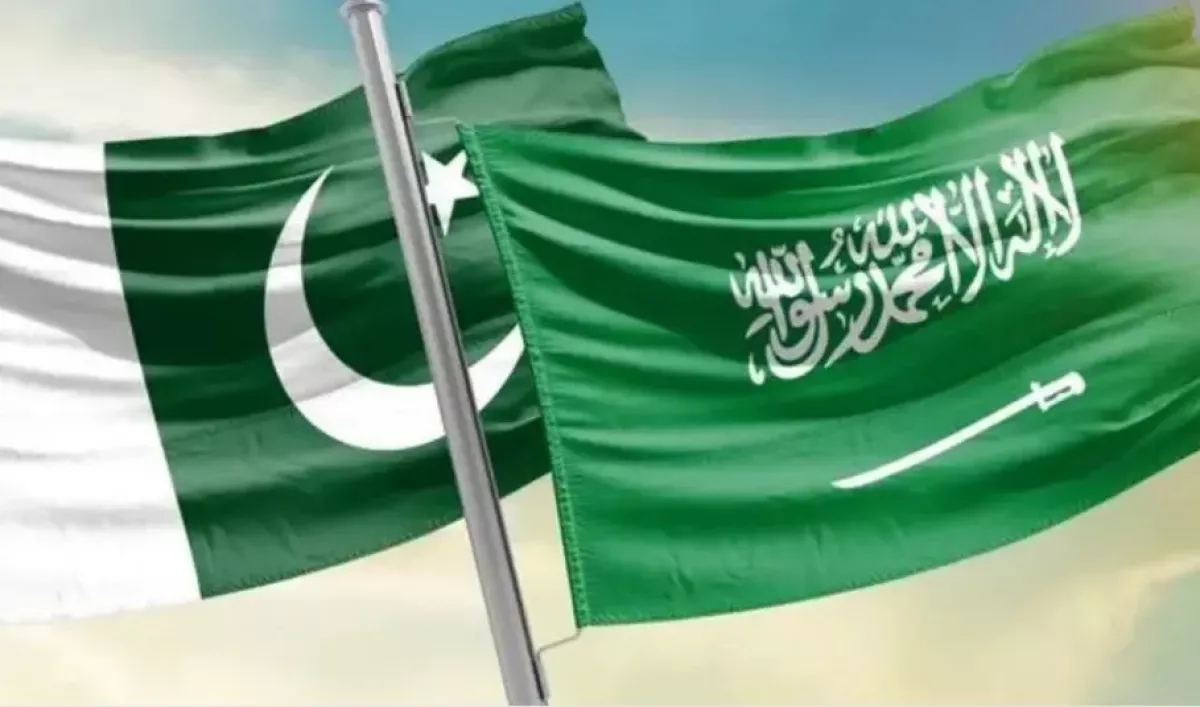
Let us set aside for now the simplistic nature of this approach and note only that in two of the three countries participating in the Mecca alliance, Shiites make up a significant share of the population. The exact number of Shiites in Pakistan and Saudi Arabia—as with comparable statistics on Sunnis in Iran—is a matter of debate, but the numbers are far from insignificant. For these communities, a military alliance built along sectarian lines would clearly be unacceptable.
As for Türkiye, it has no Shiite population in the conventional sense, but it certainly has no interest in confrontation with Iran that could lead to the resurgence of extremist Kurdish groups along the Iranian-Iraqi-Turkish border—groups that have served as cannon fodder for Western efforts to wreak havoc across the Middle East in recent decades.
Iran and Pakistan, meanwhile, have had few serious tensions in recent years, despite competition between their ports of Chabahar and Gwadar, in which Iran’s Chabahar has nonetheless failed to pose a real challenge to Gwadar. On the contrary, Pakistan was among the countries that sought to prevent an American-Iranian war and restrain Washington from escalating the conflict.
Overall, it is hardly surprising that Iran did not fall for the provocative accounts of the “Sunni NATO” peddled by Western experts and media. No Iranian official made any hostile statement toward the Mecca Pact. Upon learning of the decision by the three countries, Iranian Foreign Minister Abbas Araghchi almost welcomed it, writing that if Muslims unite, they can resolve all their problems. In Iran’s official doublespeak, that essentially means: we have no objection. As a result, to find even a vaguely negative Iranian view of the new alliance, Al Jazeera had to call a dissident Iranian activist working in the “holy of holies” of the Euro-liberal establishment—the Clingendael Institute of International Relations in the Netherlands. He did not disappoint.
Filling the vacuum left by the United States
The Mecca alliance is driven not by hostility toward Iran but by a logic of regional cooperation that is gaining ground as the presence of global powers and the blocs they created in the Middle East continues to shrink. This is evident in the behavior of virtually all the former imperial players. Just look at how elegantly the Europeans, while trying not to attract too much attention, have scaled down their operation in the Red Sea, while the Russians abandoned Assad and ended their maneuvering in Libya with Haftar.
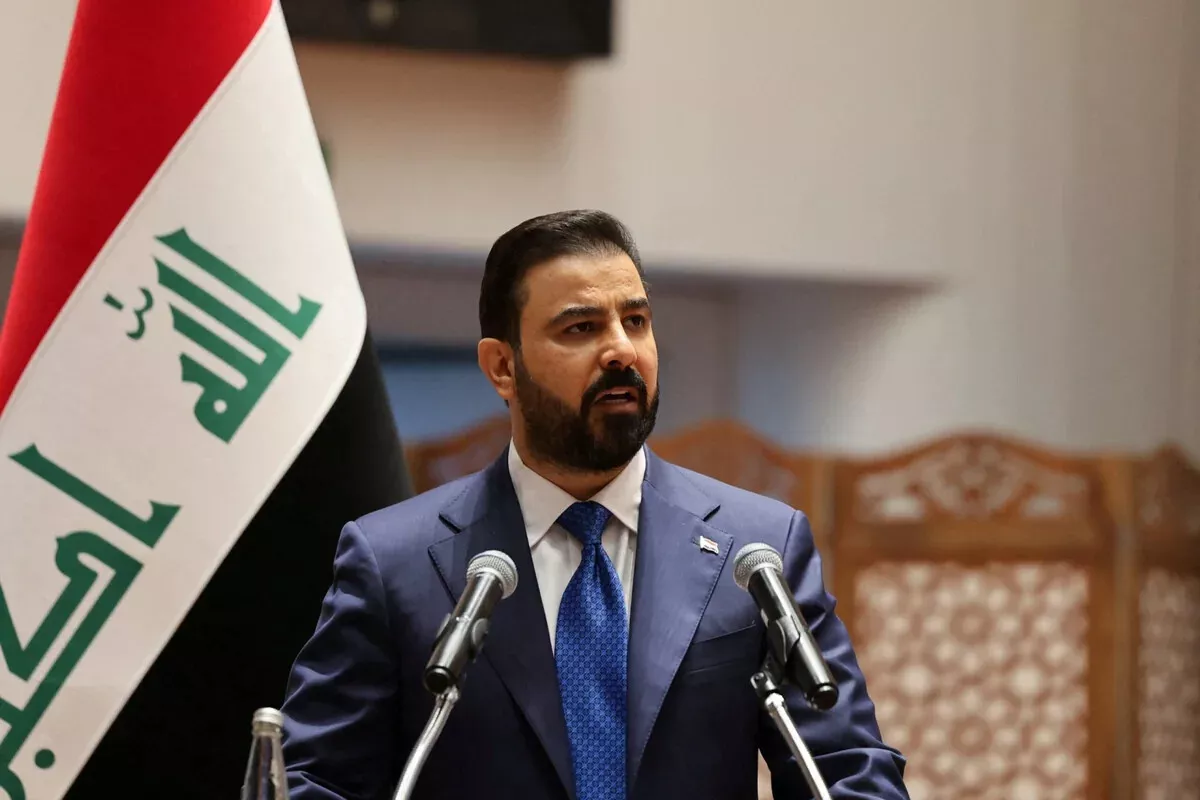
But these are minor developments compared with the redeployment of U.S. forces. On Wednesday, Iraqi Prime Minister Ali al-Zaidi agreed with U.S. Central Command chief Admiral Brad Cooper on a date for the final withdrawal of American troops—September 30. The Pentagon says the withdrawal was agreed back in 2024 and that, in fact, U.S. forces were pulled out from everywhere last year except the Kurdish autonomous region in the north.
But this claim is questionable. The withdrawal of U.S. troops from Iraq has been discussed repeatedly in recent years, so if the issue has now become this concrete, the reason is probably not agreements reached two years ago. Rather, it is likely that at the beginning of the summer, the Pentagon began considering a major redeployment of U.S. forces across the Middle East: moving bases farther away from Iran, dispersing them or, conversely, concentrating them in specific areas where they could be more easily protected against Iranian attacks. All of this was shrouded in secrecy, but details have gradually begun to emerge. In July, President Trump said there was “no longer any need” for U.S. troops in Iraq, and they began withdrawing even from Iraqi Kurdistan. Meanwhile, Foreign Affairs, the leading U.S. journal on international affairs, recently began arguing that it was long past time for the United States to withdraw its forces from the Middle East altogether—presumably with the exception of Israel and Saudi Arabia—and expressed hope that the U.S.-Iran war would give this process the necessary impetus.
Among the latest developments—or rumors—surrounding the withdrawal of U.S. troops, the departure of American forces from Iraqi Kurdistan is particularly noteworthy. For years, extremist groups made up of non-Iraqi Kurdish nationalists operated from there, carrying out attacks against Türkiye and Iran. The authorities in Iraqi Kurdistan pretended either not to know what was going on or claimed they were powerless to do anything about it. The presence of U.S. troops made it possible to play such a brazen game even with major neighboring states.
The withdrawal of U.S. forces from the region is also significant in a broader global context. It suggests that the destructive logic of extraregional alliances—which has destabilized the world and brought it to the brink of global conflict—is beginning to lose its grip.
This problem is not confined to the Middle East. It is also familiar in Eastern Europe and many other regions. Riding high after their triumph in the Cold War, Western powers increasingly began creating alliances or bringing countries from distant regions into existing blocs and organizations. Some of these states had serious problems with their neighbors, but instead of resolving them “as neighbors,” they preferred to seek backing from distant global powers.
The result was a peculiar situation in which the tail began to wag the dog, and even small countries could periodically manipulate superpowers and entire blocs. The history of NATO and the EU in Eastern Europe in recent years is a particularly striking example. Such manipulation generally failed to help the West’s local allies force through the outcomes they wanted in their relations with neighboring countries. What it did achieve, however, was to destroy the foundations for settlement, fuel tensions, and sometimes create the conditions for armed confrontation in the regions concerned.
And now, for the first time, this logic has been broken—the United States has made it clear that it not only opposes such arrangements but intends to step back from them. Washington, however, has few alternatives. The Americans simply cannot afford the luxury of maintaining their previous military presence in the Middle East and Eastern Europe while confronting Iran and drawing the Europeans into a war with Russia. This is an extremely costly undertaking even for a global hegemon, both financially and in terms of weapons and military hardware. It is no coincidence that in recent months, equipment and ammunition have had to be shifted from the European theater to the Middle East.
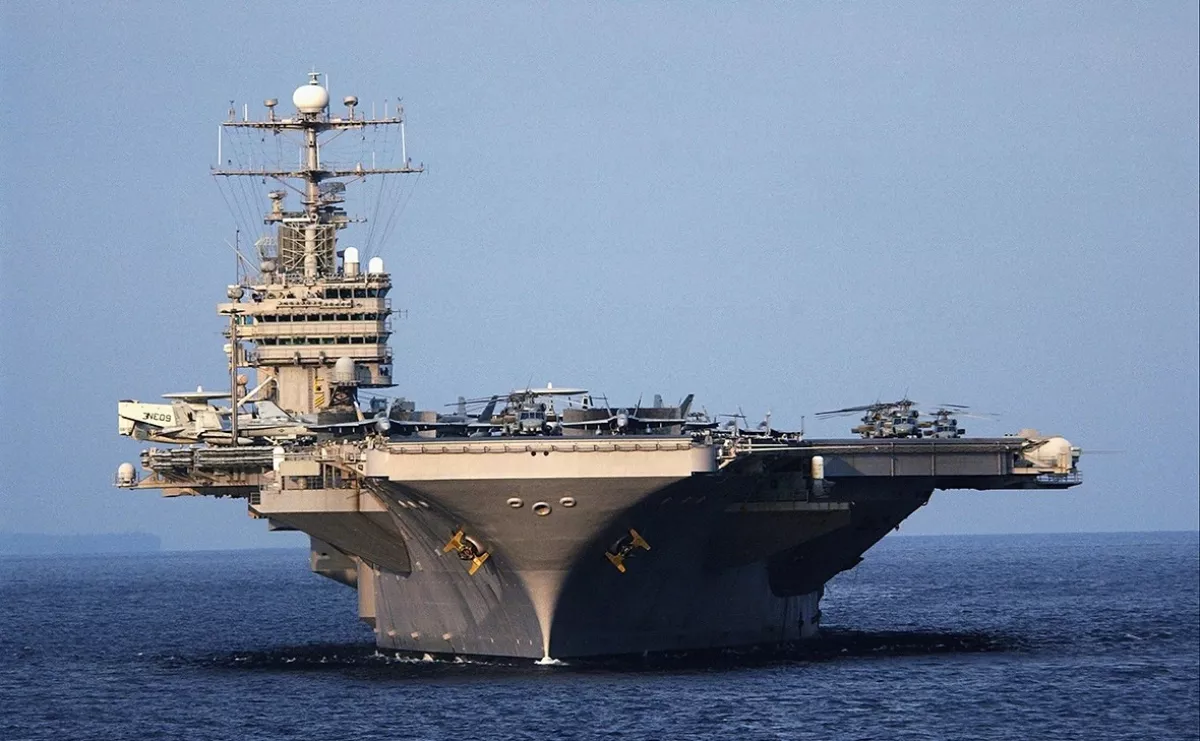
But even that has failed to spare the United States from overstretch. At the end of the week, problems among the crew of the U.S. aircraft carrier Abraham Lincoln came to light amid its prolonged and intense involvement in combat operations. The notorious concept of “imperial overstretch,” warned of by historian Paul Kennedy, manifests itself at the micro level in distinctly unromantic forms: widespread mental health problems and technical breakdowns.
In short, the main context behind the conclusion of the Mecca Pact is the declining role of the United States in the region. More dispassionate Western experts acknowledge this as well. The Council on Foreign Relations, an influential New York think tank, published a commentary on Friday stating: “A defense pact between Pakistan, Saudi Arabia, and Turkey shows how far U.S. influence in the Middle East has eroded—and how regional powers are now shaping their own security order.” This is precisely how a multipolar international system is built: through regional powers deciding to manage their own affairs, rather than through some grand global arrangements that Russian politicians have talked about.
The Mecca Pact did not emerge out of thin air
There is no shortage of skepticism about the Mecca Pact. On Friday, respected Turkish diplomat Hasan Göğüş wrote in Karar that, for now, everything remains uncertain and that he has doubts about the alliance’s readiness for joint action, pointing out that the countries did not come to Saudi Arabia’s aid when it was shelled by the Houthis a few days ago.
But it is difficult to agree with this observation. Any alliance is about providing assistance when it is reasonably necessary—when a member state requires solidarity and support. At the same time, the circumstances requiring assistance must be acceptable to all members of the alliance. An effective alliance does not operate like a pack of dogs mindlessly rushing at an adversary at the first whistle.
Yes, the Mecca Pact itself has not yet been put into action, but Pakistan already stated on Wednesday that it was ready to respond to attacks by the Houthi rebels as part of the multinational coalition established by Saudi Arabia on July 30 to ensure security in the Red Sea—a coalition that, incidentally, also includes Türkiye.
More broadly, the Mecca Pact in its current configuration did not emerge out of nowhere. In addition to the aforementioned naval alliance, it builds on years of cooperation among the three countries.
There is also another extremely important nuance that is creating a new reality in the Middle East and its wider neighborhood. In the case of the Mecca Pact, the initiative comes from the regional countries themselves for the first time. Western powers have no role in it whatsoever. That is what sets it apart from previous Middle Eastern agreements of this kind.

All these factors already make the Mecca arrangements worthy of serious attention. Interestingly, these nuances—quite obvious from the perspective of Middle Eastern history—are almost entirely absent from the global media narrative. Instead, we are too often served yet another caricature of “Sunnis” and “Shiites.” These caricatures barely conceal the broader picture of the decline of Western hegemony.
Multipolarity is not simply emerging spontaneously to replace it. It is being built, often not by some radical regimes or fierce opponents of Washington, but by countries that are neutral toward or even friendly with the United States. And they are not doing so to overthrow the global hegemon, but out of necessity. The Mecca Pact itself was concluded by states, none of which is hostile to the United States, yet in strategic terms it effectively substitutes for the United States and operates with considerable autonomy from the collective West.
It is just one of many examples of this trend. For instance, it is not only Russia but also the European Union that is deploying satellite constellations to create an alternative to Starlink. Similar trends are unfolding in civilian sectors alongside developments in the military sphere. A few days ago, it became known that China is not the only country developing a payment system independent of the United States around UnionPay. The EU is also creating its own payment systems and wants to introduce a digital euro in order to reduce its dependence on U.S. Visa and Mastercard and diminish the dollar’s dominance. Brazil is doing much the same—and it can hardly be classified as a “radical regime.”
And this year, Mark Carney, a representative of the Western liberal establishment and the prime minister of Canada, spoke in Davos in terms we would normally expect to hear from Putin, Khamenei, or Hugo Chávez: “Great powers have begun using economic integration as weapons, tariffs as leverage, financial infrastructure as coercion, and supply chains as vulnerabilities to be exploited. You cannot live within the lie of mutual benefit through integration when integration becomes the source of your subordination.”
What is happening in the Middle East and Eastern Europe also allows us to anticipate developments in the South Caucasus. The influence of extraregional powers and empires over the region is likely to decline, while the importance of regional cooperation—between the countries of the region and their neighbors—is likely to grow. Those who seek to substitute “European integration” for the development of good-neighborly relations are clearly choosing the wrong side of history.







 editor@caliber.az
 +994 55 444-88-98
 Азербайджан, Баку, ул. Низами, 203, Af Business House, 5-й этаж