










A limit to choice: Moscow pushes Yerevan to clarify its CSTO status Article by Matanat Nasibova
The issue of Armenia’s membership in the Collective Security Treaty Organization (CSTO) periodically comes to the fore in Russian-Armenian relations, which can hardly be described as rosy to begin with. As is known, Yerevan has effectively frozen its participation in the organization, but has so far taken no practical steps toward officially withdrawing from it. Moscow, for its part, is increasingly pressing the Armenian authorities to clarify their status and is reminding them of their financial obligations.
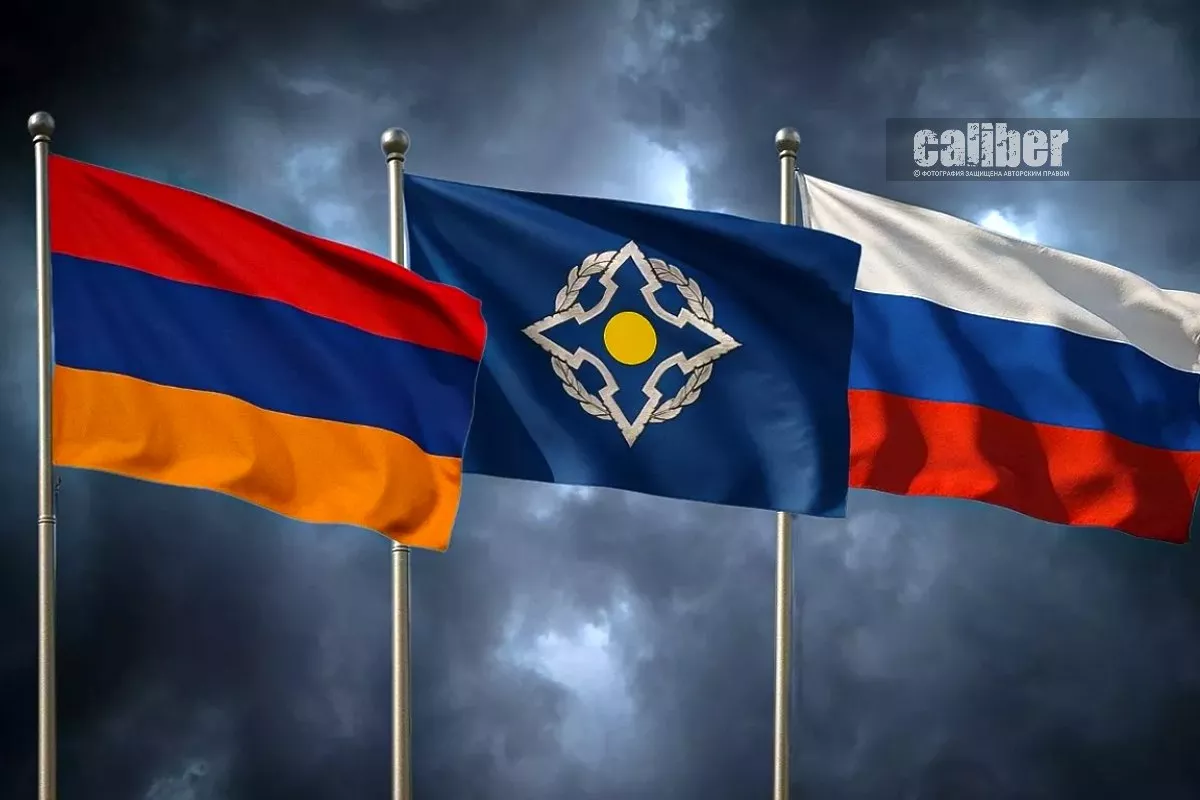
To understand the current situation, it is worth looking at the recent past. On January 1, 2024, Armenia stopped making membership payments to the CSTO budget. In May of the same year, Yerevan officially confirmed that it was ending its financial participation in the organization’s activities. Prime Minister Nikol Pashinyan and Foreign Minister Ararat Mirzoyan repeatedly explained that the republic saw no point in contributing to an organization in whose work it was effectively no longer participating.
As a result, Yerevan’s arrears in membership fees have accumulated over more than two years and, according to economists’ estimates, amount to around 10% of the organization’s total budget — a fairly substantial sum. At the same time, the Armenian authorities show no intention of changing their position. This summer, in an interview with the Armenian Service of Radio Free Europe/Radio Liberty, Nikol Pashinyan said that Yerevan did not intend to resume payments, even if this could lead to Armenia’s expulsion from the organization: “I know that there is a mechanism for expelling a country from the CSTO. It works, and if the member states decide to expel Armenia, we will have to take that decision into account; we have no other choice.”
Asked directly whether Armenia might resume its payments, the prime minister replied: “We are not going to change anything.” And when asked whether he was concerned about the possibility of Armenia being expelled from the organization, he said: “It does not concern me.”
Moscow, for its part, makes it clear that it views the situation quite differently. Following a series of fairly harsh statements by representatives of the Armenian establishment, Russian Foreign Minister Sergey Lavrov said that the Collective Security Treaty Organization member states could consider invoking the provisions of the organization’s charter. This position was recently reaffirmed by Russian Deputy Foreign Minister Mikhail Galuzin, who told Russian media that the issue of stripping Armenia of its voting rights within the organization could be considered at the CSTO summit scheduled to take place in Moscow on November 11.
“Yerevan’s refusal to participate in the organization’s work and its failure to sign annual decisions on its budget merely means that it is not exercising the right it possesses; it does not terminate Armenia’s obligations to make its national contribution on time,” he said.
According to Galuzin, any decisions on restrictive measures against a member state fall within the remit of the Collective Security Council and are made on the basis of the organization’s charter. Thus, the Russian side is consistently pursuing the same line: the formal suspension of Armenia’s participation in the CSTO’s activities does not exempt it from the obligations arising from its membership in the organization. However, it is clear that the political significance of Moscow’s pressure goes far beyond the financial issue.
At first glance, Russia is seeking to institutionalize a situation that has already taken shape de facto: Armenia remains a member of the CSTO but is politically distancing itself from the organization. Moscow is trying to translate this ambiguity into the legal sphere while simultaneously demonstrating to Yerevan the consequences of its behavior. At the same time, however, the Kremlin is hardly interested in pushing Armenia out of the CSTO overnight, as such a move would mean losing yet another institutional instrument of its presence in the South Caucasus. Therefore, the most likely scenario is that Moscow is trying to force Yerevan to make a choice while preserving room for maneuver.
That is why the likelihood of Armenia being stripped of its voting rights at the November summit remains uncertain. The Russian side will most likely once again limit itself to tough warnings and reminders of the possible consequences. In that case, Galuzin’s statement should be viewed not as Moscow’s final verdict, but as yet another signal to Yerevan that the room for ambiguity is almost exhausted.
At the same time, the immediate practical damage to Armenia from losing its voting rights could prove limited. If Russia formally restricts the republic’s participation, this would lead to a further reduction in Armenia’s involvement in the organization’s activities and lower Russian-Armenian relations to a new level — a development that would, with a high degree of probability, further strengthen the Armenian authorities’ drive toward European integration. The latter is in no way in Moscow’s interests, as Russia is clearly not prepared to let Armenia go its own way.
Thus, the CSTO summit in November is unlikely to produce a final decision on Armenia. The “Armenian dilemma” will almost certainly return to the CSTO agenda more than once, while Russian-Armenian relations will continue running in circles.







 editor@caliber.az
 +994 55 444-88-98
 Азербайджан, Баку, ул. Низами, 203, Af Business House, 5-й этаж