










From assembly to production: Azerbaijan’s auto industry gears up Analysis by Khazar Akhundov
The global automotive industry has been going through a difficult period lately: production costs are rising and vehicle output is declining in Europe, the United States, and Japan, while China is gaining the upper hand in the competition, emerging as the world’s leading exporter of passenger cars in the first half of this year. Against this backdrop, car assembly is developing successfully in countries that have not traditionally had a strong automotive industry. Vehicle production is expanding in Central Asia, as well as in Azerbaijan, where output of passenger cars and trailers increased by nearly 90% in January–July this year.
The crisis in car manufacturing in Europe, the United States, Japan, and South Korea that emerged during the COVID-19 pandemic continues to undermine the once-solid positions of the world’s automotive giants. Six years ago, the industry plunged into a deep downturn as supply-chain disruptions led to shortages of semiconductor chips and electrical equipment, while the prices of steel, polymer components, and other parts also rose sharply. Despite governments introducing preferential financing measures and providing support to the automotive sector, recession and inflation in 2022–2024—particularly in European countries—along with the energy crisis, high labor costs, and heavy taxation drove up production expenses, which in turn translated into rapidly rising prices for new cars.
By the beginning of this year, US automakers ranked second globally, with an 18.4% share of the market. India was third, accounting for 5.1% of total sales, followed by Japan in fourth place with a 4.9% share, while Germany rounded out the top five with 3.2%. Meanwhile, leading German automaker Volkswagen, following last year’s dismissal of several thousand employees, announced in July 2026 that it was prepared to cut another 100,000 jobs worldwide, including plans to completely shut down four plants in Germany. Other once-prestigious automakers are also losing ground: the United Kingdom has fallen to seventh place, Italy to ninth, while South Korea’s technologically advanced automakers have slipped all the way to 10th place.
China has emerged as the main beneficiary of these challenging global trends. It has built the world’s largest steelmaking and polymer-production capacities, developed an independent semiconductor industry, and possesses vast reserves of rare-earth metals essential for microelectronics, as well as lithium needed for battery production. Over the past five years, China has established an unchallenged lead in automotive manufacturing, overtaking the world’s leading automakers. In 2025, a total of 88.716 million passenger and commercial vehicles were produced worldwide, with China accounting for around 34.53 million units, up 10.4% year on year.
China also dominates the export market. In the first half of 2026, it exported 3.381 million vehicles, 48.1% more than a year earlier, including 1.135 million new-energy vehicles (electric and hybrid), whose exports surged by 59.4%. Analysts predict that if current growth rates are sustained, Chinese vehicle exports could exceed 10 million units within the next one to two years.
Notably, against the backdrop of tariff wars and the deglobalization of the global market, recent years have seen a trend toward the active development of automotive manufacturing in local clusters across developing countries that were not previously market leaders. Brazil and Canada are cases in point: they rose to sixth and seventh place worldwide in terms of vehicle production, with output growing by 2.7% and 2.8%, respectively, last year.
The automotive markets of Vietnam and Thailand are also showing solid growth, while passenger-car assembly is gaining momentum in Central Asia. In Uzbekistan, for example, 235,700 passenger cars were produced in the first half of 2026, 13% more than in the same period last year. Kazakhstan’s automotive industry is also maintaining strong momentum, with more than 96,000 vehicles of all types produced during the reporting period, up 34% year on year.
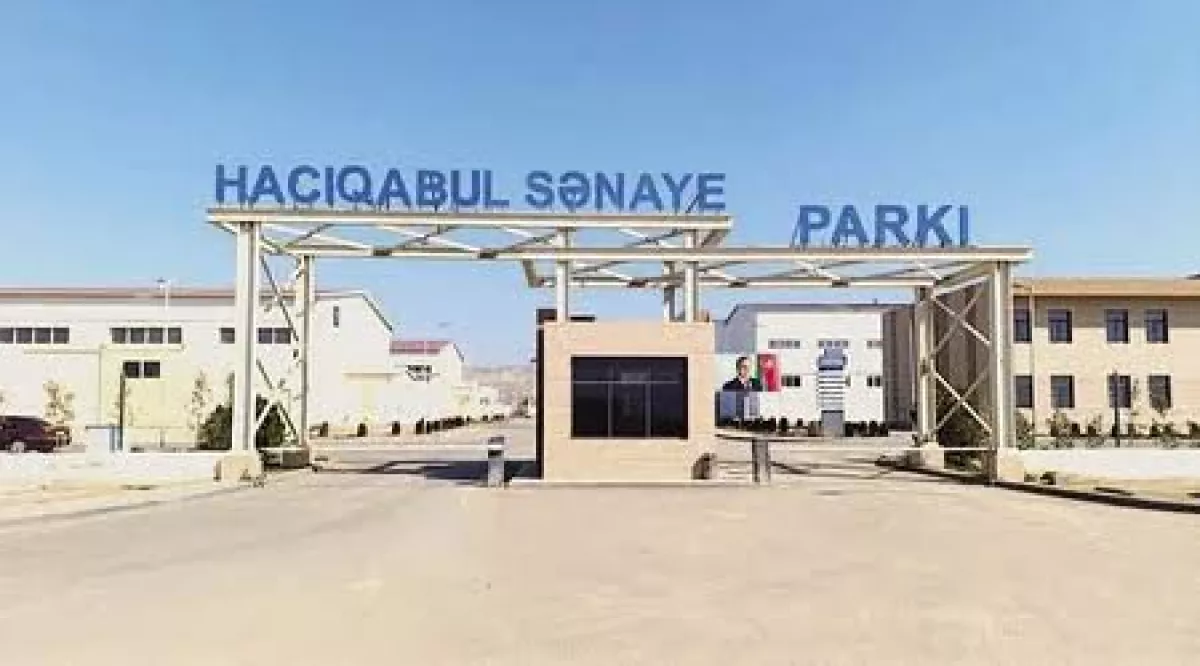
In recent years, Azerbaijan has also been developing its own automotive assembly cluster, with three plants currently operating in the country. Since 2010, the NAZ-Lifan plant in the Nakhchivan Autonomous Republic has been assembling budget vehicles using inexpensive Chinese components. In 2018, Azermash OJSC launched production of the Khazar line of passenger cars at the Neftchala Industrial District, using components supplied by Iranian automaker Iran Khodro. The most promising project, however, has been the Azerbaijani-Uzbek joint venture in the Hajigabul Industrial Park, where a range of Chevrolet models has been assembled since 2022.
Azerbaijan’s domestic automotive production peaked in 2024, when 5,998 passenger cars were produced, 55% more than in 2023. After output fell by one-third in 2025, the country’s automotive plants are once again picking up the pace this year. According to data released by the State Statistics Committee in recent days, the strongest growth in the manufacturing sector was recorded in the production of passenger cars, trailers, and semi-trailers, with output surging by a substantial 88.4% in January–July 2026.
It is quite possible that statistical indicators in this sector will show even stronger growth next year. As Uzbek Deputy Minister of Investment, Industry and Trade Khurram Teshabayev recently told local media, “Uzbekistan and Azerbaijan are embarking on the construction of a full-cycle automotive plant in Hajigabul. The $84.3 million project is being implemented by Azermash CP and Uzavtosanoat JSC. The main preparatory work has already been completed, suppliers have been identified, and orders have been placed for technological equipment and production lines.”
According to him, the new plant is scheduled to become operational in mid-2027. Once it is commissioned, Azerbaijan will move beyond large-scale assembly of vehicles from imported components to a full-fledged industrial production cycle, with localized manufacturing of body components and other automotive parts. In particular, the plant is expected to produce the popular Chevrolet Cobalt model.

Deepening the localization of automotive component production in Azerbaijan is critically important, as it can help reduce vehicle production costs and, consequently, boost competitiveness through more flexible pricing. To this end, under amendments to the Tax Code, passenger-car production and the retail sale of locally assembled vehicles in Azerbaijan have been exempt from VAT for 10 years since May 1, 2023, while imports of components and spare parts required for vehicle assembly are exempt from VAT until January 1, 2031.
It is worth noting that demand for locally produced vehicles is to a considerable extent driven by government procurement orders from ministries and other state institutions. Companies and individual entrepreneurs providing taxi services have also shown considerable interest. In other market segments, however, domestic automakers have faced stiff competition in recent years from new Chinese vehicles and growing imports, particularly in the second-hand segment. Whether Azerbaijan’s assembly plants can overcome these challenges by deepening the localization of component production will become clear in the not-too-distant future.







 editor@caliber.az
 +994 55 444-88-98
 Азербайджан, Баку, ул. Низами, 203, Af Business House, 5-й этаж