










Aliyev’s interview in Nakhchivan and Zelenskyy’s diplomatic move Caliber.Az weekly review
The Caliber.Az editorial team presents a new edition of the “Events” programme, hosted by Murad Abiyev, in an analytical review of the key developments of the week.
Azerbaijan
During his visit to Nakhchivan, Azerbaijani President Ilham Aliyev gave an interview to Azerbaijan Television (AzTV). As is often the case, the conversation touched on broad themes, effectively outlining Baku’s vision of what the future of the South Caucasus should look like.
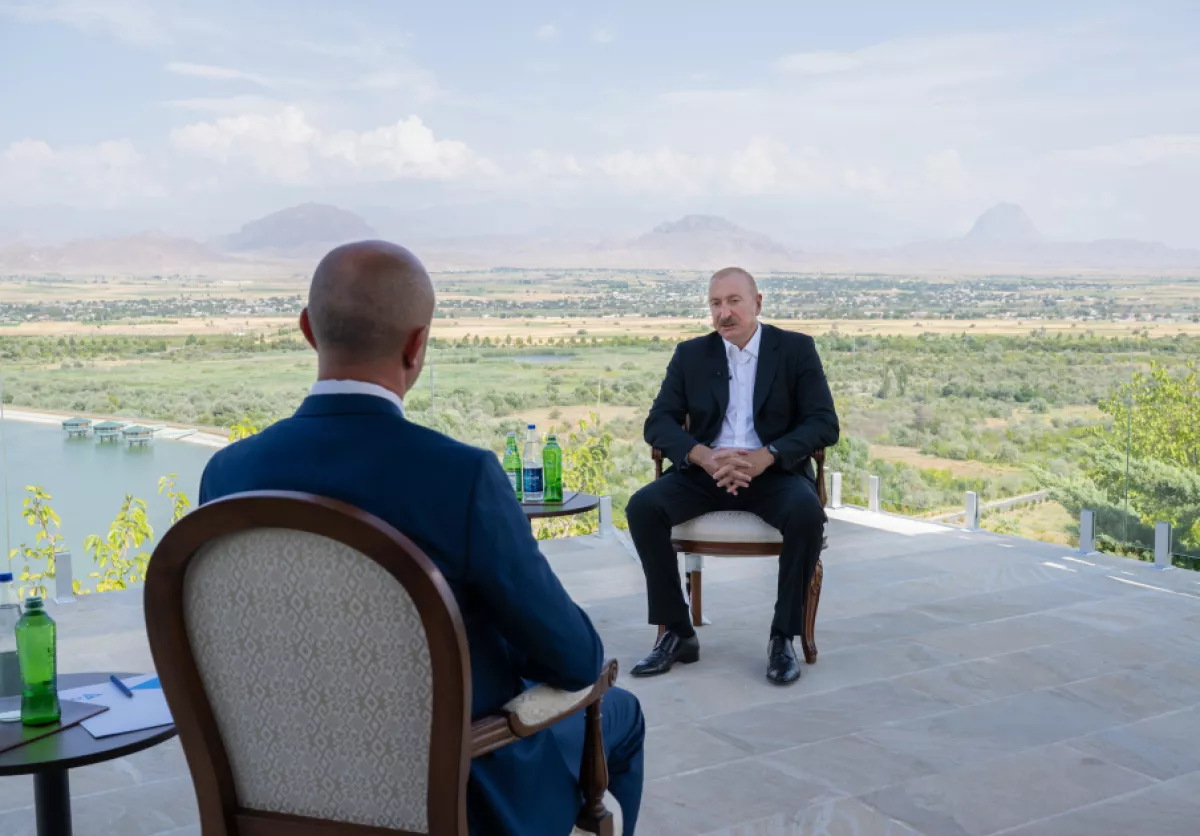
Let’s start with security. Nakhchivan occupies a unique position: it is part of Azerbaijan but separated from the country’s main territory, which is why particular attention has traditionally been paid to its defense capabilities. According to Aliyev, the establishment of the Separate Combined-Arms Army, the development of commando units, and the strengthening of military infrastructure should ensure the region’s absolute security. There is also a broader political message here: Baku is making it clear that the Azerbaijani Army continues to play a decisive role in the regional security system.
But for Nakhchivan, security is not only about the military dimension. The second, equally important element is transforming the republic into a major transport and energy hub. Referring to the launch of the TRIPP project, Aliyev described Nakhchivan as an indispensable crossroads for international routes — not only along the East-West axis, but also along the North-South route.
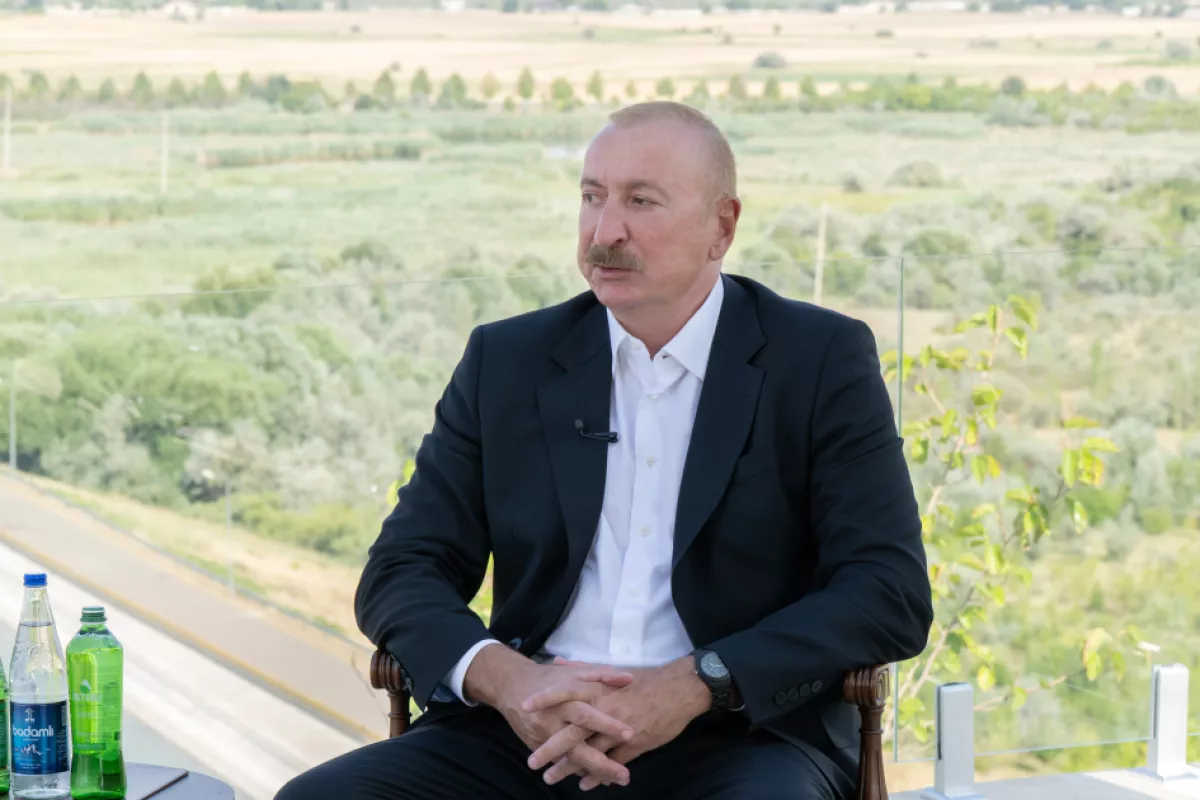
Energy also featured prominently in the president’s remarks. Nakhchivan has been fully supplied with natural gas for around 15 years, so Baku’s next objective is not so much to provide Nakhchivan with energy as to transform it into an energy export hub. In addition, a project has been prepared to build power transmission lines from mainland Azerbaijan through Armenian territory to Nakhchivan and onward to Türkiye and even Europe. This is also interesting from a regional perspective: in the future, such a system could become a source of electricity not only for Türkiye and Nakhchivan, but for Armenia itself.
In conclusion, the president stressed that, in Azerbaijan’s vision, the Zangezur route should become a multilayered infrastructure network comprising railways and highways, power transmission lines, fiber-optic cables, and, eventually, oil and gas infrastructure.
Looking at the president’s remarks as a whole, it is not difficult to identify the main political message behind the broader vision outlined by Aliyev. Baku is proposing a model in which Azerbaijan and Armenia, once adversaries in conflict, become interconnected through shared infrastructure — railways, energy networks, communications systems, and trade routes.
In other words, Aliyev is essentially describing the post-conflict South Caucasus as a system of interconnectedness. The logic is fairly straightforward: the more economic interests bind the countries of the region together, the higher the cost of a new conflict. This is why, in this vision, Nakhchivan is no longer a peripheral exclave but one of the key elements of a new regional architecture.
Ukraine — Russia
Over the past week, Ukraine reported a major success on the southern front, claiming that it had pushed Russian units out of their positions in Dnipropetrovsk Region. Kyiv is thus seeking to disrupt the prospect of further Russian advances toward Zaporizhzhia, seize the initiative on the southern front, and, perhaps most importantly, strengthen its position ahead of a possible new round of peace talks.
It was no coincidence, therefore, that shortly afterward, Volodymyr Zelenskyy announced that Kyiv had submitted new, concrete proposals on the peace plan to Washington. In an interview with CNN, the Ukrainian president declined to disclose the details, citing the confidentiality of the diplomatic process. What is known, however, is that the territorial issue remains at the heart of the matter. Zelenskyy publicly ruled out the possibility of withdrawing Ukrainian forces from the parts of Donetsk and Luhansk regions currently under Kyiv’s control. In other words, Ukraine is not prepared to accept further territorial concessions in exchange for a cessation of hostilities. To defend its position, Kyiv is calling on Washington to put greater pressure on Moscow.
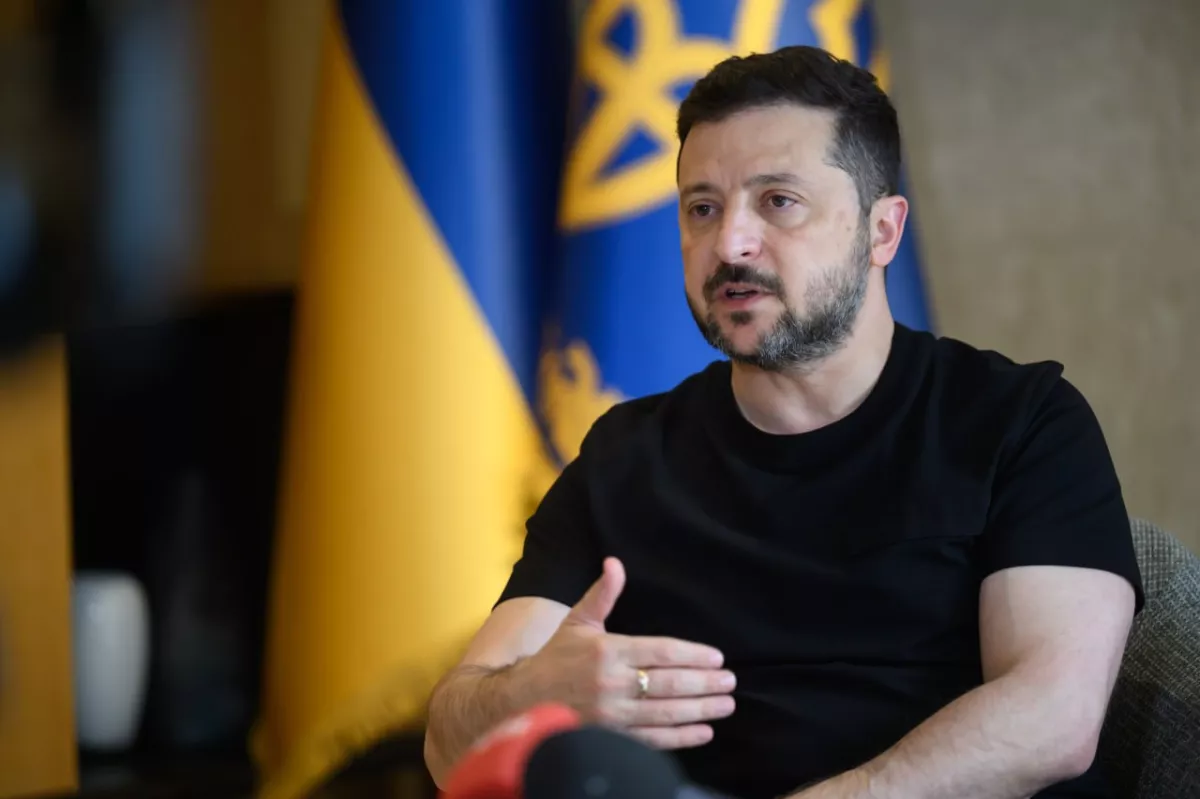
Another major pain point for Ukraine is strengthening its air defense, particularly securing supplies of missiles for Patriot systems. The logic is clear: the better Ukraine is able to defend its territory, the stronger its negotiating position.
But this is where a serious contradiction emerges. Ukraine needs to bolster its air defenses right now, yet Washington has so far shown no readiness to provide Patriot missiles in the quantities required, citing shortages. And Russia is actively exploiting this shortage. Moscow has changed its tactics for air attacks. Aware that Kyiv has almost run out of PAC-3 interceptor missiles — the only missiles capable of intercepting ballistic targets — Russia has more than doubled its monthly launches of ballistic missiles. And this figure is likely not the limit.
Clearly, over the coming months, Moscow intends to inflict critical damage on Ukraine’s infrastructure, above all its military-industrial complex. Once that is achieved, Russia may be in a position to dictate the terms of negotiations.
It is against this backdrop that U.S. special envoys Steve Witkoff and Jared Kushner are expected to make their planned visit to Kyiv, followed by a trip to Moscow.
Thus, as has been the case before, the battlefield is precisely where the struggle is taking place over the position from which these negotiations will begin. Both sides are preparing for talks while simultaneously seeking to improve their positions ahead of them. In essence, this is not a choice between war and diplomacy, but the parallel pursuit of both. And if this logic persists, we are indeed in for a very hot winter.







 editor@caliber.az
 +994 55 444-88-98
 Азербайджан, Баку, ул. Низами, 203, Af Business House, 5-й этаж