










The empty classrooms of the future How Ukraine is losing a new generation
Another summer of one of Europe’s most brutal wars is drawing to a close, and in a few weeks’ time, Ukrainian towns and villages will once again hear the school bell ring. Parents will see their children off to school, discuss their timetables and ponder how to get through yet another academic year amid air raid alerts and uncertainty.
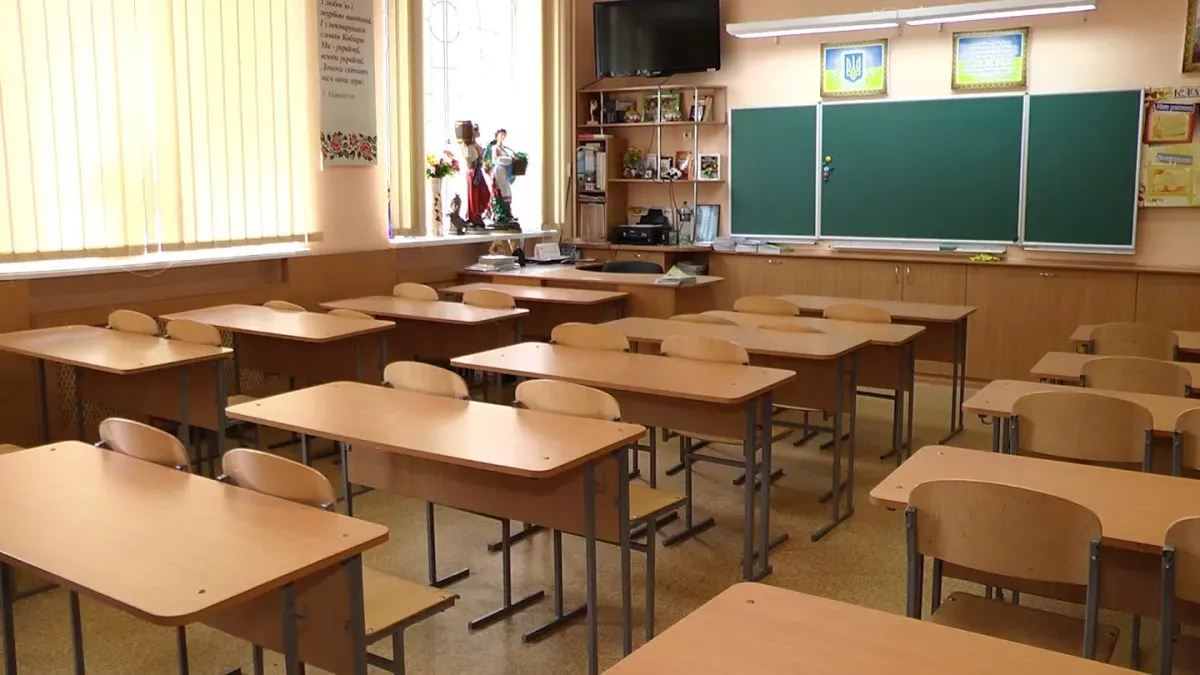
Against this backdrop, an even more serious problem is coming into sharper focus — one whose consequences could prove far more long-lasting for Ukraine than many of its current economic difficulties: Ukrainian schools are beginning to empty.
This is not simply because millions of Ukrainians have left the country. The underlying problem is much broader and deeper: Ukraine has entered a period of demographic decline that began before the Russian-Ukrainian war and is now accelerating rapidly.
In particular, Olena Parfonovaб head of the public organisation “Parents SOS,” points to a telling statistic: the number of first-graders is expected to fall by 30–33% in the 2029/30 school year compared with 2025/26.
And this is only one of the first visible effects of the demographic crisis. Demographic trends do not respond to political statements, government programmes or officials’ wishes. A child who is not born today cannot start first grade six or seven years later, and no government decree can create a place at a school desk for a child who does not exist.
Ukraine is already facing the consequences of this demographic decline. According to the Ministry of Justice, the number of registered births in the first half of 2026 fell by 16% from the same period last year and was nearly half the pre-war level.
The impact will be felt across the education system for years to come. Children born in 2026 are expected to start school in around 2033, meaning Ukrainian schools are likely to see a sharp drop in the number of first-graders within the next seven years.
The situation across the country is particularly concerning. Birth rates have fallen by around half in the Donetsk region, by three times in the Zaporizhzhia region, and by about 20% in Vinnytsia, Ternopil and Lviv regions.
At the same time, the average class size is currently around 15.7 students. However, this national average masks major regional differences. In the Ternopil region, for example, there are just 12.9 students per class on average, compared with 25.7 in Kyiv.
The disparity is largely driven by population concentration and internal migration. Kyiv and its surrounding metropolitan area have absorbed large numbers of people, while many other regions continue to lose population.
Even in Kyiv, however, the picture is far from uniform. Schools in densely populated residential districts can struggle to accommodate all students, while other schools are already facing difficulties forming first-grade classes.
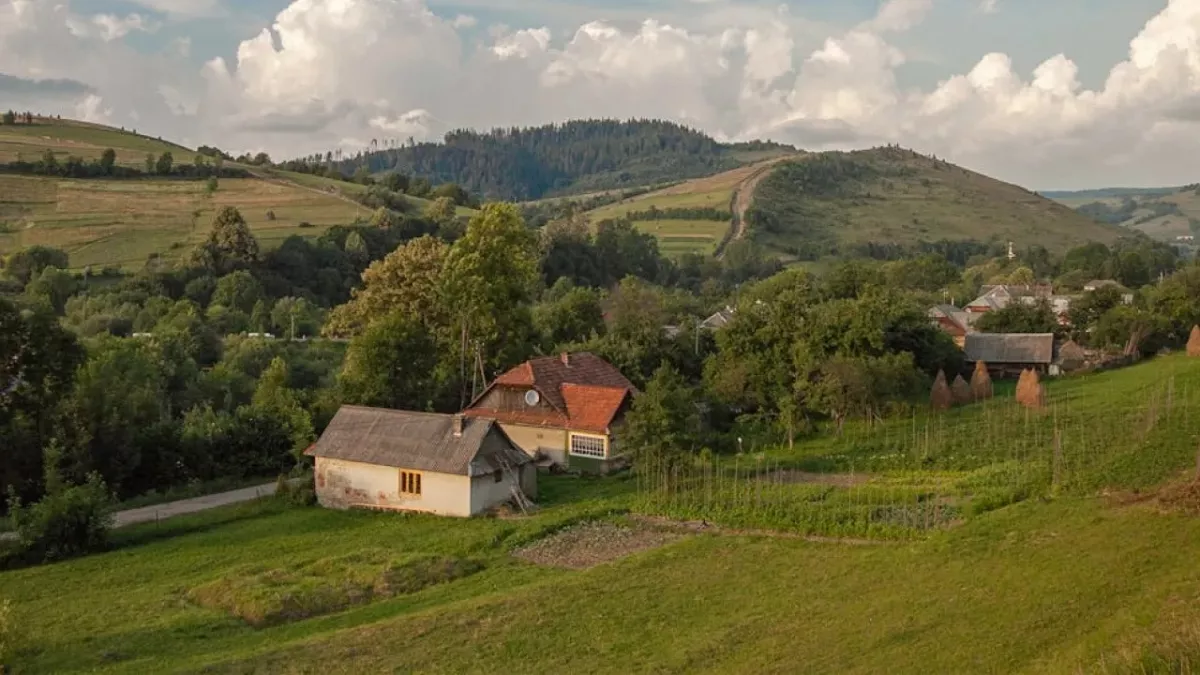
Small schools are particularly vulnerable, especially in rural areas. According to Ukraine’s State Statistics Service, there were 11,820 general secondary education institutions in the country in 2025, of which 7,426 were located in rural areas. In other words, nearly two-thirds of Ukraine’s school network is concentrated in areas where demographic conditions are often the most challenging.
This leaves the Ukrainian government facing a deeply difficult dilemma: running a school costs money regardless of whether it has 500 students or 50. As student numbers fall, the cost of educating each child rises sharply.
The economic logic therefore pushes authorities toward creating hub schools, arranging transportation for students and closing under-enrolled schools. But the social reality points in the opposite direction. In a small Ukrainian village, a school is often more than just an educational institution — it is one of the last remaining pieces of community infrastructure. Closing it can deliver another blow to the survival of the settlement itself.
If a village no longer has a school, young families have one more reason to leave, and their departure means fewer children remain. This creates a demographic spiral that is extremely difficult to break.
In this context, it is worth noting a figure cited by Dmytro Hovsee, director of the Kyiv Perinatal Centre, which illustrates the scale of the problem: to restore Ukraine’s population to its pre-2022 level, each woman would have to give birth to an average of eight children. Clearly, such a scenario is unrealistic.
At the same time, it would be a mistake to attribute the entire demographic crisis solely to the war. Even before the conflict began, Ukraine was already facing low birth rates, an ageing population, migration and a shrinking number of young people.
The Russia-Ukraine war has compounded these existing trends and dramatically accelerated them, while introducing new factors such as loss of life, the destruction of cities, mass displacement, family separation, uncertainty about the future and enormous psychological stress.

Another important point is that the end of the fighting by itself will not necessarily mean the end of Ukraine’s demographic crisis. At first glance, it may seem that it would, as millions of people could return home, the economy could begin to recover, and families could once again plan for the future.
But there is another side to the issue: some Ukrainians may never return. Many children have already spent several years studying abroad, adapting to new education systems, languages and social environments.
For families that have lived in Germany, Poland, the Czech Republic, Spain or other European countries for several years, returning home after the war may be a far more difficult decision than it seemed in 2022. This is particularly true for teenagers.
There is another factor that has received far less attention so far. After the war ends, Ukrainian parents may become more likely to send their older school-age children abroad, fearing that they could eventually face military mobilisation.
If this perception becomes widespread, Ukraine could face another wave of emigration involving precisely the age group that, within a few years, would be expected to enter universities, begin their careers, start families and contribute to the next generation.
As a result, the country risks losing not only its current generation of children but also a significant part of its future demographic potential. That is why, in these final days of summer, the question of how many children will sit at school desks this academic year and in the years ahead is no longer simply an issue for the education system — it is a question about Ukraine’s future.







 editor@caliber.az
 +994 55 444-88-98
 Азербайджан, Баку, ул. Низами, 203, Af Business House, 5-й этаж