










Germany and Georgia: Can a new ambassador reset ties? Article by Vladimir Tskhvediani
Germany has appointed career diplomat Barbara Voss as its new ambassador to Georgia, and the change of ambassador could signal the beginning of a reset in relations between Tbilisi and Berlin.

Germany’s previous ambassador to Georgia, Peter Fischer, “distinguished himself” through his open support for the radical opposition and anti-government protests, bringing him into conflict with the Georgian Dream government. His activities were not universally welcomed even in Germany itself. In October 2025, the opposition Alternative for Germany (AfD) questioned the German ambassador’s impartiality in Tbilisi and formally addressed the Bundestag, seeking clarification.
The opposition “wave of protests” in Georgia has now hopelessly subsided, and it is already clear to everyone that the current government cannot be ousted through an attempted street “revolution.” However, relations between Tbilisi and Berlin have seriously deteriorated, partly because of the activities of the now-former ambassador.
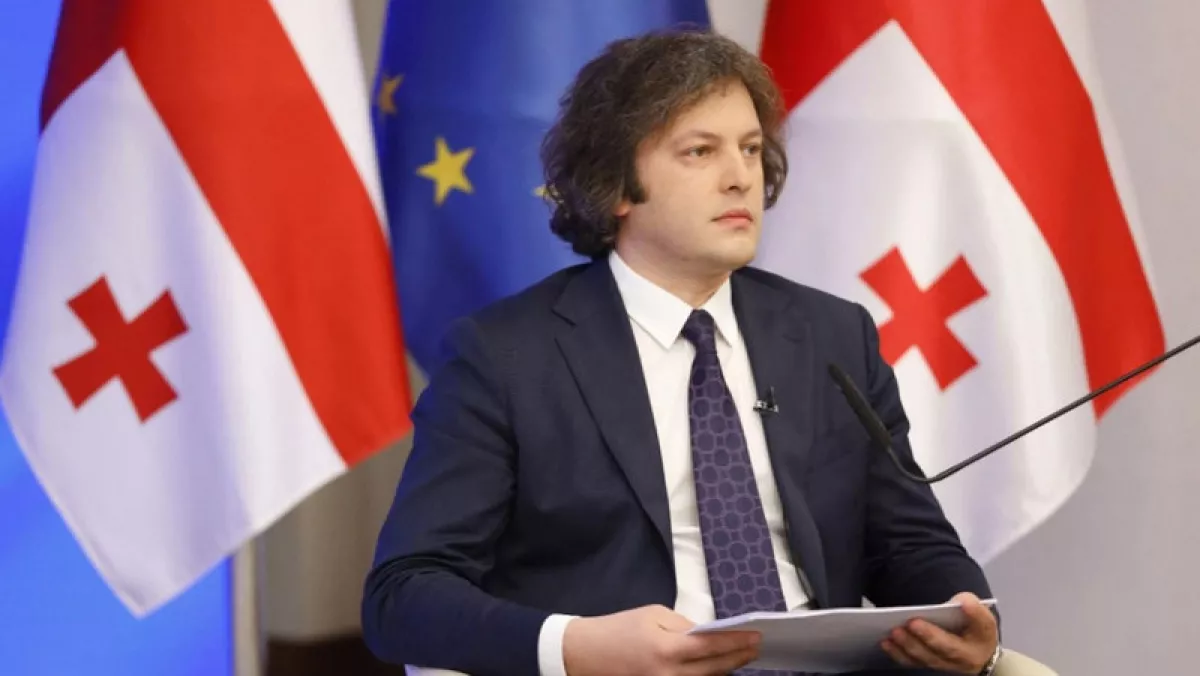
In particular, Prime Minister Irakli Kobakhidze assessed Fischer’s activities as follows: “For many years, Georgia and Germany had good, friendly relations. Fischer was the only ambassador who not only did nothing to develop these relations, but did everything possible to damage them and cause significant harm, which is very unfortunate.”
So, Berlin apparently needed a diplomat in Tbilisi with experience working in regions marked by complex political situations, particularly the Middle East and South Asia, but without a trail of scandals behind her. This is most likely why Barbara Voss was chosen as Germany’s new ambassador to Georgia. Since 2023, she has served as Germany’s consul general in Kolkata, India.
Before that, from 2019 to 2023, she served at the German Foreign Ministry as deputy head of the division responsible for cultural relations with the countries of the Maghreb, the Middle East and South Asia. From 2015 to 2019, she worked on issues of international cooperation in the fight against terrorism. Voss has also served at German embassies in Pakistan (2012–2015), Israel (2009–2012), Nigeria and Tanzania.
As her career record shows, she has extensive experience working in complex regions and countries where geopolitical interests intersect.
However, following her appointment as ambassador to Georgia, Barbara Voss posted a message on social media that offers little hope, for now, of a rapid improvement in relations between the authorities in Berlin and the ruling Georgian Dream party.
“Existing tensions are complicating relations between Germany and the European Union and Georgia. Nevertheless, Germany’s strong support for the country’s democratic and pro-European course remains unwavering,” she wrote.
At the same time, however, Germany currently has a strong interest in stability both in Georgia and across the South Caucasus as a whole. The reason is that Berlin is facing difficulties with access to energy resources and their transit, as the energy supply routes to Germany from Russia that had been built up over decades have begun to break down as a result of the war in Ukraine.
In particular, Chancellor Friedrich Merz has openly stated that the halt in Russian gas supplies triggered a prolonged energy crisis in Germany: energy has become more expensive, the competitiveness of German goods has declined, and companies are trying to cut costs by reducing their workforce. As a result, around 500,000 jobs were cut in Germany in the first quarter of 2026 alone.
In addition, the EU has adopted regulations aimed at gradually phasing out Russian gas. Imports of Russian LNG are scheduled to end completely in early 2027, while pipeline gas imports are to be phased out in autumn of the same year. If the war in Ukraine does not end, there is little prospect of Russian gas supplies to Germany resuming anytime soon.
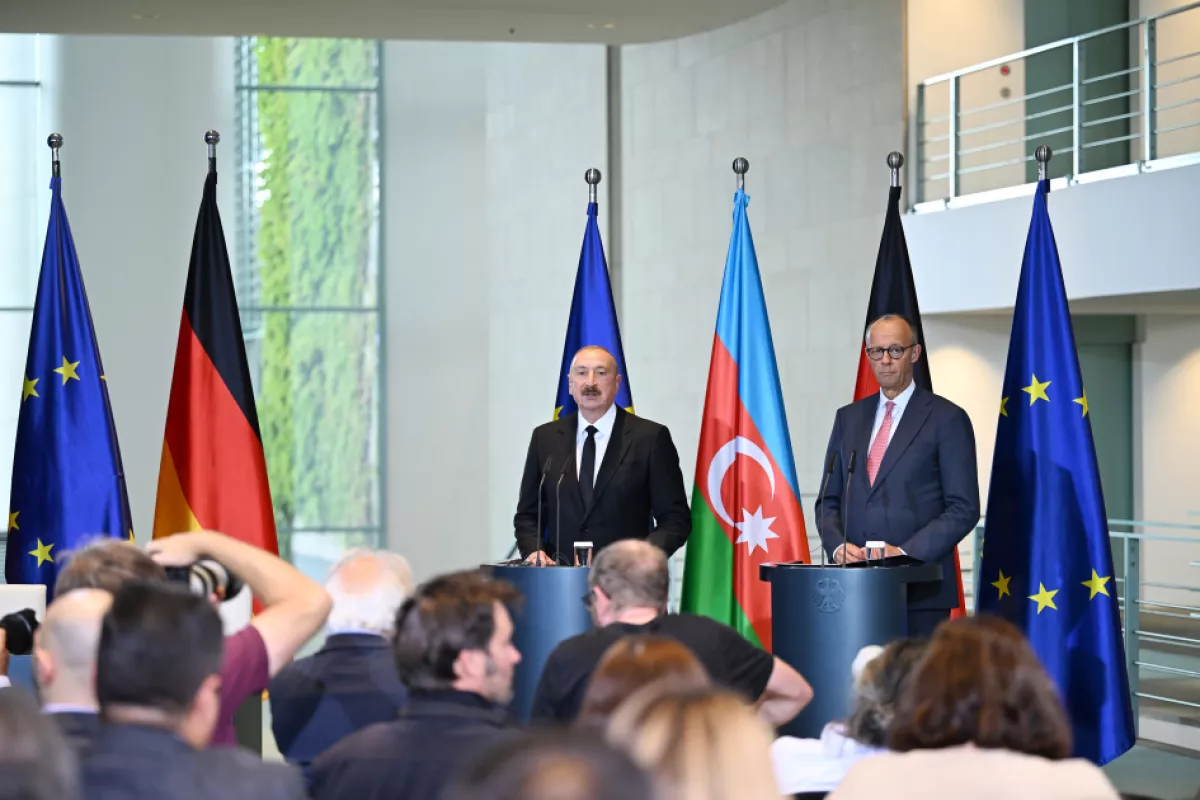
Berlin is therefore now in urgent need of additional sources of natural gas, and Azerbaijani gas could be one of them. Thus, following Azerbaijani President Ilham Aliyev’s official visit to Germany and his meeting with Friedrich Merz on July 21, 2026, it was announced that Germany intends to purchase more gas from Baku in the future.
“After halting gas imports from Russia four and a half years ago, we naturally began looking for new sources of supply, and Azerbaijan plays an important role in this regard,” Merz said at the time.
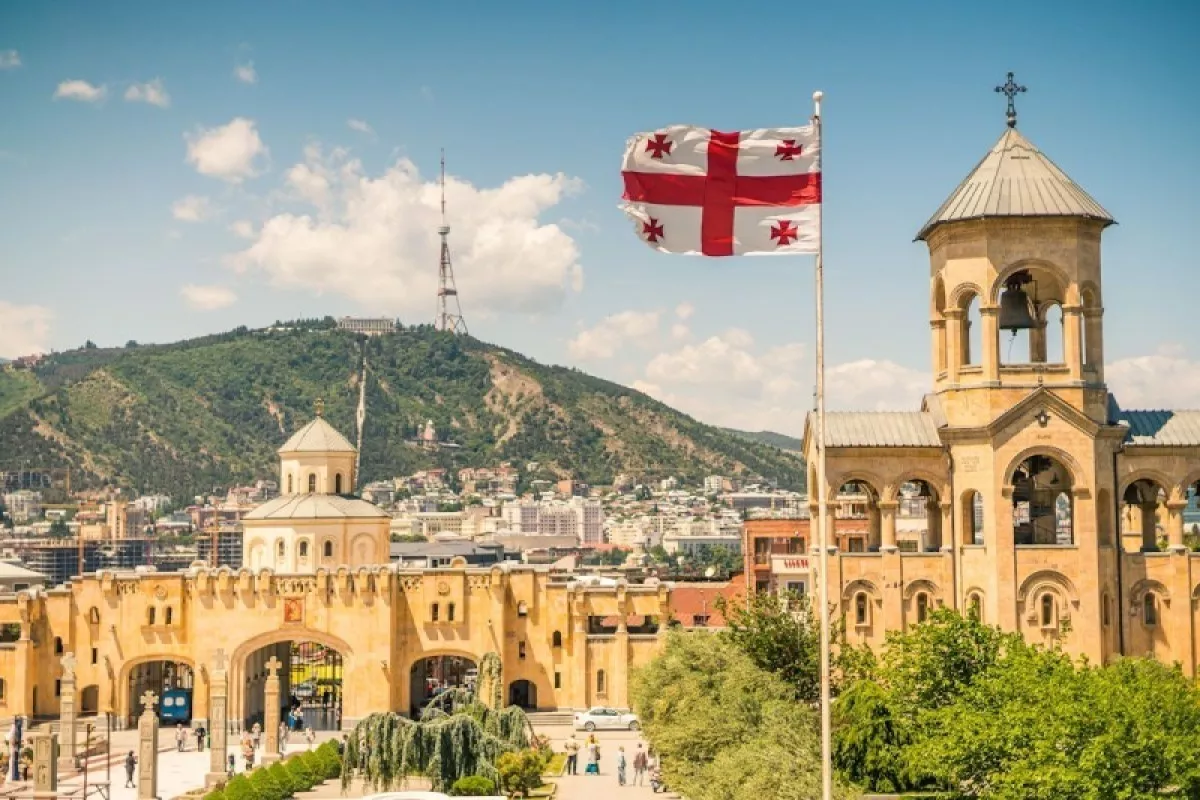
Most importantly, Azerbaijani gas reaches Germany in part via Georgian territory. Against this backdrop, any instability in the country—let alone a “revolution” supported by Peter Fischer—would threaten supplies of natural gas that are vital to Germany. Georgia is also important to Germany as one of the key countries along the Middle Corridor, which connects Europe with Central Asia and China. This is particularly significant given that the Russia-Ukraine war has already disrupted established transit routes between these regions. As is well known, even Kazakhstan’s oil exports transiting through Russia have encountered difficulties.
As a result, a significant share of Kazakhstan’s oil exports to Europe may eventually have to be rerouted across the Caspian Sea and through Azerbaijan and Georgia. Under these circumstances, the German embassy’s previous one-sided support for the radical Georgian opposition hardly contributes to the stability of this transit route.
Therefore, it is in Germany’s own interest that, with the arrival of the new ambassador, this policy be replaced by efforts to establish constructive cooperation with the Georgian government.
By Vladimir Tskhvediani, Georgia, exclusively for Caliber.Az







 editor@caliber.az
 +994 55 444-88-98
 Азербайджан, Баку, ул. Низами, 203, Af Business House, 5-й этаж