










Azerbaijan as a strategic asset for the West The Washington Times on Baku’s value
The Washington Times has published an article by journalist Jacob Wirtschafter examining the Azerbaijani-American cooperation. Caliber.Az presents the most telling parts of the article.
Trump administration officials are in talks with Azerbaijan to fine-tune deals with officials from a Western-friendly Caspian state that offers potential land-based Asia-to-Europe connections that would bypass Russia, Iran and the still-closed Strait of Hormuz.
Assistant Secretary of State Caleb Orr, who is leading the Trump team, hopes to build on a strategic partnership charter that Vice President J.D. Vance signed in February.
The meeting Tuesday at the Ministry of Economy gives the Trump administration a geopolitical win worth noting. Washington is institutionalizing and elevating an alliance with a nation that was once part of the Soviet Union, at a time when Moscow, weakened by years of war, has a limited ability to counter American moves.
The blockade of the Strait of Hormuz has increased Azerbaijan’s strategic potential.
“That makes Azerbaijan a structural asset in European energy security, not simply a bilateral partner for Washington,” said Vasif Huseynov, an analyst at the Baku-based AIR Center.
The Americans are just one contingent among more than 45 countries in the Azerbaijani capital this week for the Baku Energy Forum, including China and Japan.
Everyone brought a checkbook.
The opening exists because Azerbaijan’s two large neighbors are bogged down in wars. Russia is losing standing in its own backyard, with Armenia drifting toward the European Union. Iran is reeling from the conflict, its gas output cut and its economy in crisis.
The largest energy deal this week, a contract to ship 1.17 trillion cubic feet of gas to Turkey over 15 years from 2029, drew Emirati, French, Turkish and Azerbaijani partners, and Persian Gulf capital is flowing into Azerbaijani power and gas.
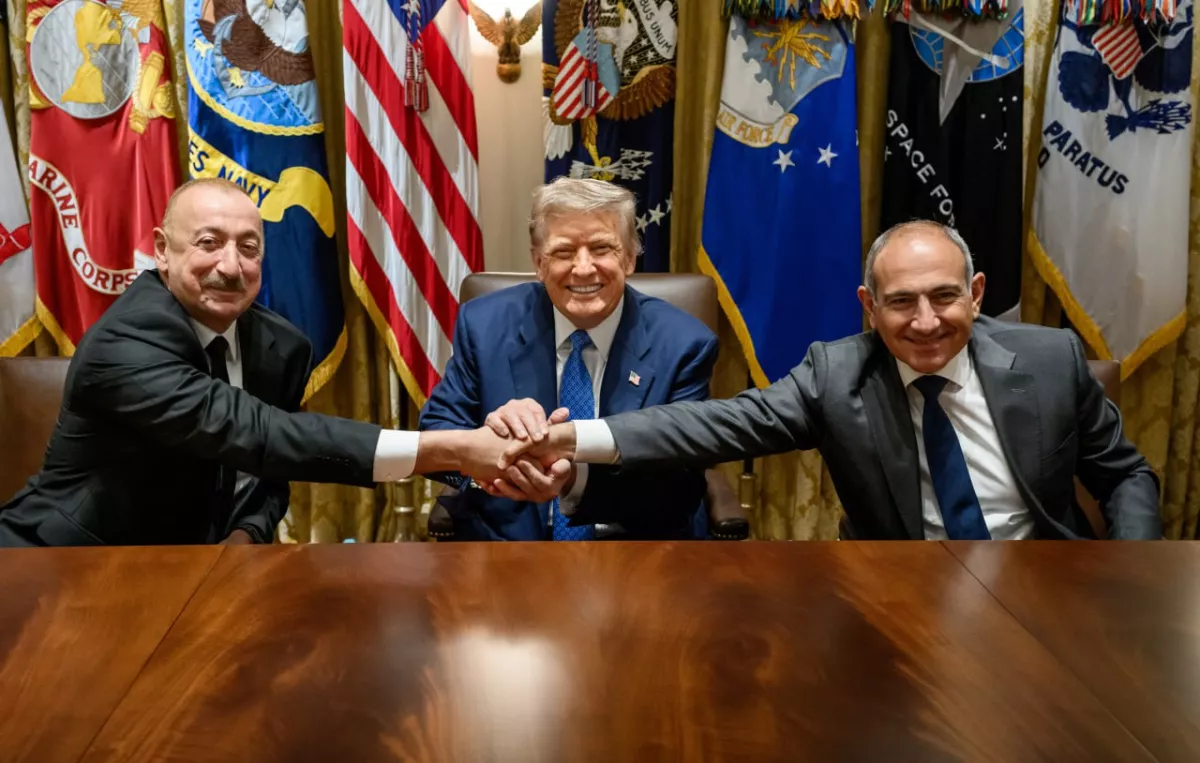
The U.S.-Azerbaijan relationship has moved fast. In August 2025, Azerbaijani President Ilham Aliyev shook hands with President Trump at the White House, where the man who wrote “The Art of the Deal” witnessed a peace declaration between Azerbaijan and Armenia and lifted restrictions on military cooperation with Baku.
Vitaliy Baylarbayov, a deputy vice president of the state oil company SOCAR, traces Washington’s hand back further.
“President Trump’s role in successfully developing the Southern Gas Corridor is something we should never forget, because he was the one who managed to convince our, at that time, hesitating European partners to take the steps toward the implementation of it,” he told The Washington Times. The August signings, he said, reflect “the role and attention President Trump pays to the Caucasus, to Azerbaijan, to Azerbaijan’s neighbors, and his interest in a more interconnected, more interrelated world.”
John Ardill, vice president and head of global exploration at Exxon Mobil, which sponsors the forum, told The Times that the company sees Azerbaijan’s direction as positive despite the wars to its north and south.
“We would see it on a positive vector, with the support of U.S. government involvement,” Mr. Ardill said, adding that recent regional cooperation “gives us the confidence to look at additional investments beyond those we already have.”
SOCAR released the agreements from the dialogue after the afternoon session. Mr. Orr put the commercial deals signed on the trip at more than $8 billion.
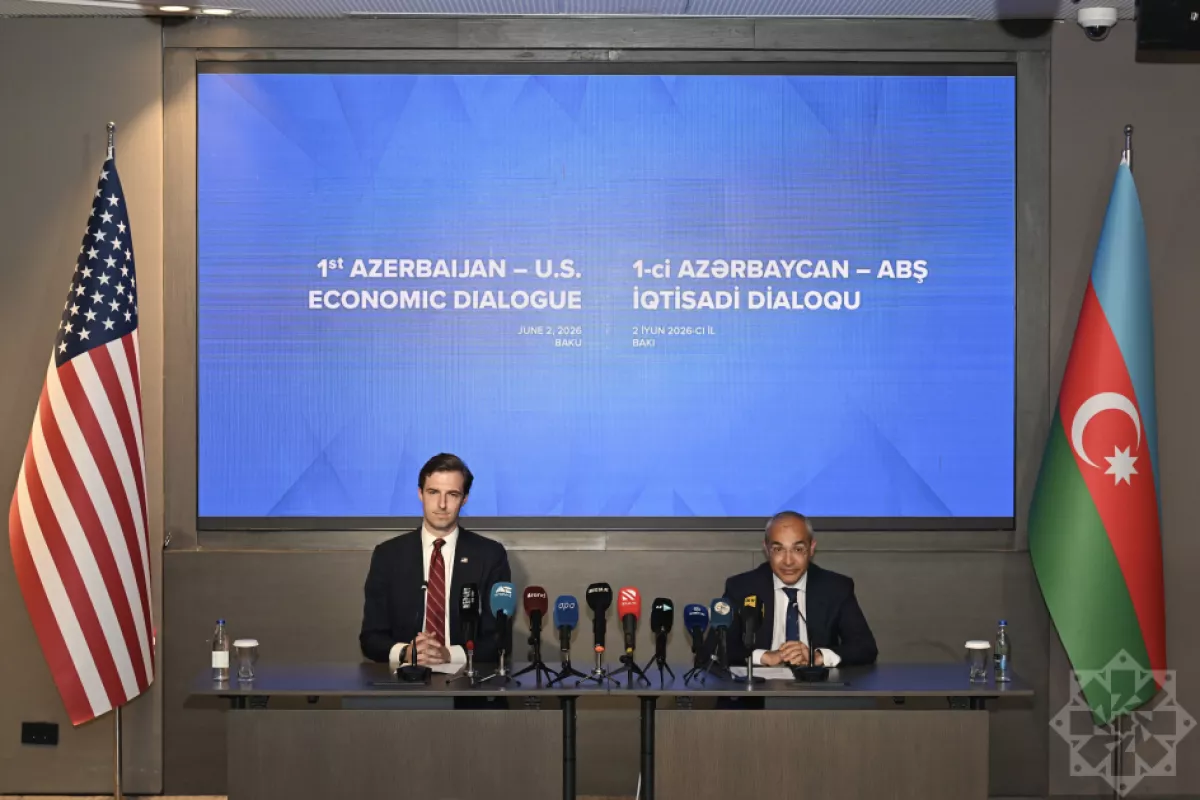
Mr. Orr and Economy Minister Mikayil Jabbarov signed a framework to secure supplies of critical minerals and rare earths. Chevron signed a joint study agreement, and SOCAR added memoranda with J.P. Morgan, Apollo and Comstock Resources.
The Gulf states have already placed their bets.
Saudi Arabia’s ACWA Power built the largest renewable energy plant in the Caucasus. Abu Dhabi’s ADNOC took a stake in the Absheron gas field and invested in the Southern Gas Corridor, and Masdar is expanding solar at Garadagh.
The shift is deliberate, Mr. Huseynov said. “Azerbaijan is positioning itself as a system-shaping state rather than a commodity supplier.” New wind and solar free gas for export rather than replacing it, he said.
For the Americans, the real test is whether the framework hammered out this week hardens into contracts.
Robert F. Cekuta, who served as U.S. ambassador in Baku, told The Times that Azerbaijan matters for “its hydrocarbon production, its geography, and the potential for its population to make creative contributions” — but that the relationship is “building on things we have been doing for a long time.”
Mr. Aliyev cast Azerbaijan as a country that now exports capital, not just gas.
“Thirty years ago, we were attracting investors. Now we are going with our investments outside,” he said at the forum, pointing to SOCAR’s stakes in the Middle East, Africa and Central Asia. “And this geography will grow.”







 editor@caliber.az
 +994 55 444-88-98
 Азербайджан, Баку, ул. Низами, 203, Af Business House, 5-й этаж