










Azerbaijan’s stone sculpture: mastery, culture, and spiritual symbols. Part IV Exploring history on Caliber.Az
Continuation. The beginning can be found in the first, second, and third articles.
When speaking about the cultural landscape of Azerbaijan, one cannot overlook its rich funerary heritage. Alongside architectural monuments, decorative arts, and archaeological sites, a special place is held by the culture of tombstones, which reflects the worldview, beliefs, and artistic ideas of different eras.
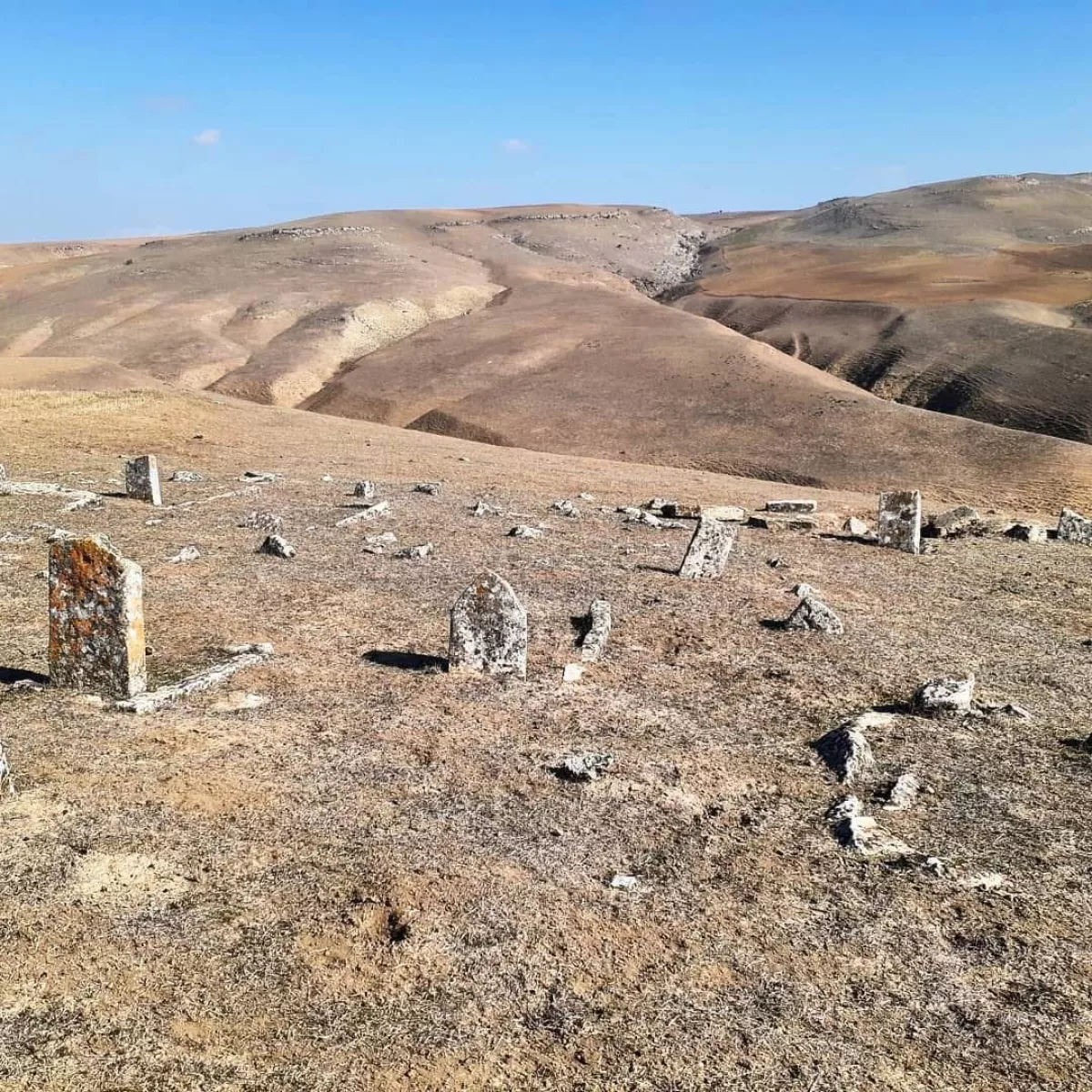
One of the most fascinating and rare phenomena is the anthropomorphic grave stone. These tombstones are elongated stone slabs, often reaching several metres in length, on the surface of which a human figure is symbolically depicted.
Such stones were carved from a single piece of rock, which in itself testifies to a high level of craftsmanship and significant labour. The images on these tombstones often appear deliberately simplified, and sometimes even somewhat crude. The proportions of the human body are represented conventionally, without an attempt at realism. However, as many researchers suggest, this apparent simplicity conceals profound symbolism. The human figure here is not a portrait, but a sign—a generalised image connected to notions of the soul, the body, and the transition between worlds.
The dating of such monuments remains a subject of scholarly debate. Most researchers attribute them to the Early Middle Ages, yet there are hypotheses suggesting that some examples may date back even earlier—up to the beginning of the first millennium. This makes anthropomorphic tombstones particularly valuable sources for studying the early forms of funerary culture in the region.
A distinctive feature deserves special attention: small depressions carved directly into the body of the anthropomorphic figure. These are fairly common. According to several scholars, these depressions had a ritual purpose and were used to collect rainwater, which was considered sacred and believed to possess purifying and blessing properties.
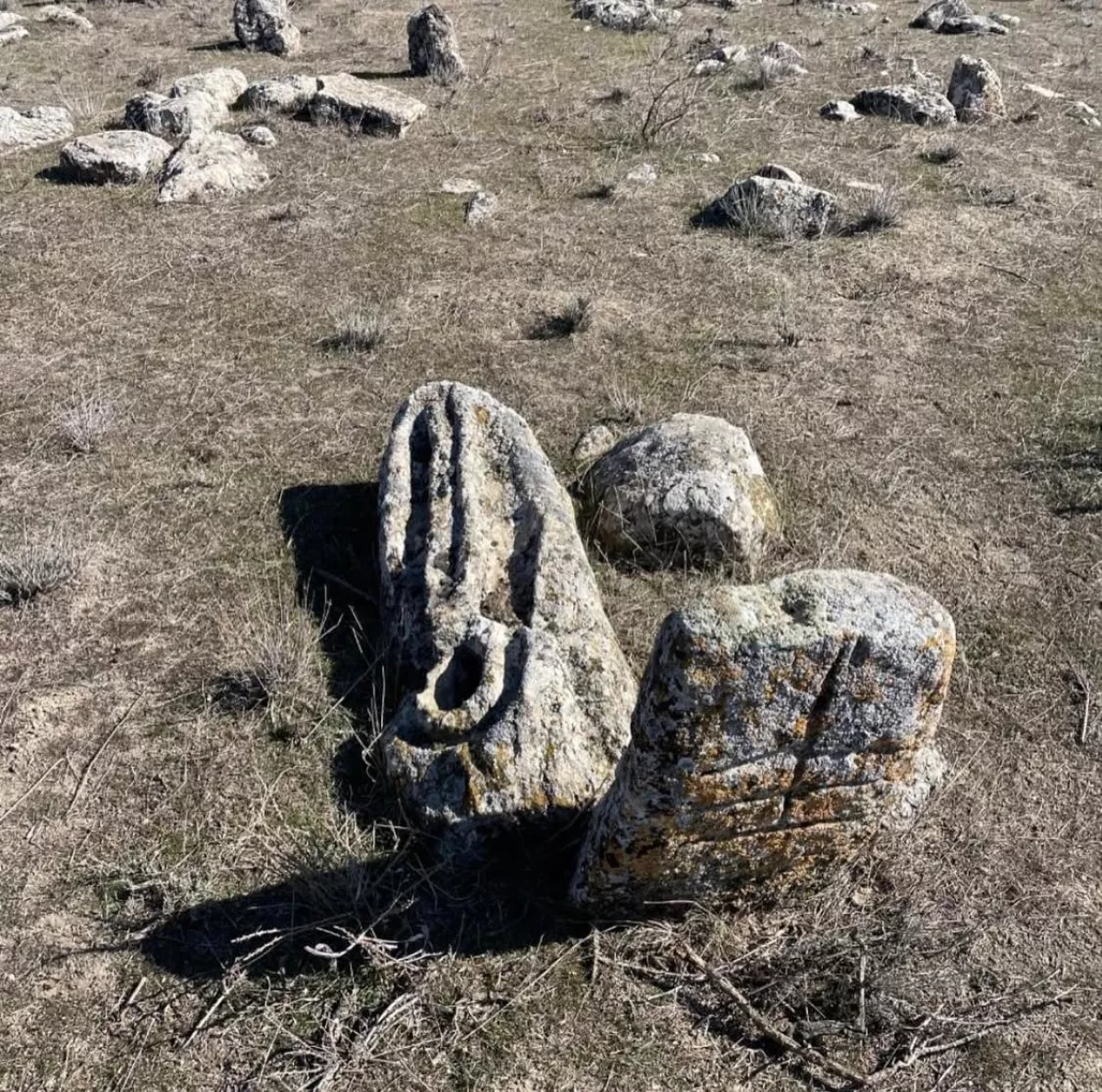
Thus, a tombstone became not merely a commemorative marker, but an active participant in ritual practices connected with the cult of water and natural elements. Taken together, these monuments represent a unique, invaluable, and extremely rare layer of culture, where ancient beliefs, symbolism, and artistic traditions intersect. Their vulnerability and susceptibility to damage and loss make their study and preservation particularly urgent.
When discussing stone sculpture and related elements, it is also important to highlight monuments featuring tamga symbols—unique artefacts that were widespread across Azerbaijan. These marks, carved into stone, carried not only decorative but also profound symbolic meaning, reflecting ideas of clan affiliation, authority, protection, and the sacred concepts of their time.
Tamga symbols appear on historical structures—caravanserais, mausoleums—as well as on isolated rocks standing in fields. A tamga was a clan mark or seal used to indicate ownership and affiliation. It was applied to livestock to prevent herds from mixing, served as a family emblem or coat of arms, marked the boundaries of cultivated lands and pastures, and identified valuable objects and coins. For a long time, tamga also functioned as a personal seal for many rulers: it was engraved on rings and used to authenticate important documents and treaties.
The tamga served as a tribal or clan symbol among many Turkic peoples and was widespread among Turkmens, Karachays, Balkars, Nogais, Crimean Tatars, Chuvash, Bashkirs, Uzbeks, Uyghurs, Kazakhs, Kyrgyz, Kumyks, Turks, and, of course, Azerbaijanis.
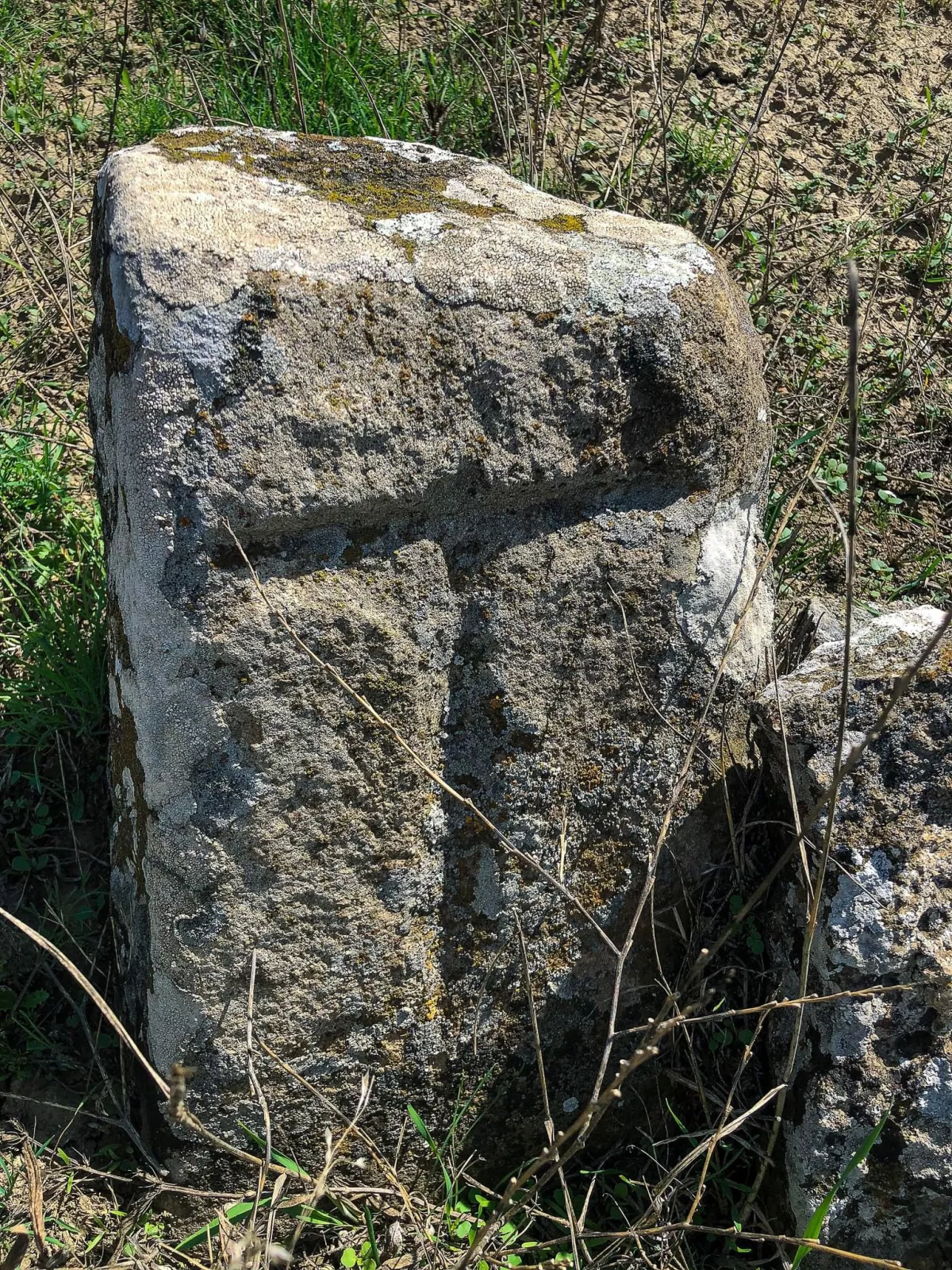
Tamga symbols could take a wide variety of forms. According to ethnographic data, their prototypes were often simple geometric shapes—circles, squares, triangles, and lines at various angles. Alongside these, sacred pictograms also appear: depictions of birds and animals, everyday objects, weapons, and sometimes letters from different alphabets. It is believed that many tamga symbols derive from totemic animals or symbols connected with clan relations and notions of ancestry.
Researchers note that the use of tamga across Eurasia began as early as the Bronze Age. In Azerbaijan, their use is documented from ancient times and continues to appear in later monuments, including cemeteries from the 18th–19th centuries. Tamga symbols remain an important source for studying the social structure, culture, and spiritual traditions of the region’s Turkic peoples, linking past and present within a continuous historical tradition.
Funerary stone sculpture as a whole forms a comprehensive picture of Azerbaijan’s cultural landscape, in which material monuments serve as bearers of memory, beliefs, and social identity. These stone witnesses of the past allow us to trace the continuity of spiritual and artistic traditions over millennia. Their study and preservation today remain among the key tasks in understanding and safeguarding the country’s historical heritage.
To be continued…
By Vahid Shukurov, exclusively for Caliber.Az







 editor@caliber.az
 +994 55 444-88-98
 Азербайджан, Баку, ул. Низами, 203, Af Business House, 5-й этаж