










Azerbaijan’s stone sculpture: mastery, culture, and spiritual symbols. Part III Exploring history on Caliber.Az
Continuation. The beginning can be found in Parts One and Two.
The stone sculpture of Azerbaijan impresses with the richness and diversity of its forms, deeply reflecting the folk culture and worldview of different historical eras. Particularly noteworthy are the zoomorphic sculptures, which symbolically embody ancient beliefs and ideas associated with strength, fertility, and protection. Among them, figures of rams (sheep) and horses occupy a special place, playing an important role in the region’s cultural tradition.
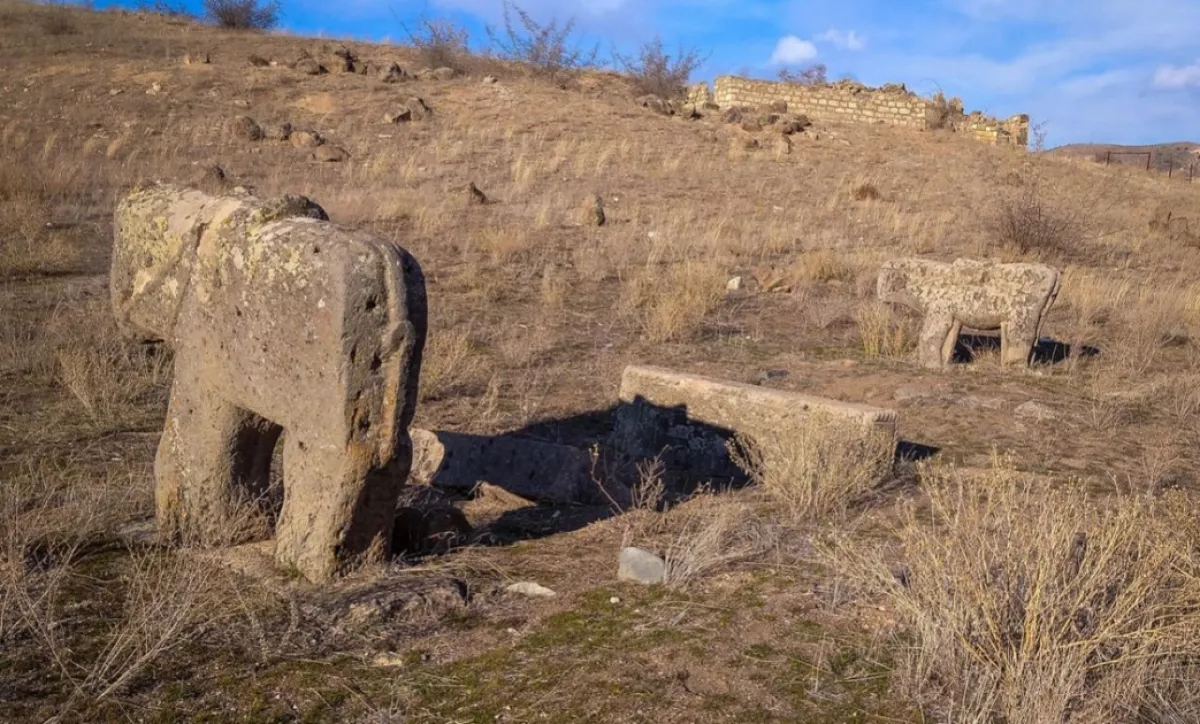
The widespread presence of these images is linked to the totemistic beliefs of the ancestors of modern Azerbaijanis and serves as evidence of their rich spiritual world. Such monuments possess not only high artistic value but also offer deeper insight into the social and religious aspects of life in ancient communities. They form a unique layer of national heritage, uniting art with the cultural identity of the people.
The image of the ram (sheep) — a cult animal revered for many centuries — is especially common in stone sculpture. These carvings are most numerous in Nakhchivan, Karabakh, and Ganja, as well as in Kalbajar, Aghdam, Tovuz, Gazakh, Lachin, and Lerik. During work on the archaeological map of Azerbaijan, archaeologist V. M. Sysoev also documented stone sculptures on the Absheron Peninsula and in Muslim cemeteries of Shirvan, where they continue to serve as expressive symbols of ancient beliefs and a resilient cultural tradition to this day.
All these sculptures are authentic works of art. Most of them date from the 13th to the 19th centuries. At the same time, there are much earlier examples of zoomorphic figures — in particular, depictions of rams discovered during archaeological excavations in Azerbaijan and dated to the 5th–3rd millennia BC. Thus, in Jalilabad, at the Khudutapa archaeological site, early examples of such sculpture were identified.
The cult of the ram (sheep) has existed among Turkic peoples since ancient times and carried profound symbolic meaning. According to the worldview of the ancient Turks, ram figures granted the deceased the possibility of returning from the afterlife to a new existence, to the world of light. In addition, the ram was perceived as a symbol of the inviolability of power. In folk tradition, these sculptures are known as goch dash.
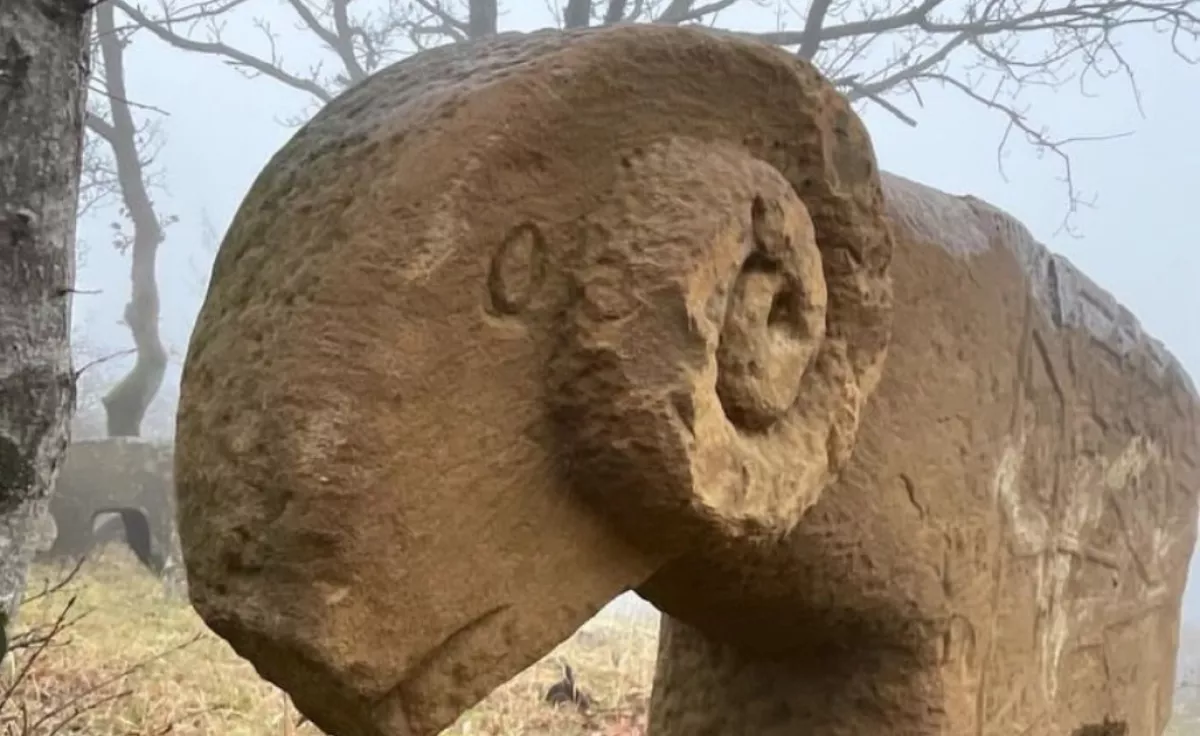
Black rams enjoyed particular veneration. Images of rams with powerful, tightly curled horns were reproduced for centuries by generations of potters and stonecutters. The ram functioned as a kind of talisman: it was used to ward off evil forces and to attract benevolent powers and their protection. Echoes of these ancient beliefs have survived to this day — in some regions of the republic, ram skulls are still used to decorate the entrances of houses or courtyards, being perceived as symbols of protection, prosperity, and a connection to the centuries-old spiritual memory of the ancestors.
Many zoomorphic sculptures are notable for their considerable size. Some are executed schematically and deliberately crudely, while others are striking for their high level of artistic craftsmanship. The surfaces of the sides and backs were often decorated with relief compositions and ornaments, among which inscriptions in Arabic script can be found. Notably, on some stone rams, hunting scenes were frequently carved alongside the inscriptions.
A vivid example of ram imagery is provided by the stone tombstones discovered in the Yardimli region. In academic circles, there is some disagreement regarding the dating of these zoomorphic sculptures: some researchers attribute them to the 14th–15th centuries, while others date them to the 16th–17th centuries. However, despite differences in chronology, scholars are unanimous in recognising the high artistic value of these monuments and their importance for understanding the cultural and religious traditions of Azerbaijan.
The variability in dating only underscores the long-standing and multi-layered nature of the development of stone sculpture in the region, while the sculptures themselves continue to serve as an important source for studying the spiritual world of the ancestors. A distinctive feature of the figures from Yardimli is the fineness and clarity of their execution. When observing them, one is struck by the craftsmanship of the ancient stonecutters. Particular attention is drawn to the ornaments and the high degree of detail: unlike the ram (sheep) sculptures found in other regions of Azerbaijan, here even the tails and other minor elements are rendered, albeit schematically, lending the figures vitality and individuality. The animals are depicted in a calm, balanced pose of expectation, creating the impression of their symbolic guardianship over the repose of the deceased.
Alongside images of rams, stone figures of horses are also widely represented in Azerbaijan. Depictions of this animal, encountered across various forms of art, carried a pronounced symbolic meaning. The horse was associated with wealth, masculinity, bravery, and loyalty, while its individual elements — such as the horseshoe and the tail — functioned as talismans and protective charms.
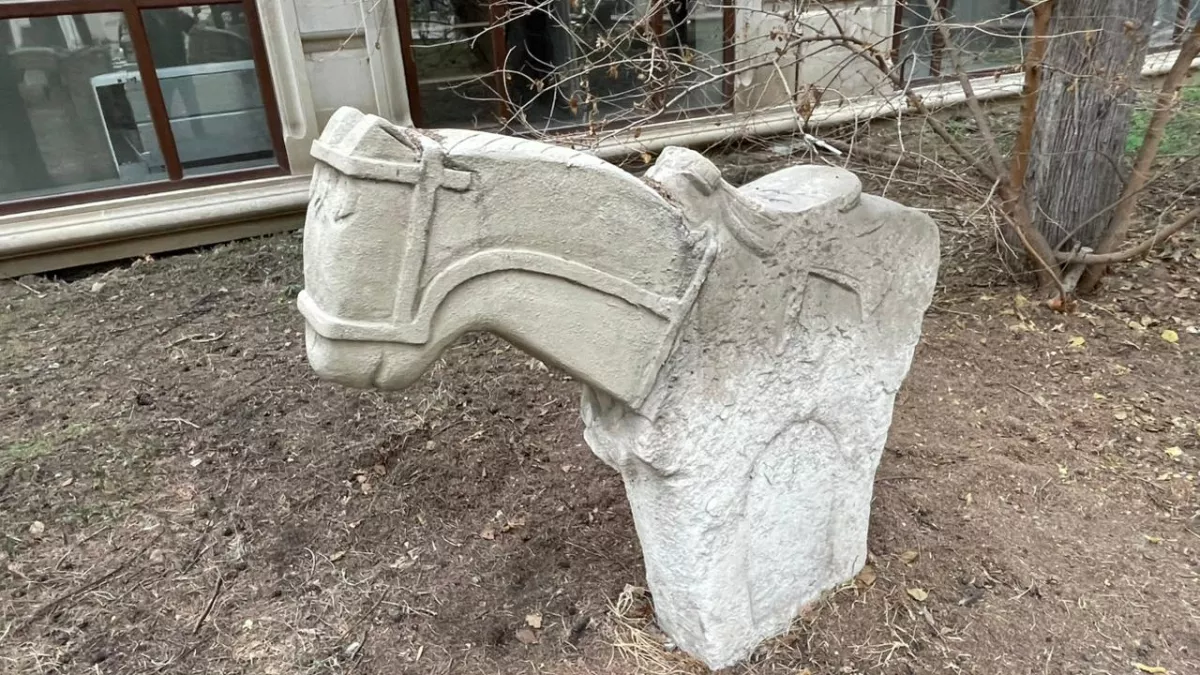
Sculptural representations of horses discovered in Muslim cemeteries in Nakhchivan, Ganja, Shamkir, Gazakh, Tovuz, Gadabay, Aghdam, Lachin, and other regions were, as a rule, dedicated to warriors or prominent townspeople, symbolising their courage, martial valour, and vital strength. These sculptures served not only as tombstones but also as expressive markers of public respect and veneration for the individual.
The image of the horse as a sacred animal is vividly reflected in the folk epic The Book of Dede Korkut. Despite differences in historical periods, most stone depictions of horses share similarities in their decorative elements. The sculptures feature a complete set of equestrian gear carved in stone: bridles, breast straps, girths, cruppers (tail straps), stirrups, and saddles. These details are valuable not only artistically but also historically, as similar forms of ornamentation are characteristic of the horse equipment of Central Asian peoples in the past. In addition to tack, elements of martial weaponry — a bow with arrows, a quiver, a sabre, a lasso — as well as hunting scenes were often depicted on the surfaces of the figures, underscoring the close connection between the sculpture and the lifestyle and cultural realities of its time.
Stone sculptures of rams and horses reflect not only the artistic traditions of Azerbaijan but also the social, military, and cultic aspects of the life of its people. It is noteworthy that valuable examples of stone sculpture are preserved in the collections of the Ganja Museum of History and Local Lore, as well as displayed in museums in Baku, where they are regarded as some of the most important testimonies to the country’s rich artistic and cultural heritage.
Similar zoomorphic images in stone sculpture are also found among other Turkic peoples — Kazakhs, Turks, and many others — attesting to a deep cultural affinity and shared artistic traditions. These parallels highlight common roots, historical continuity, and a unified civilisational identity of the Turkic peoples, expressed through animal symbolism and forms of sacred art.
Stone sculptures of rams and horses reflect not only the artistic traditions of Azerbaijan but also the social, military, and cultic aspects of the life of its people. It is noteworthy that valuable examples of stone sculpture are preserved in the collections of the Ganja Museum of History and Local Lore, as well as displayed in museums in Baku, where they are regarded as some of the most important testimonies to the country’s rich artistic and cultural heritage.
Similar zoomorphic images in stone sculpture are also found among other Turkic peoples — Kazakhs, Turks, and many others — attesting to a deep cultural affinity and shared artistic traditions. These parallels highlight common roots, historical continuity, and a unified civilisational identity of the Turkic peoples, expressed through animal symbolism and forms of sacred art.
The stone sculpture of Azerbaijan impresses with its diversity and expressiveness, reflecting the deep layers of folk culture, spiritual perceptions, and historical memory. These sculptures are not only valuable works of art but also living bearers of memory about the past, linking generations and demonstrating the continuity of cultural heritage. In the contemporary context, they continue to serve as symbols of strength, courage, and protection, fostering respect for history and a sense of pride in Azerbaijan’s rich cultural legacy.
To be continued…
By Vahid Shukurov, exclusively for Caliber.Az







 editor@caliber.az
 +994 55 444-88-98
 Азербайджан, Баку, ул. Низами, 203, Af Business House, 5-й этаж