










Azerbaijan’s stone sculpture: mastery, culture, and spiritual symbols. Part II Exploring history on Caliber.Az
Continuing the discussion, it is important to mention the next stage in the development of stone sculpture—the emergence of more complex sculptural forms associated with anthropomorphic and zoomorphic imagery. This new artistic language significantly expanded the expressive possibilities available to craftsmen, allowing them to move beyond purely decorative solutions and create images richer in symbolic meaning. On this basis, Azerbaijani stone sculpture reached a particular peak approximately between the 15th and 18th centuries, when chest-shaped tombstones adorned with multi-figure narrative reliefs came to the fore, distinguished by their technical complexity and the richness of their ornamental motifs.
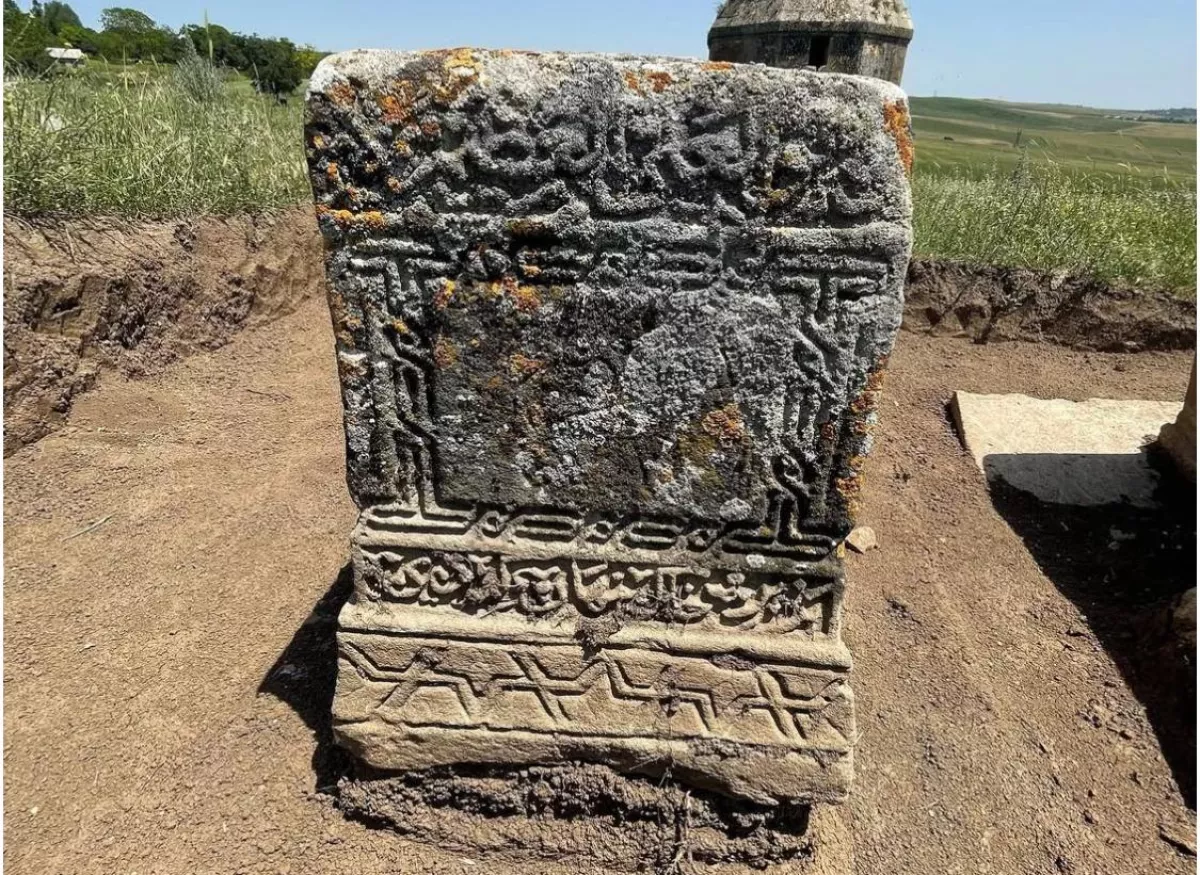
On their surfaces, one can find elements of architectural decoration, various scenes from everyday life and religious rituals, as well as solar symbols representing the connection between humans and the cosmos and the idea of cyclical time. Sanduga—a word of Arabic origin (Arabic: صندوقة, meaning “small chest” or “casket”)—refers to a small architectural form placed above a grave. These tombstones were made of stone, marble, and other durable materials, and were decorated with carved ornaments, Qur’anic verses, fragments of poetic texts, as well as inscriptions narrating the life of the deceased, including their name and, in some cases, dates. Such chest-shaped tombstones became widely used in the East during the Middle Ages.
Azerbaijan is home to numerous such monuments, vividly demonstrating the richness and diversity of local stone-carving traditions. Of particular interest are the tombstones located in the extensive necropolises of ancient settlements in Absheron, Gobustan, Shamakhi, Guba, Karabakh, and other regions of the country. Most of these are shaped as parallelepipeds, hewn from large blocks of stone. Their surfaces are generally exposed for viewing and are adorned with skillfully executed decorative carving. The centre of each composition typically features medallion-shaped panels of various forms, with ornamented inner surfaces framed by alternating bands of plant motifs and decorative inscriptions, predominantly of Qur’anic content.
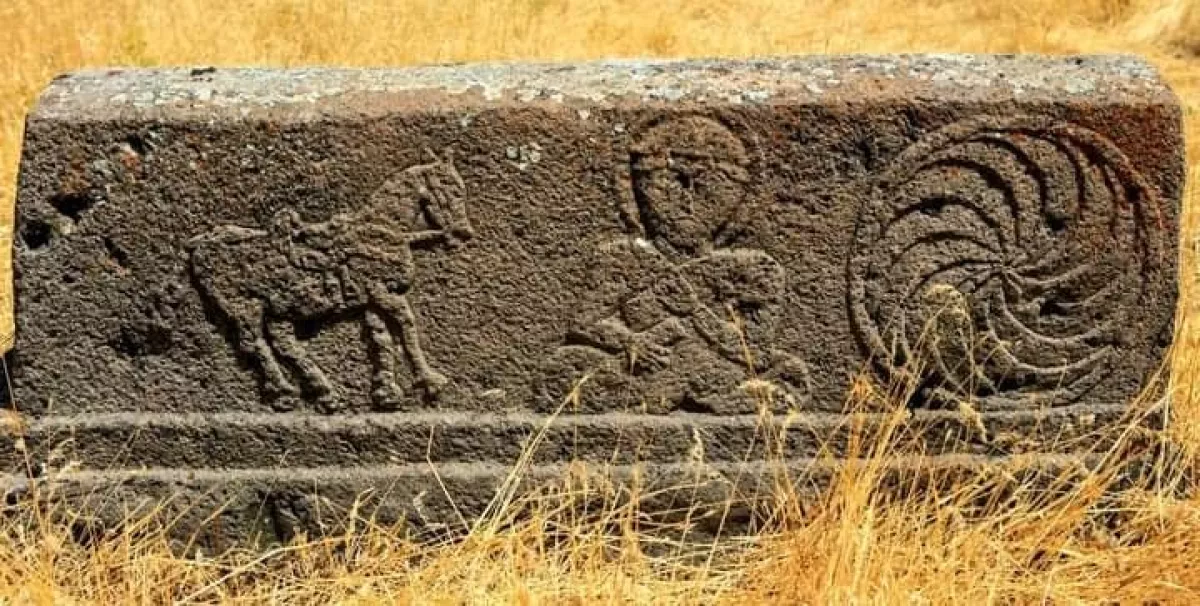
In the scenes depicted on sandugas, folk craftsmen—albeit in a somewhat naive style—sought to convey episodes of everyday life, such as hunting, sacrifices, and feasts. Such narrative reliefs can be found in virtually all regions of Azerbaijan, reflecting the richness of popular imagination and the endurance of artistic traditions. The themes of the images on tombstones are often linked to the biography of the deceased. Recurring, easily recognisable figures appear, such as a lone horseman, a blacksmith with his tools, and other characteristic personas.
Compared to previous centuries, the decoration of monuments from this period increasingly featured pictorial motifs, including individual figures of animals (horses, rams, etc.), birds (eagles, falcons, etc.), household objects (pitchers, Quran stands, mirrors), types of weapons, as well as various tools related to work—looms, anvils, hammers, tongs, and so on. These stone-carved images were not merely decorative; they carried significant symbolic meaning. They allow us to understand to whom the monument was dedicated, the profession of the person, and which aspects of their life were considered most important.
On monuments erected in honour of men, the central image often depicts a heroic figure: the deceased is shown mounted on a horse, dressed in battle attire, holding a bow, sabre, or axe. During this period, the hero was perceived as a natural life ideal. Courage and strength of spirit were understood not merely as personal virtues but as the foundation of human dignity.
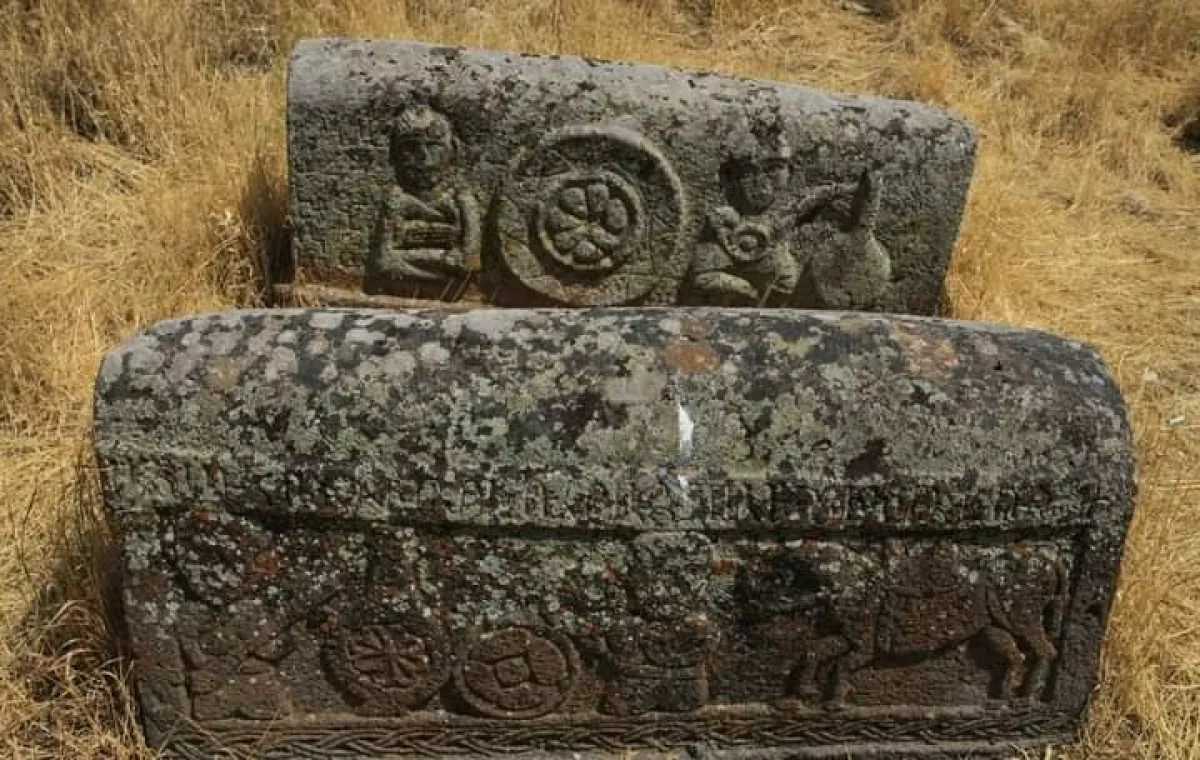
If images on men’s tombstones primarily reflected the valor and bravery of the deceased, then on women’s stones the central motif was most often a carpet-weaving loom—a symbol of an important craft that, in the past, nearly every Azerbaijani woman practiced. Narrative depictions on tombstones are generally storytelling in nature, positioned on the side surfaces of the stones, and separated from one another, forming independent scenes.
Many of the themes depicted in these reliefs find parallels in other forms of Azerbaijani art; however, there are also images without counterparts in official or “conventional” art. These include depictions of birds and animals that apparently served as totems for ancient Turkic-speaking tribes, as well as a number of other unique motifs. In rare cases, a sanduga may feature the mythical bird “Unu”, considered the guardian of the hearth among many Turkic peoples.
According to R. Afandiyev, among the Oghuz tribes—the ancestors of the modern Azerbaijani people—this image held special significance: bird figures were made from wood, felt, and other materials, forming an integral part of the household interior, serving a protective function to safeguard the family and the hearth. Thus, depictions of Unu on tombstones not only served a decorative purpose but also reflected ancient beliefs and cultural traditions, intertwining everyday life, religious notions, and sacred symbolism.
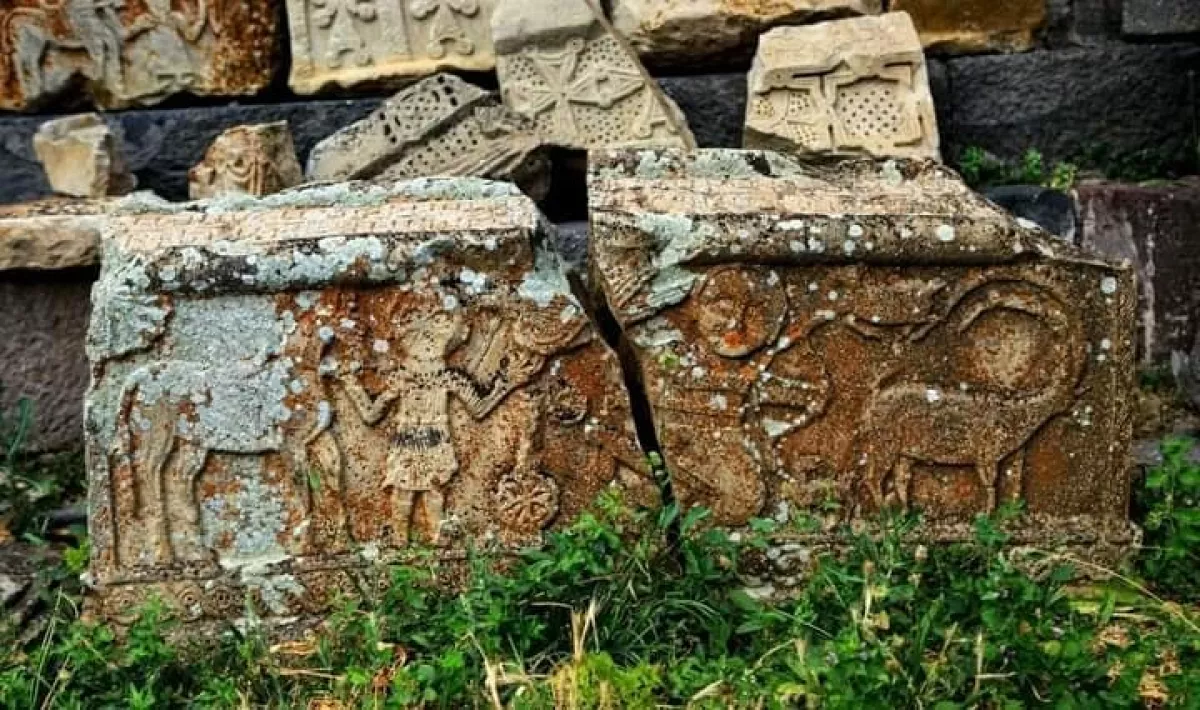
The compositional scheme and carving technique depended entirely on the creative individuality of each master. Despite the diversity and originality of the subjects, tombstone reliefs often retain a flat and stylised character, which is especially noticeable in the depiction of human figures. All characters are generally placed on a single plane and shown en face, with no attempt to convey perspective or profile views. These monuments clearly display a predominance of static, frontal presentation, linking them to the traditions of archaic art. At the same time, over time, Azerbaijani stone sculpture began to develop reliefs with a more pronounced sense of volume, gradually overcoming flatness and linear graphic expression.
According to art historians Leonid Bretanitski and Boris Vejmarn, such images indicate that Islam, while imposing significant restrictions on the development of the visual arts—particularly sculpture and monumental painting—was unable to completely eliminate them from everyday life and the artistic consciousness of the people.
Sandugas with narrative-themed reliefs are of interest not only as artistic objects but also as valuable examples of epigraphy. Inscriptions on them, executed in Arabic scripts, were placed on the surfaces or end faces of the monuments and arranged in ornamental calligraphy styles such as Nastaliq, Naskh, and Thuluth. These inscriptions not only reflect the history of the formation and development of Azerbaijani stone sculpture but also serve as an important tool for accurately dating the monuments. Together, the reliefs and epigraphy form an integrated cultural layer, offering a new perspective on the heritage of stone carvers and the historical evolution of Azerbaijani art.
To be continued…
By Vahid Shukurov, exclusively for Caliber.Az







 editor@caliber.az
 +994 55 444-88-98
 Азербайджан, Баку, ул. Низами, 203, Af Business House, 5-й этаж