










The Singer Company Building in Ganja: architecture that became history Exploring history on Caliber.Az
Ganja has preserved many beautiful buildings that shape the city’s unique historical character. Especially captivating are the structures from the late 19th to early 20th centuries, made of brick and distinguished by their striking architecture and well-considered proportions. These buildings give the city a special charm, filling its streets with the atmosphere of a bygone era. Each of them holds its own story—the lives of owners, craftsmen, and entire generations of townspeople. Here, architecture becomes a living witness of time, reflecting the tastes, ambitions, and spirit of its age. The Singer Building, which will be discussed below, is a prime example of this.
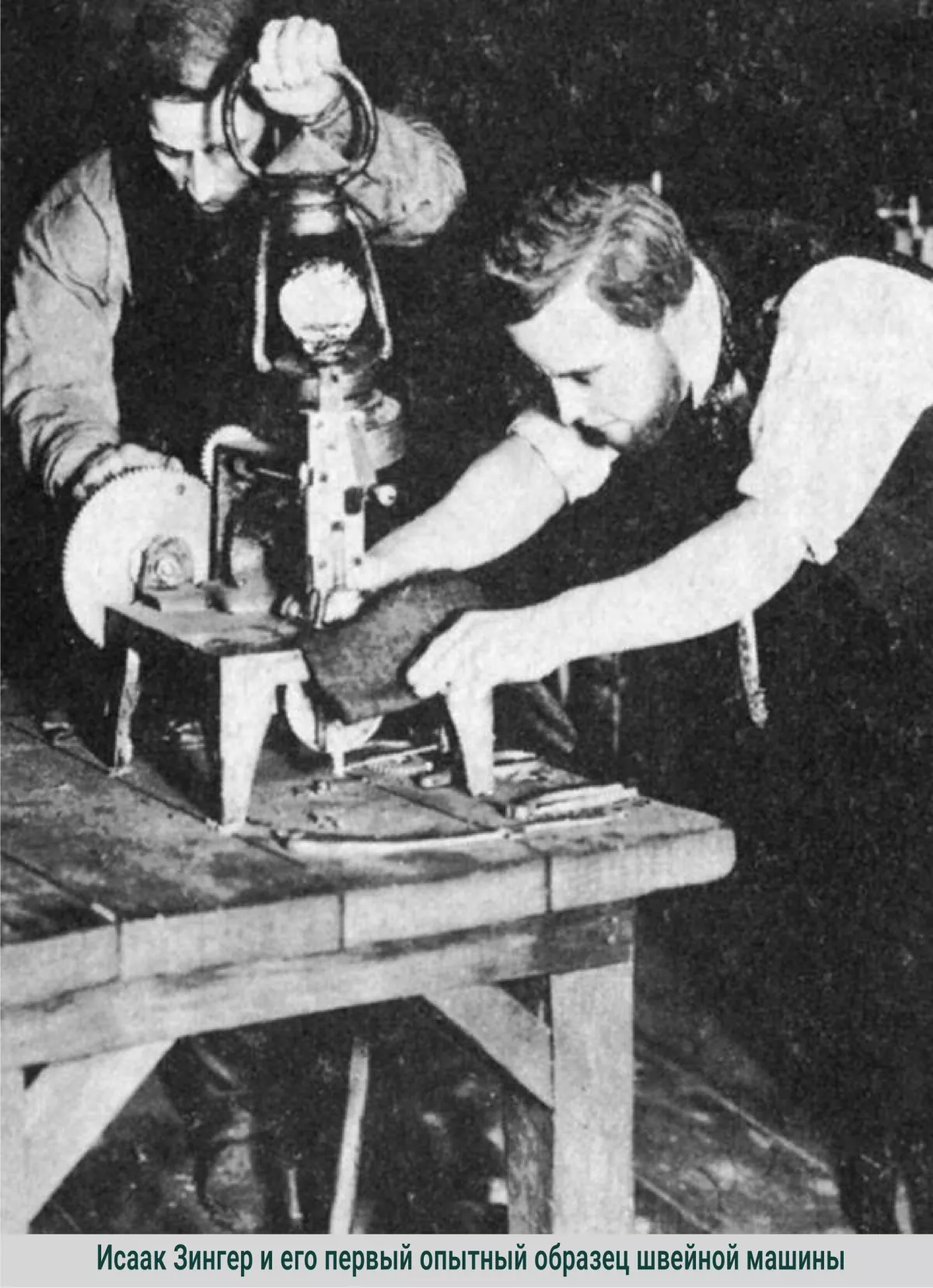
The Singer Company (Singer Corporation) — a legendary American firm, was founded in 1851 in New York by Isaac Singer and lawyer Edward Clark as I.M. Singer & Co. The company truly revolutionised the industry, making the sewing machine a mass-market and widely accessible tool through durable metal constructions, the introduction of an instalment payment system, aggressive advertising, and the world’s first transnational business model. The Singer brothers’ workshop was located in the very heart of the city—on what is now Javad Khan Street—highlighting its importance in urban life and making Singer products an integral part of everyday life and the cultural fabric of early 20th-century Ganja.
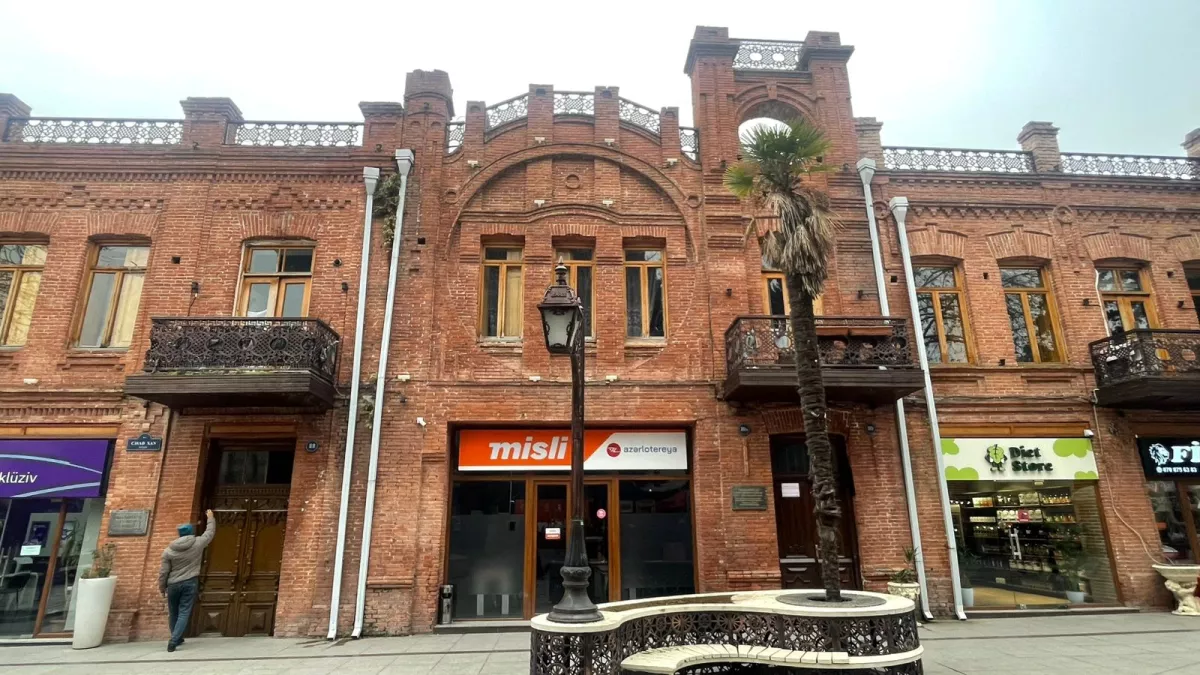
The building was constructed in 1901 as a residential house and originally featured an architectural appearance typical of that era. From 1902 to 1920, it housed the Singer sewing machine store and workshop. Later, the building’s exterior was reimagined: its façade was given a form reminiscent of a sewing machine, creating a striking architectural symbol that reflected the brand’s popularity.
The structure is designed in an eclectic style, strongly influenced by brick Art Nouveau and Neo-Renaissance motifs. Red fired brick serves as the primary shaping and decorative material, giving the façade a sculptural expressiveness and tectonic clarity. The symmetrical composition of the façade is emphasised by a central risalit with an arched top, forming one of the visual focal points of the street. Arched window openings and decorative brickwork create a rhythmic structure, organising the perception of the elongated façade. Metal balconies with ornate railings complement the architectural ensemble, highlighting the building’s commercial and representative function.
The architectural appearance of the house demonstrates a high level of craftsmanship in brick masonry, characteristic of local construction schools at the beginning of the 20th century. The façade is perceived as a cohesive architectural plane, where decorative elements adhere to the overall compositional logic and do not disrupt structural clarity.
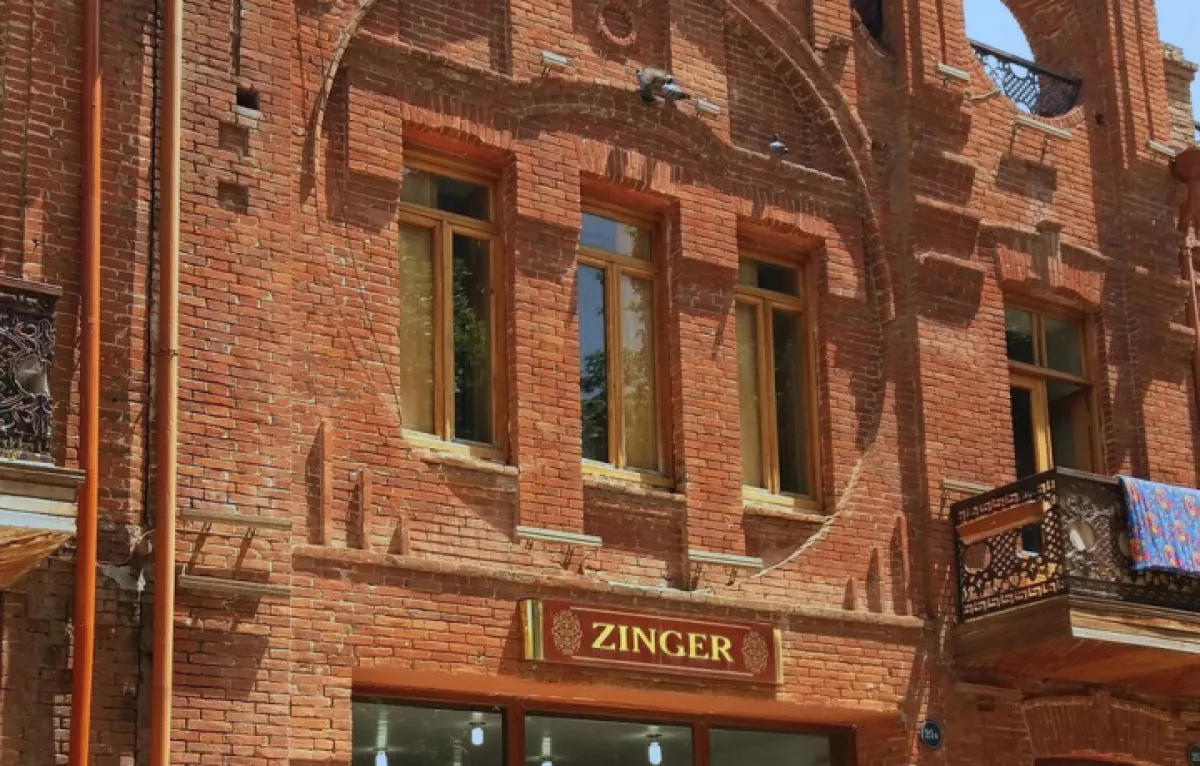
The building’s façade conveys a sense of restrained yet confident representativeness. It is not overloaded with excessive decoration; however, every detail—from the window frames to the stone bands—is proportionally measured and contributes to the overall perception of the house as a cohesive architectural object.
The Singer Building plays a key role in shaping the historic character of the street, serving as an urban focal point and an important landmark. Its scale and proportions create a harmonious connection with neighbouring structures, forming a unified architectural frontage. In a contemporary context, the Singer Building retains high cultural and tourist value as a symbol of Ganja’s commercial and architectural heritage.
The building was originally constructed as a revenue-generating residential house: shops occupied the ground floor, while the upper floors were home to residents. At that time, this street was one of the busiest in the city, lined with shops, banks, and cinemas, and it was a favourite spot for residents to stroll and socialise.
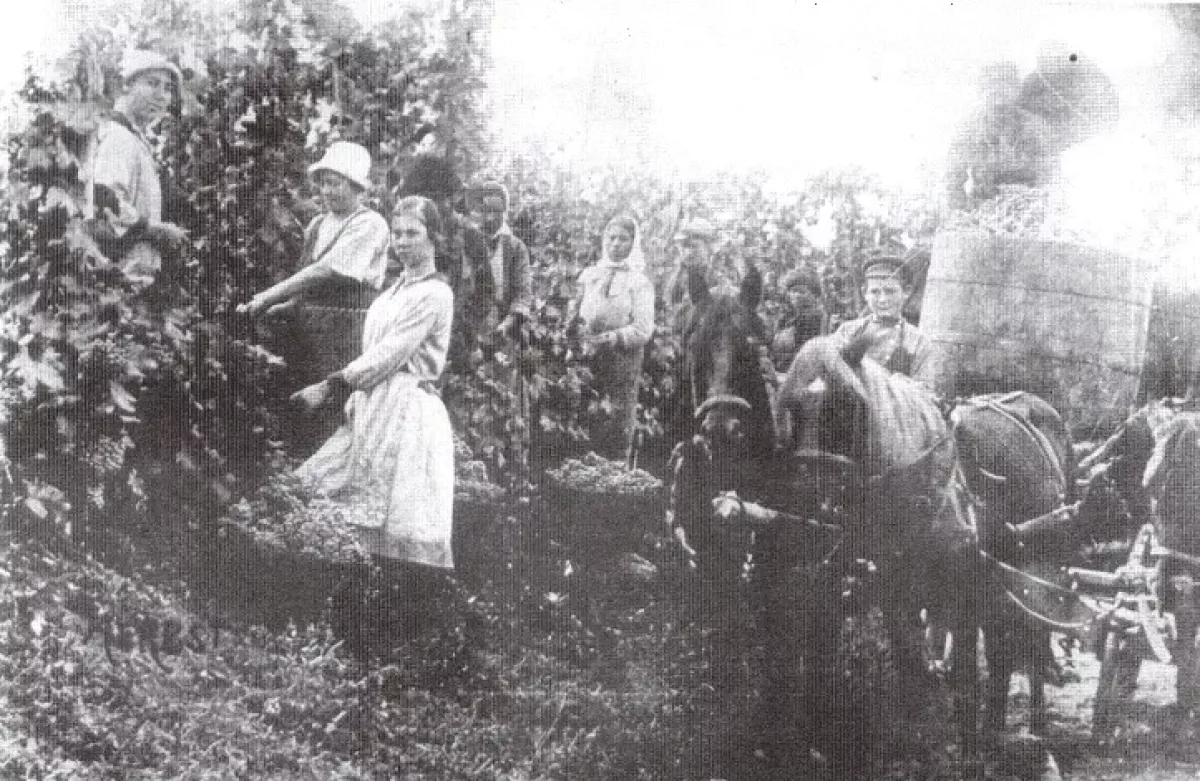
The settlement of Germans in Ganja and its surrounding areas began in 1818–1819. According to 1897 data, 103 Germans lived in the city. The German community maintained its presence in Ganja until 1941, leaving a noticeable mark on the city’s economic, cultural, and architectural history.
Today, the former Singer workshop functions as an office and is under state protection as a historical and architectural monument, preserving the memory of one of the city’s vivid episodes from the early 20th century.
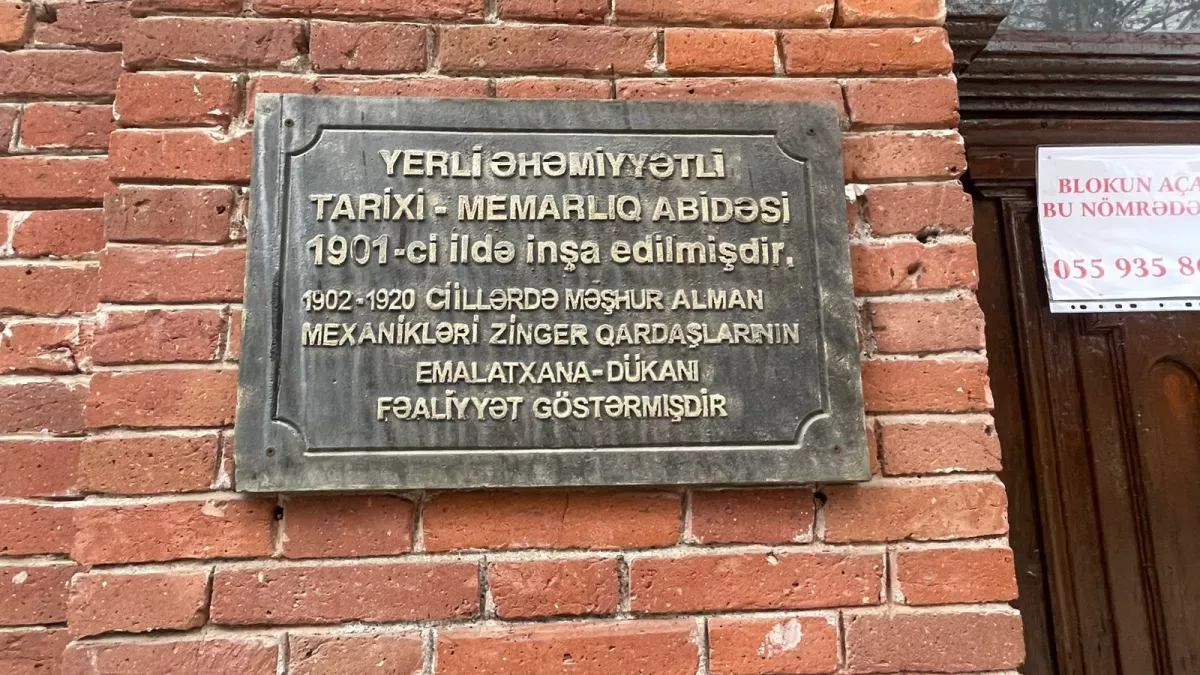
The Singer House in Ganja is not just an unusual architectural structure, but a living page of the city’s history. Its appearance reflects the spirit of the era, technical progress, and cultural connections that shaped the urban environment of early 20th-century Ganja. Buildings like this remind us of the people, ideas, and labour that contributed to the city’s development. Their preservation and careful maintenance are an important part of respecting the past and safeguarding historical memory. Through such houses, the city retains its uniqueness, character, and soul.
By Vahid Shukurov, exclusively for Caliber.Az







 editor@caliber.az
 +994 55 444-88-98
 Азербайджан, Баку, ул. Низами, 203, Af Business House, 5-й этаж