










Beijing skyscraper crash prompts review of China's low-altitude flight oversight
A plane crash into Beijing’s tallest skyscraper last week has raised questions about how a small aircraft was able to operate in the first place through one of the world’s most tightly controlled airspaces.
China’s airspace is heavily restricted, with more than 70 percent under military control, as a Foreign Policy article points out. The skies over Zhongnanhai, the Chinese Communist Party (CCP) leadership compound located only about 8 kilometers from the crash site, are considered especially sensitive.
During construction of the CITIC Tower, the headquarters of the state-owned financial services group, the article recalls how officials even reportedly worried that visitors to its observation deck might be able to see into the leadership compound.
The incident that shocked residents across the Chinese capital on June 26 killed the pilot of the light passenger plane and injured 13 other people.
While Chinese authorities acknowledged the crash and confirmed the pilot’s death, there initially had been almost no coverage in official state media. In recent days, reports have emerged saying the 66-year-old pilot, identified only by the surname Liu, had been suffering from mental health issues.
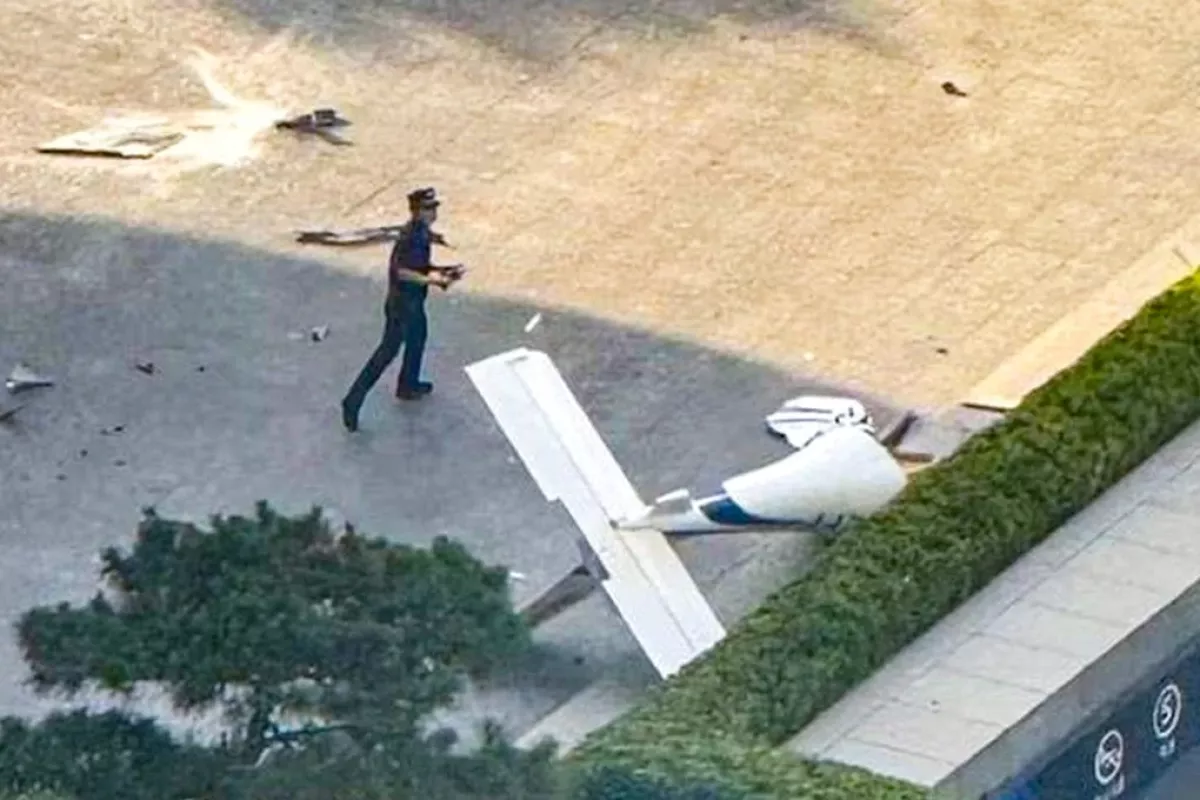
An official statement released on July 2 said Liu suffered from chronic insomnia and anxiety and had repeatedly written in a diary about “ending his life.”
“The comprehensive investigation concluded that this was a case of endangering public safety caused by personal reasons,” the statement said.
The incident has also drawn attention in the context of China’s push to develop its “low-altitude economy,” an emerging sector covering activities, businesses and services operating in airspace below 1 kilometer, including drone flights.
As the South China Morning Post notes, the timing of the crash has intensified scrutiny of how such airspace is managed.
Li Wei, director of the Centre for Counter-Terrorism Studies at the China Institutes of Contemporary International Relations, a government think tank in Beijing, said there would have been little time to respond once the aircraft deviated from its route.
“Once this civilian aircraft deviated from its flight path and headed towards the city, its speed would have been very high, leaving little reaction time for air traffic control and air defence identification,” Li said.

He added that identifying the aircraft’s “intent” would have been difficult, and if it could not be determined—such as if the transponder was switched off—the plane could be treated as a threat, but responding to it would still present a dilemma.
“Shooting down a civilian aircraft in a crowded urban area would create potential ground threats and panic, so decision-makers would have conducted risk assessments,” he said.
“Given that this collision has occurred, there must be gaps in the management and coordination of the relevant departments,” he added.
Li also called for a review of the qualifications and psychological condition of flight personnel, saying aircraft identification systems should be strengthened along with emergency response plans.
Following the crash, flight schools across China said they had been instructed to suspend training and undergo safety inspections ordered by authorities after the two-seater plane struck Beijing’s tallest skyscraper.
By Nazrin Sadigova







 editor@caliber.az
 +994 55 444-88-98
 Азербайджан, Баку, ул. Низами, 203, Af Business House, 5-й этаж