










Bloomberg: Germany scrambles to prepare hospitals for potential war
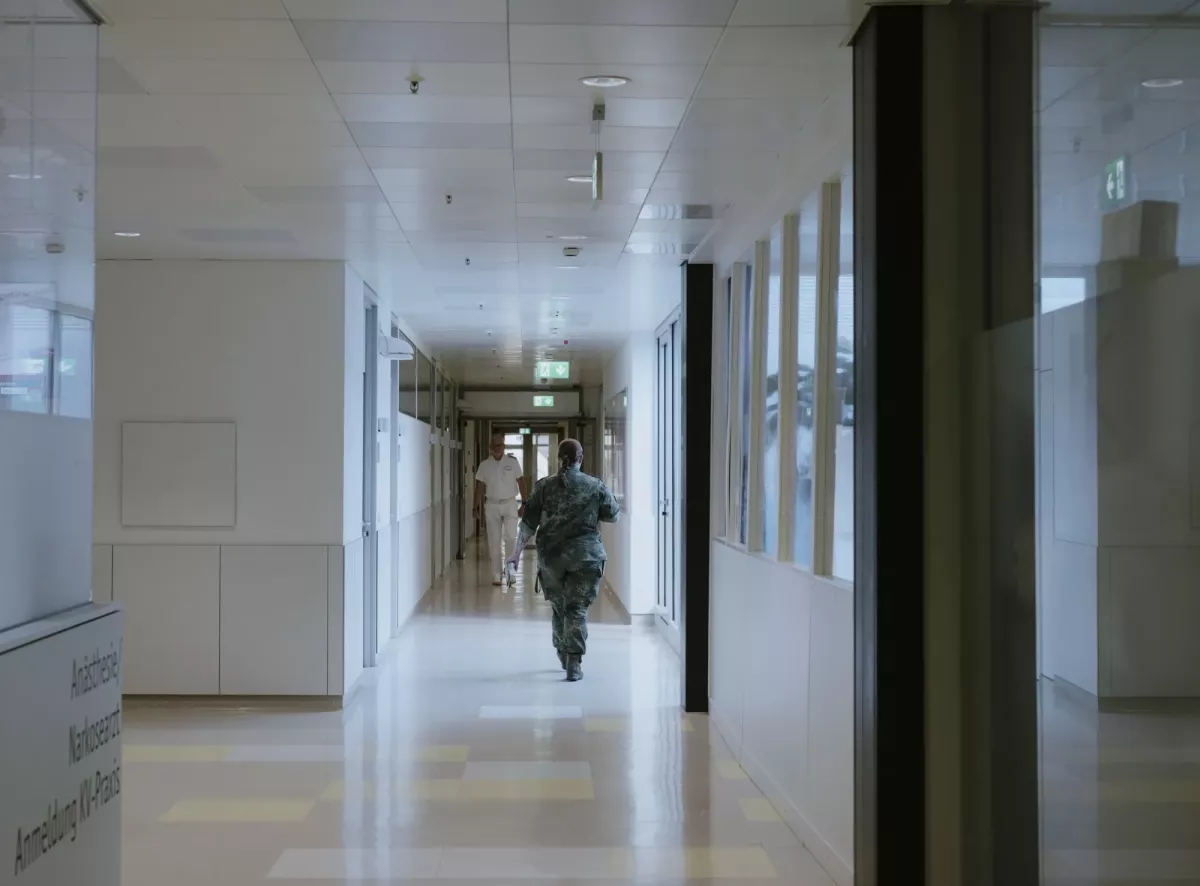
Germany is reviewing the capacity and resilience of its healthcare system as the country prepares for the possibility of having to treat large numbers of wounded soldiers in a future conflict involving NATO, with the military estimating that as many as 1,000 casualties could arrive in Germany each day.
The preparations include examining whether Cold War-era medical facilities can be brought back into service, strengthening coordination between military and civilian hospitals, expanding training for doctors and reinforcing medical supply chains, according to the latest piece by Bloomberg.
In the southwestern city of Ulm, a military medical bunker completed in 1979 during the Cold War is being considered for renewed use. The underground facility was designed to allow doctors to treat wounded soldiers following a nuclear strike and can accommodate up to 2,000 people for 90 days. It remained unused for nearly three decades.
Restoring the bunker would require millions of euros to modernise its aging ventilation and power systems, while officials acknowledge that such a facility would address only a small part of Germany’s broader healthcare requirements in a war.
“Is our healthcare system prepared for this? The only answer is: No,” said Benedikt Friemert, chief medical director and commander of the Military Hospital in Ulm. “What lies ahead of us is a marathon.”
The Bundeswehr has five military hospitals, which would quickly reach capacity in a major conflict. German law requires civilian hospitals to provide assistance during wartime, potentially placing unprecedented pressure on the healthcare system and forcing authorities to balance the treatment of military and civilian patients.
Germany is also working to reduce administrative obstacles that could hinder the rapid movement of patients and medical resources. Government bodies are assessing healthcare infrastructure and systems to determine how they would perform in a defense scenario.
The effort has gained urgency since Russia’s invasion of Ukraine. Germany has experienced a rise in hybrid attacks, including an attempted strike on an airport in Leipzig last month involving a drone carrying explosives, as well as cyberattacks targeting hospitals.
Defense Minister Boris Pistorius has warned that Russia could be in a position to attack NATO territory by 2029. In such a scenario, Germany would be required to support the alliance’s defense and, because of its central location in Europe, could become a major transit point for troops and a destination for their medical treatment.
A further challenge is the shortage of doctors experienced in treating war-related injuries. Only a few hundred doctors in Germany are estimated to have such experience. The Bundeswehr and the German Trauma Society DGU have responded by offering civilian surgeons courses on mass-casualty incidents and wartime injuries.
Sascha Flohé, secretary general of DGU, said demand for the training has increased sharply since the cooperation was established in 2017.
“Back then, we still thought we were living in a safe world, apart from Islamist terrorism,” Flohé said. “Nobody believed the security situation would change completely, or that we would be talking about collective-defense scenarios.”
Some state governments are now booking entire weeks of courses, while the most intensive programs, which use cadavers and anesthetized pigs, can train only 50 to 100 surgeons a year.
The military tested its ability to coordinate wartime medical care in March during its largest medical exercise in decades. The drill simulated an attack on Lithuania and involved transporting soldiers to hospitals in Berlin and parts of Brandenburg. Flohé said the exercise went smoothly but that further training was needed to ensure military and civilian healthcare systems could communicate effectively during an emergency.
A Health Security Act, expected to reach parliament this fall, is intended to improve that coordination by creating a real-time overview of hospital beds, medicines and medical personnel with skills relevant to wartime conditions. At present, information remains fragmented, making it difficult to determine where specialists are available and whether doctors and nurses who volunteer for aid organizations or serve as reservists are properly accounted for.
“At the moment we have these islands, the hospitals,” said Maria-Lena Weiss, a Christian Democratic Union lawmaker and member of the Bundestag’s health committee. “Now it’s about connecting them to the overall system.”
Companies are also assessing their exposure to potential disruptions. Biotech company CSL found that as many as 20% of its employees in some areas could be called away as reservists or volunteers.
Annegret Wittich-Höffer, CSL’s head of Germany, Austria and Switzerland, said truck drivers, many of whom come from Eastern Europe, could also be called up by their home countries. The company is examining how to maintain production of critical medicines if demand surges.
One drug used in trauma surgery requires CSL to collect and process plasma donations, a process that can take up to a year. The limited shelf life of finished products also makes it difficult to establish strategic reserves.
“Without blood-clotting factors, things get really tight,” Wittich-Höffer said. If wounded soldiers arrive in Germany at the scale outlined by the Bundeswehr, “nobody will be prepared — neither we nor our competitors.”
Hospitals are meanwhile assessing their own resilience. Michael Ey, a healthcare partner at PwC, said larger hospitals were seeking advice on emergency planning, including physical protections such as bullet-resistant glass and barriers against drones, as well as the availability of medicines and surgical supplies during a crisis.
“Our economy has largely been built around just-in-time supply chains. That may be good for efficiency and minimizing tied-up capital, but that’s not how resilience is built,” Ey said, calling for decentralized stocks of masks, medicines and vaccines across multiple locations.
Ukraine’s experience since Russia’s 2022 invasion is also informing Germany’s preparations. Kateryna Bielka, an anesthesiologist and professor in Kyiv, said Ukrainian hospitals moved patients to lower floors, barricaded windows against flying glass during air strikes and converted underground changing and technical rooms into treatment areas.
Hospitals also diversified their electricity supplies with generators and solar panels after Russia began attacking energy infrastructure. Bielka said uncertainty was among the biggest challenges, citing “the high level of stress, lack of information, lack of understanding.”
In Ulm, the university hospital across from the Military Hospital is also preparing for emergencies. It has a crisis and resilience team that conducts terror drills and is examining whether its underground parking garage could be converted into a long-term emergency shelter.
Udo Kaisers, the university hospital’s chief medical officer, said many German buildings were constructed when resilience and crisis preparedness were not priorities. Funding and grants generally support the most cost-effective construction and renovation measures rather than the most durable ones.
Kaisers also warned of vulnerabilities in medical supply chains. Germany, like much of Europe, depends on China for many critical ingredients used in antibiotics and painkillers. His hospital is increasing stocks of some essential medicines, but budget constraints complicate the effort. German hospitals are advised to maintain only six weeks of intensive-care medicines.
The previous German government had been working on legislation to prepare the healthcare system for defense and wartime conditions but failed to complete it before collapsing in 2024. The current coalition had planned to present a draft Health Security Act this summer but postponed it until the fall, and it remains unclear whether that timetable will be met.
Kaisers said maintaining the functioning of the healthcare system is ultimately essential to Germany’s ability to withstand a crisis.
“The healthcare system is central to the functioning of society,” he said. “Social cohesion, and ultimately also public morale, depend significantly on whether we can uphold the promise of healthcare for people.”
By Tamilla Hasanova







 editor@caliber.az
 +994 55 444-88-98
 Азербайджан, Баку, ул. Низами, 203, Af Business House, 5-й этаж