










China readies humanoid robots for potential battlefield use
China’s defence establishment is accelerating research into the military use of humanoid robots, with researchers modelling their deployment in urban combat and missions behind enemy lines, according to a Reuters review of military procurement records, academic studies, patents and official documents.
The work has gained momentum since 2025, with Chinese military institutions seeking humanoid robots and technologies to train them, while studying how the machines could operate alongside troops.
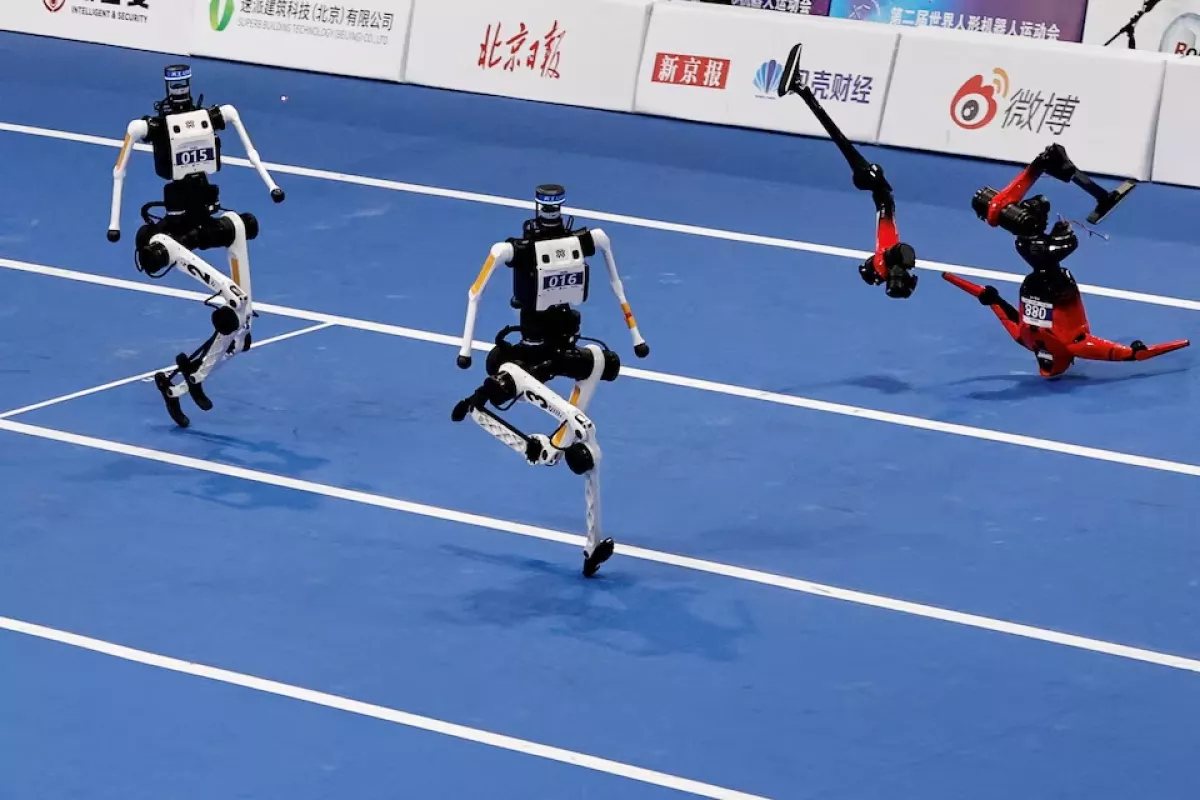
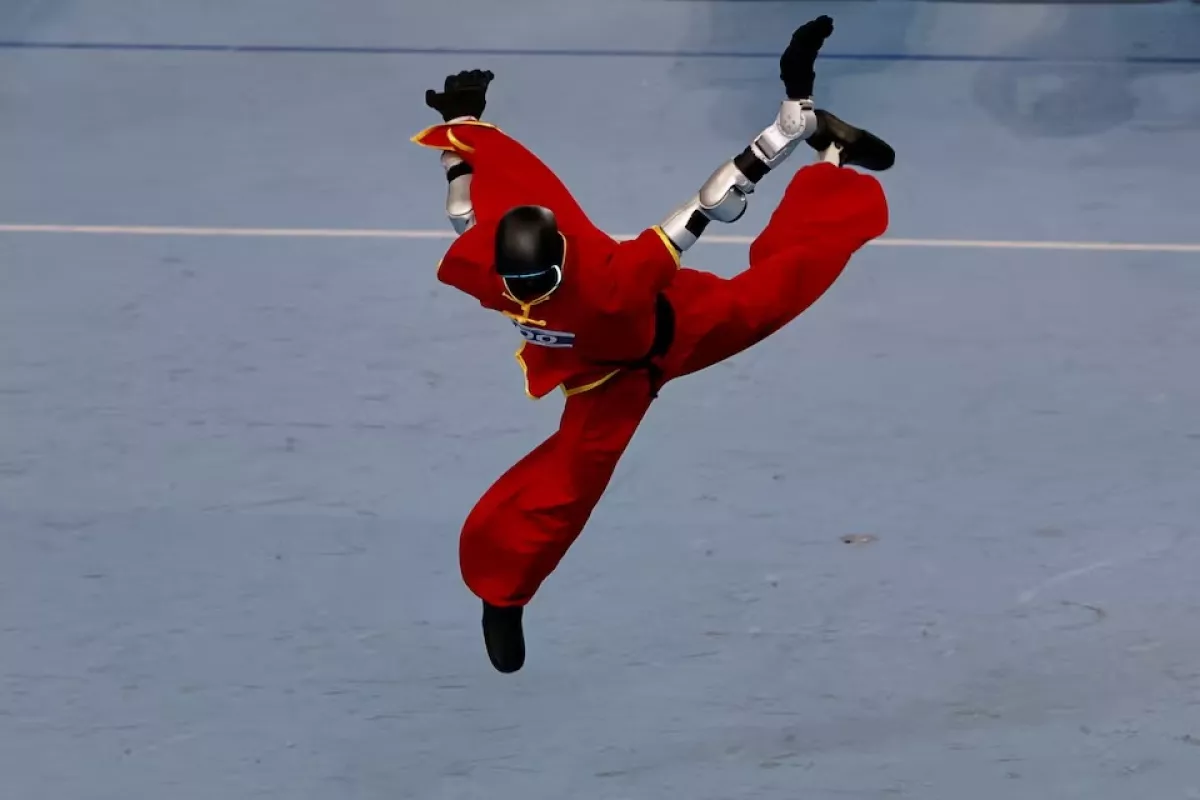
At the World Humanoid Robot Games in Beijing last month, humanoid robots competed in running, boxing and wushu. Two days later, the People's Liberation Army's official newspaper called for faster transfer of advanced technologies from laboratories to military training grounds for robotic “combatants”.
China accounted for about 95% of global humanoid robot shipments in 2025, according to BofA Global Research. Reuters found no evidence that China has deployed an armed humanoid robot with an operational PLA unit. The technology remains energy-intensive and unreliable outside controlled demonstrations.
“Going where we don’t want humans to go is one of the most compelling reasons to develop robots in the first place,” said Dennis Hong, a professor at UCLA. “If losing a robot means avoiding the loss of a human life, then the robot can become expendable.”
Urban combat
A 2025 study by researchers at the National University of Defense Technology (NUDT) in Xi’an modelled an urban assault force using six “combat robots” – including humanoids, robot dogs and unmanned vehicles – divided between two assault teams.
The robots would work alongside troops to clear enemy-occupied buildings floor-by-floor and room-by-room. The study did not specify their rules of engagement, weapons or how they would respond to civilians.
“Their two hands and two feet could, in theory, combine mobility, climbing and manipulation,” said Juo-Min Chou, a researcher at Taiwan's Institute for National Defense and Security Research.
A July 2025 PLA Daily article said humanoid missions could eventually develop “from supporting combat toward primary combat” and discussed how robots might be authorised to fire on a living target verified by a human.
Behind enemy lines
Chinese military interest increased in 2024, when NUDT and the Academy of Military Sciences held a defence technology forum covering military applications for humanoid systems.
A 2025 NUDT competition included an event simulating “infiltration behind enemy lines”, requiring robots to enter an area, map it and locate targets. Other scenarios included identity checks and security patrols at military bases.
In May 2025, the PLA issued a tender for a humanoid robot, including installation and technical training. In June 2026, it budgeted about $300,000 for a system to collect and label camera, radar and motion data for humanoids.
Remote operation
Norinco, the state-owned defence conglomerate, has developed the Fuxi humanoid robot, which company materials say can perform sentry duty, reconnaissance and intelligent patrols.
Fuxi can be controlled remotely through Norinco’s teleoperation system, potentially reducing the need for autonomous decision-making.
Malcolm Davis, a senior analyst at the Australian Strategic Policy Institute, said humanoid robots were not practical battlefield systems at present.
“But in five to 10 years,” he said, “they could very well be.”
China is not alone. The U.S. Army launched a competition last year to develop “militarized humanoid capabilities” for potential roles including reconnaissance, security and urban operations.
Humanoid robots designed for autonomous deployment would also face legal and ethical challenges. International humanitarian law requires forces to distinguish combatants from civilians and prohibits attacks on wounded or surrendering fighters.
China’s defence ministry said in March that AI-powered weapons should remain under human control.
Wang Yonghua, a researcher at the Academy of Military Sciences, wrote that humanoids still face unresolved problems involving movement, perception and intelligence. Technical breakthroughs, lower costs and industrial-scale production would be needed before they become widespread military systems.
If those conditions are met, Wang wrote, “humanoid robots will stream onto the battlefield.”
By Aghakazim Guliyev







 editor@caliber.az
 +994 55 444-88-98
 Азербайджан, Баку, ул. Низами, 203, Af Business House, 5-й этаж