










Curse of India’s occupation army in Kashmir Suicides, violence, mass graves
Kashmir Media Service (KMS) has published an article analysing the crisis within India’s armed forces in Kashmir. Caliber.Az is reprinting it with minor edits.
“The world has long documented the suffering of the Kashmiri people under India’s military occupation in the form of enforced disappearances, children blinded by pellet guns, torture cells, and mass graves. But there is now another story emerging from the same occupation, one that India is desperately trying to hide: the occupier is suffering too.
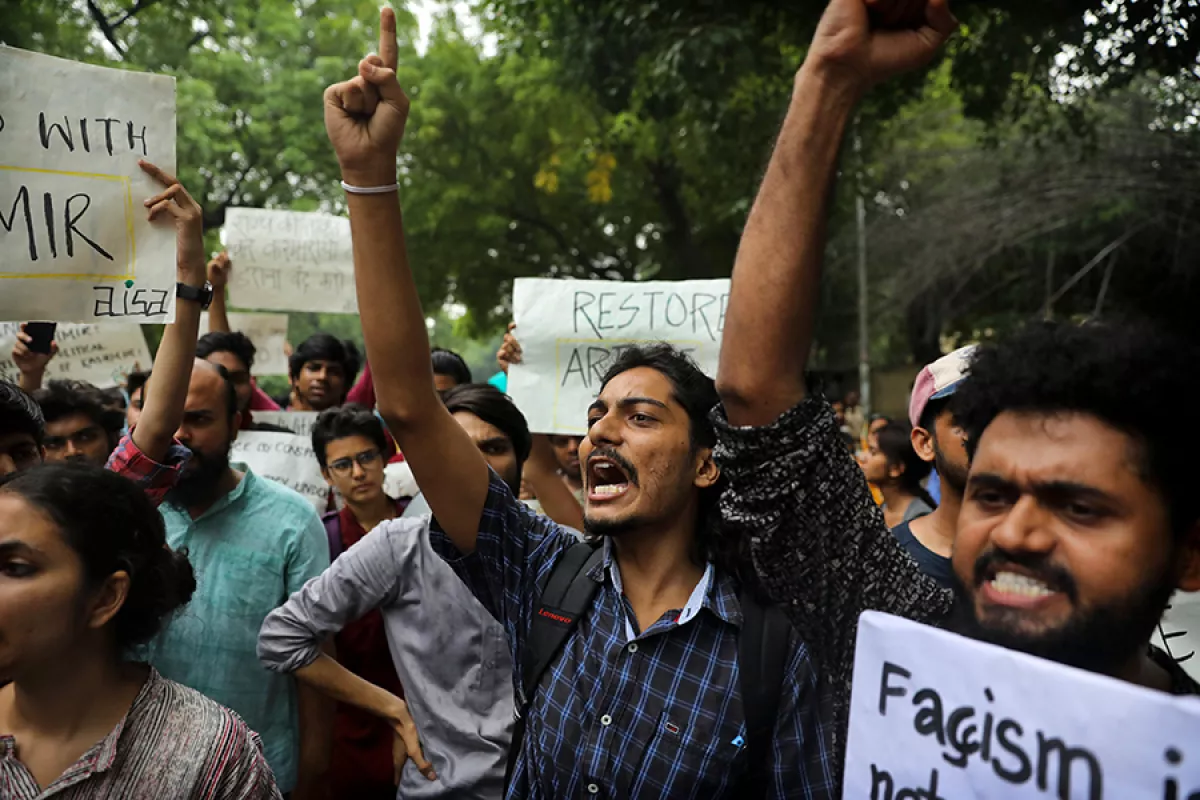
On April 19, 2026, an Indian Army soldier posted with a dog unit was found hanging from the ceiling of his room inside a military camp at Nagrota, Jammu. This single tragedy belongs to a pattern so vast and so deliberately hidden that it has become one of the strongest indictments of India’s occupation policy. In 2024 alone, the Indian Armed Forces recorded 787 suicide cases, 591 in the Army, 160 in the Air Force, and 36 in the Navy. The Central Armed Police Forces recorded 1,532 suicides between 2011 and 2023. Since 2007, over 612 Indian soldiers and paramilitary personnel have taken their own lives in Indian illegally occupied Jammu and Kashmir (IIOJK) alone. A soldier is dying by his own hand every third day.
Much of this crisis traces directly to the political decisions of the BJP government. Under Narendra Modi, IIOJK has been treated not as a political dispute requiring dialogue, but as a territory to be controlled by force. The revocation of Article 370 in August 2019 removed whatever political autonomy the region had, deepened the anger of the Kashmiri people, and placed an even heavier burden on already exhausted troops. Then came the Agneepath scheme in 2022, a short-term contractual recruitment model that brought young soldiers in for just four years with no guaranteed pension or long-term security. Critics argue that the phrase “Modi ki Sena” is no longer just a political slogan but a reflection of reality, where loyalty to Hindutva ideology increasingly influences promotions over battlefield competence, and where political interference creates a pressure cooker environment for soldiers at the bottom.
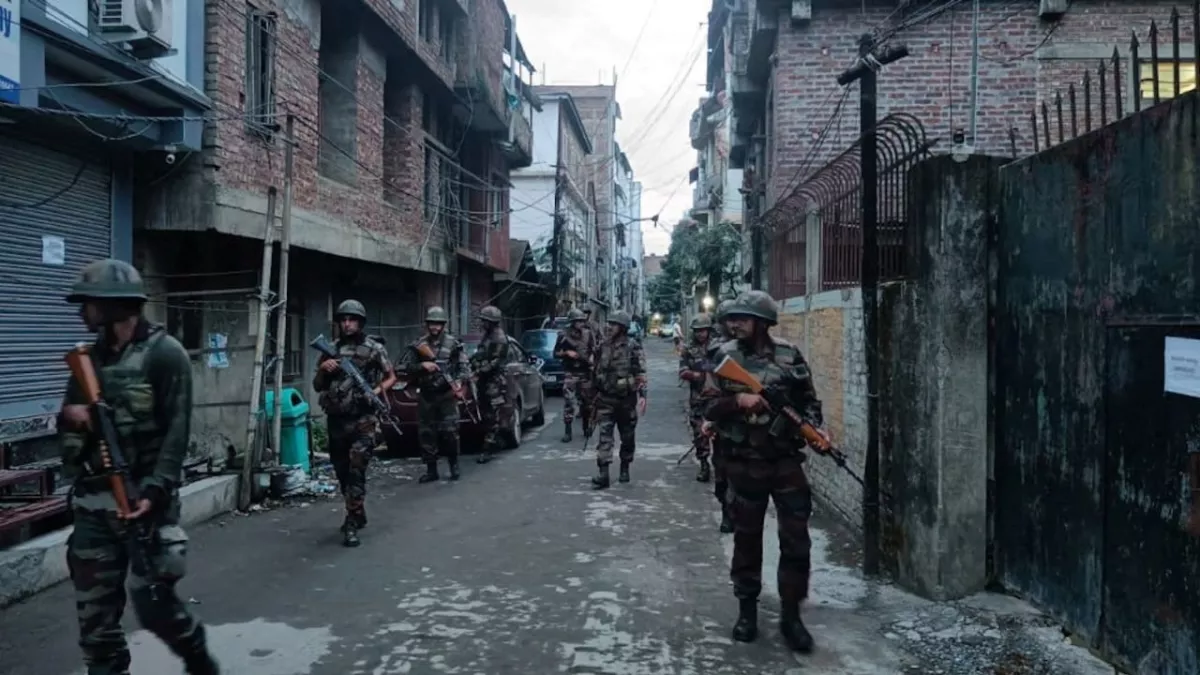
Inside the ranks, the rot goes even deeper. Reports indicate that Muslim officers in the Indian Army face a glass ceiling reinforced by Hindutva bias, with promotions shaped by religion rather than merit. The non-commissioned officers, the soldiers at the lowest ranks doing the most dangerous work show significantly higher suicidal tendencies than their commissioned superiors. These are young men from poor villages, with no political connections and no safety net, sent to IIOJK indefinitely and abandoned there.
India’s response to each suicide follows the same script: blame personal or family problems, close the case, and move on. But between 2016 and 2020, nearly 47,000 troops from the Civil Armed Forces voluntarily resigned or retired early. You cannot explain away 47,000 departures as personal choices. India’s own Punjab and Haryana High Court acknowledged in August 2025 that continuous postings, family separation, and a zero-error work culture cause extreme and life-threatening stress in soldiers. Even India’s own courts are now saying what New Delhi refuses to admit.
And when domestic pressure grows too strong to ignore, India does what it has repeatedly done: it manufactures a crisis to change the conversation. The Pahalgam attack of April 2026 fits this pattern precisely. Before any investigation was complete, Indian media and BJP politicians were blaming Pakistan. Independent analysts have noted how conveniently such incidents appear whenever India faces pressure over its military failures or institutional rot. False flags do not solve the underlying crisis. They simply delay it, while more soldiers die.
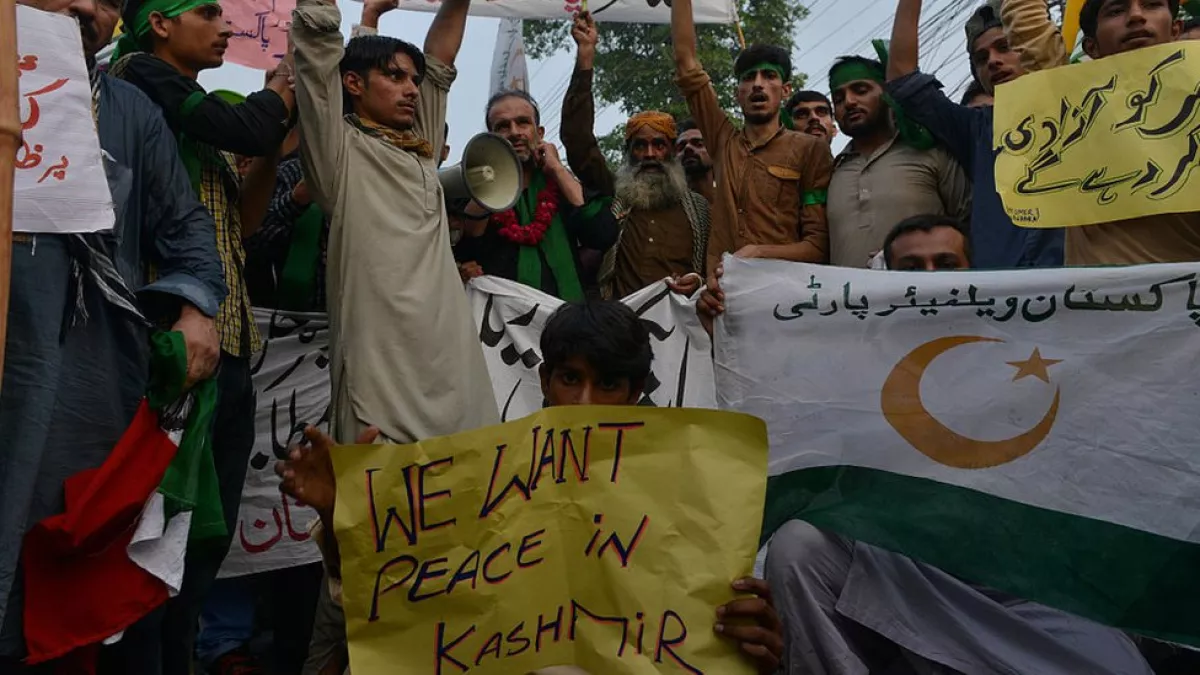
The same army that fires pellet guns at unarmed Kashmiri protesters, that has disappeared thousands of young men into torture cells, that operates under AFSPA with near-total legal impunity, that army is now consuming itself from within. The Kashmiri people have paid an unbearable price for seven decades of occupation. But the soldiers sent to enforce that occupation are also paying a price. With their mental health, and increasingly, with their lives. Both are victims of the same failed policy.
The rising number of suicides by the Indian soldiers stands as a stark indictment of nearly eight decades of occupation, of BJP’s politics of force, of Agneepath’s disposable soldiers, of caste and religious discrimination within the ranks, and of a government that has chosen military dominance over political courage at every turn. The people of occupied Kashmir have suffered long enough. Now the occupier is suffering too. And until India resolves the Kashmir dispute through dialogue, justice, and international law, that suffering on both sides will only grow heavier, one death at a time,” the article says.







 editor@caliber.az
 +994 55 444-88-98
 Азербайджан, Баку, ул. Низами, 203, Af Business House, 5-й этаж