










EU's first full-fledged faculty for Islamic theology opens in Germany
The University of Münster is the stage for the first faculty of Islamic theology in Germany, and West Europe as a whole, giving the subject the same status at the university as Catholic and Protestant theology.
The opening of the academic faculty was attended by several hundred academics, representatives of various religious communities and public officials, as German media reports.
Founding Dean Mouhanad Khorchide told the audience that the faculty was not a pulpit and that preaching belonged in mosques, underscoring that academic research must and would remain free from the influence "from whoever”.
Islamic theology must reach out to people who are skeptical of Islam or have fears about it, Khorchide said. A key question, he added, is how an open-minded understanding of Islam can be communicated to society.
Khorchide, born to a Palestinian family in Lebanon who holds Austrian citizenship, also sees the new faculty as having a broader social role. Under the guiding principle “Islamic Theology in Responsibility, Shaping the Future”, it is intended to conduct academic research while also strengthening its engagement with society.
The chairman of Germany’s Catholic Bishops’ Conference, Bishop Georg Bätzing, added that all theology, whether Christian, Islamic or Jewish, must be alert, sensitive to suffering and ethically oriented. Particularly in times of polarization and group-based hostility, theology has a special responsibility to work “shoulder to shoulder” on the challenges facing society, he said.
Tackling radicalism, foreign influences
Münster University has already offered the opportunity to study Islamic theology since 2012 through its Centre for Islamic Research. Khorchide, who was heading that body, advocated for a liberal understanding of Islam that interprets the Quran’s statements in a contemporary context and questions rigid interpretations. He has repeatedly warned about radical tendencies and has faced criticism from conservative Islamic representatives.
The move to faculty status, which is also unique in Europe in this form, came after 15 years of development and is regarded as a milestone in establishing Islamic theology at German universities. A faculty can establish its own study regulations, create degree programs, conduct examinations and award doctorates and habilitations.
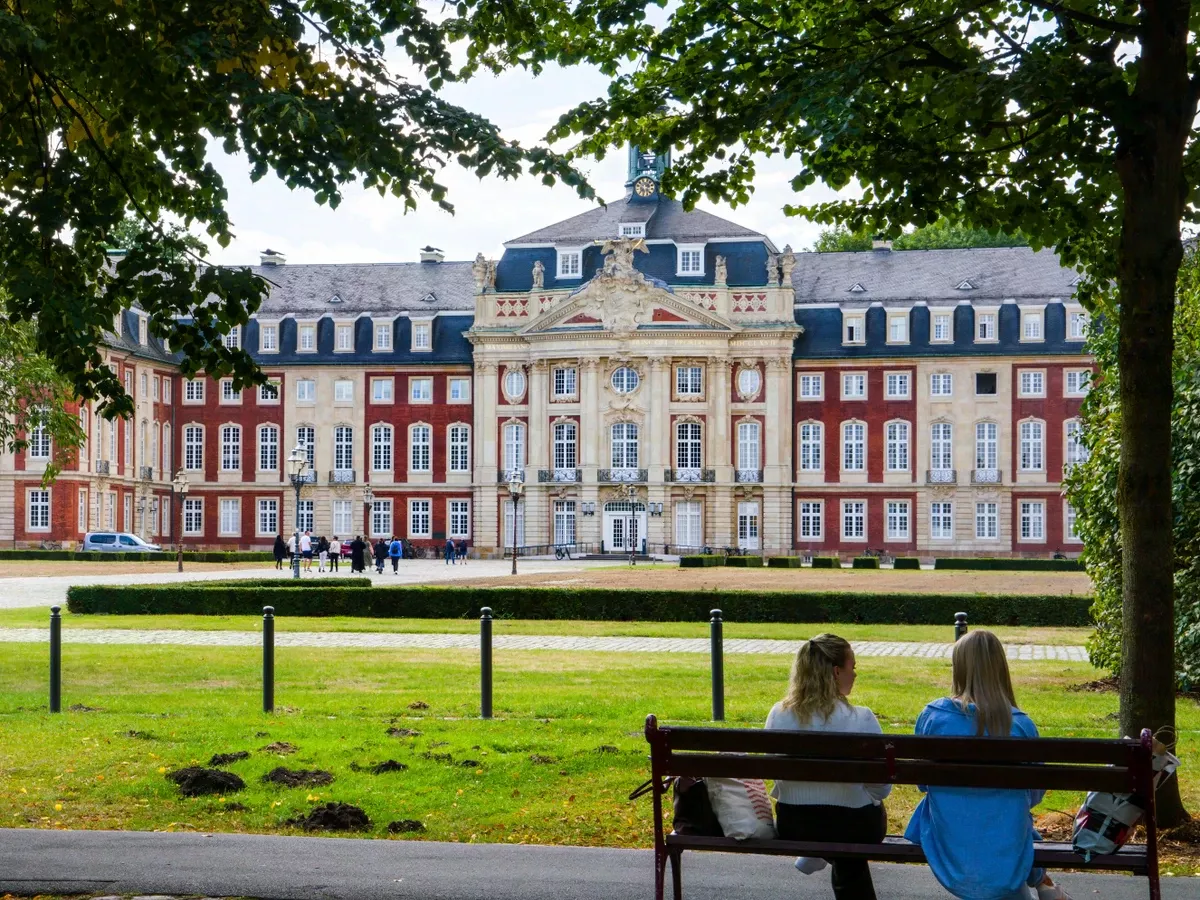
Eight professors teach at the new faculty, where students can, among other options, train to become teachers of Islamic religious education.
“With the introduction of a faculty of Islamic theology, interreligious exchange and mutual understanding are to be intensified,” a spokesperson for North Rhine-Westphalia’s Ministry of Culture said. “This includes imam training in German by teachers who grew up in Germany, who were socialized in our society and with our basic values.”
Until now, almost all imams serving in German mosques have come from abroad and received their training there.
Efforts to establish Islamic theology in Germany began decades ago. The aim has been to create an academic engagement with Islam that is rooted in Germany. Many also see the initiative as a way of limiting foreign influence over the understanding and practice of Islam in Germany.
Abdulkerim Şenel, a doctoral student at the faculty, told German media reporters that the Muslim community required not only prayer rooms, but also spaces where one could "bring certain thought processes into motion" and which offer a stage for open discussions and reflections.
The German university will expand in this direction with the planned opening of a Campus of Theologies and Religious Studies, where Islamic, Catholic and Protestant theology, as well as Jewish studies, are expected to work more closely together.
By Nazrin Sadigova







 editor@caliber.az
 +994 55 444-88-98
 Азербайджан, Баку, ул. Низами, 203, Af Business House, 5-й этаж