










Europe faces potato shortage after summer heatwaves hit crops
Europe is facing a potato shortage that could lead to smaller and more expensive fries after a succession of summer heatwaves scorched fields and stunted crop growth.
Extreme weather destroyed about 3.1 million tonnes of potatoes worth between €400 million and €620 million, according to an analysis by the non-profit Energy and Climate Intelligence Unit (ECIU), reviewed by the Financial Times. That comes on top of roughly 3.6 million tonnes of potatoes that were not planted this year after a bumper harvest in 2025.
“We’ve gone from a record high to a record low in one year, if [the estimates] materialise,” said Craig Elliott, Europe, Middle East and Africa market analyst at commodity price information service Expana. “It’s potato drama.”
Last year’s glut sent potato prices plunging, underscoring the crop’s vulnerability to boom-and-bust cycles. A benchmark Belgian potato price fell to nearly zero, prompting growers to dump unwanted potatoes, give them away, burn them or feed them to cattle.
Europe’s frozen-fries exports were also squeezed by a new US tariff and increasing competition from Asia, encouraging farmers to reduce plantings.
Production in Germany, France, Belgium and the Netherlands, Europe’s main potato-growing countries, is forecast by ECIU to fall from a record 27.3 million tonnes in 2025 to between 19.5 million and 20.5 million tonnes this year.
“What nobody saw coming was a series of five brutal heatwaves,” Elliott said. “Crop volumes have been hit. Crop quality has been hit.”
France is on course for its lowest potato yields in more than 30 years, excluding 2022, when the country suffered a severe drought.
“As one of Europe’s thirstiest crops, it was inevitable that the potato harvest would be hit hard, and we are starting to see that now in industry yield estimates, down 20 per cent in some cases,” said Tom Lancaster, land, food and farming analyst at ECIU. “For potato growers on the front line of climate change, the chips are well and truly down.”
On Jean-Paul Dallene’s farm near Arras in northern France, there was no rainfall between June 10 and August 25. When temperatures stayed above 30C for almost a week in August, his potatoes “stopped growing”, he said.
Dallene grows potatoes on 65 of his 340 hectares. He expects yields on irrigated land to be about 10% below normal, while some nearby unirrigated fields could produce only 20 tonnes per hectare, compared with a typical 45 to 50 tonnes.
Many of the potatoes that did grow are too small for processing, Dallene said. Manufacturers generally require potatoes larger than 50 millimetres, but in some fields most of the crop is below 40 millimetres. Processors have begun relaxing those specifications.
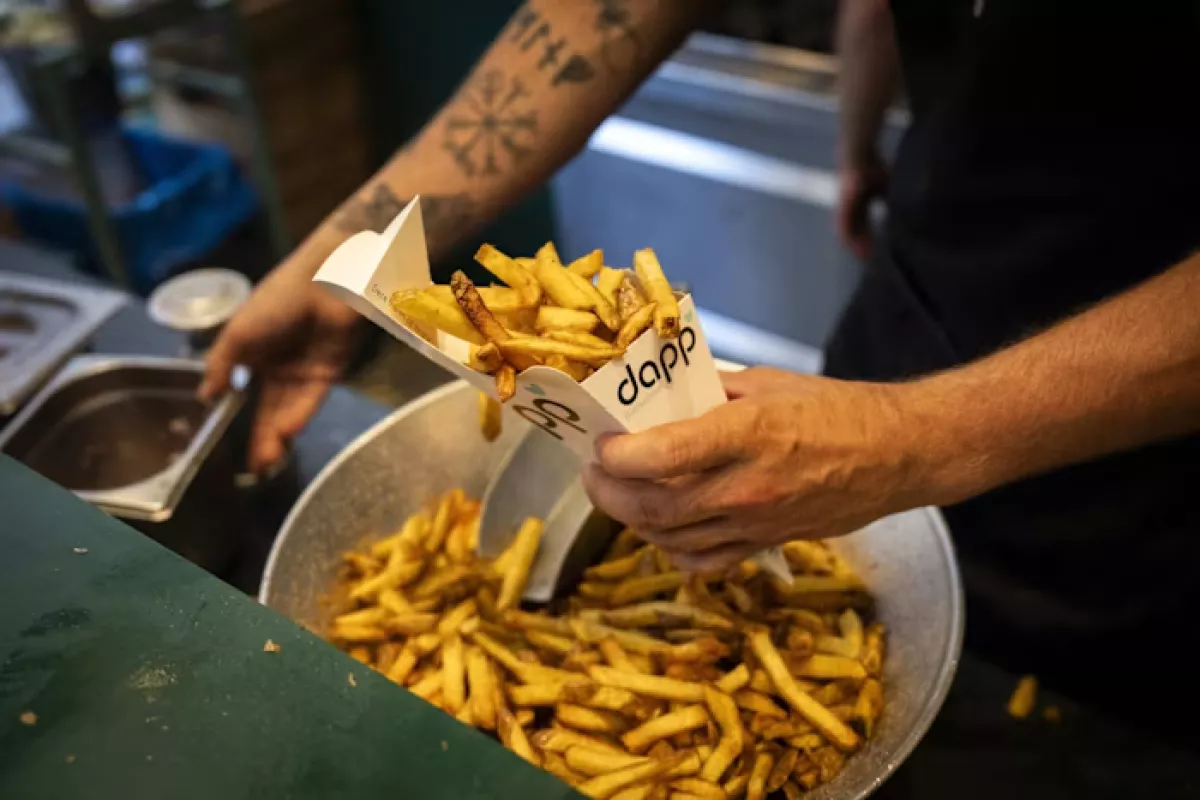
“You’re going to see smaller fries,” Dallene said.
Dallene sells his entire crop under contract to frozen-food group McCain at a price agreed before the summer drought. That price had already been reduced by €60 a tonne, or about a quarter, because of last year’s surplus.
Unless the contract is renegotiated, Dallene said, his potatoes will effectively be priced for a surplus but harvested in a shortage, leaving him with both a lower price and fewer tonnes to sell.
He is far from alone. About 80% of processing potatoes are sold under contract, according to Elliott, up from roughly 50% to 60% in previous years. Farmers who agreed prices before the scale of the heatwave damage became apparent were “locked in”, he said. “Those are the prices they’re stuck at.”
The free market has moved sharply in the opposite direction. New-crop processing potatoes are fetching as much as €250 a tonne in parts of Europe, compared with about €30 a year ago. French table potatoes were quoted at €520 a tonne on Sept. 3, up from €310.
Remaining stocks from last year’s bumper harvest should be sufficient to supply the market through Christmas, but they will only delay the squeeze, said Cedric Porter, editor of information service World Potato Markets. The effects are expected to begin appearing on supermarket shelves by Easter.
The looming shortage is part of an increasingly volatile pattern. Northwestern Europe has experienced four drought-hit potato crops since 2018, interspersed with wet winters and springs that left fields too waterlogged for planting.
Farmers are increasingly confronting both extremes: too much water when they do not need it and too little when they do.
“Weather conditions are becoming more extreme and challenging,” Porter said.
By Tamilla Hasanova







 editor@caliber.az
 +994 55 444-88-98
 Азербайджан, Баку, ул. Низами, 203, Af Business House, 5-й этаж