










Hidden heritage: A forgotten mosaic in Baku A journey through history on Caliber.Az
Mosaic is one of the oldest forms of art and has always held a special place in the architectural decoration of public and religious buildings. Azerbaijan has a strong tradition of monumental art, which developed particularly actively in the 20th century. It was during this period that a distinctive school of monumental artists emerged, characterised by a vivid visual language and a strong focus on national motifs. Many works created during this era continue to hold considerable artistic and historical value today.
One such work is a monumental panel located in Baku’s Sabunchu district, inside a former mosque. The large-scale panel covers almost the entire surface of the wall and consists of several compositional sections brought together by a unified artistic concept.
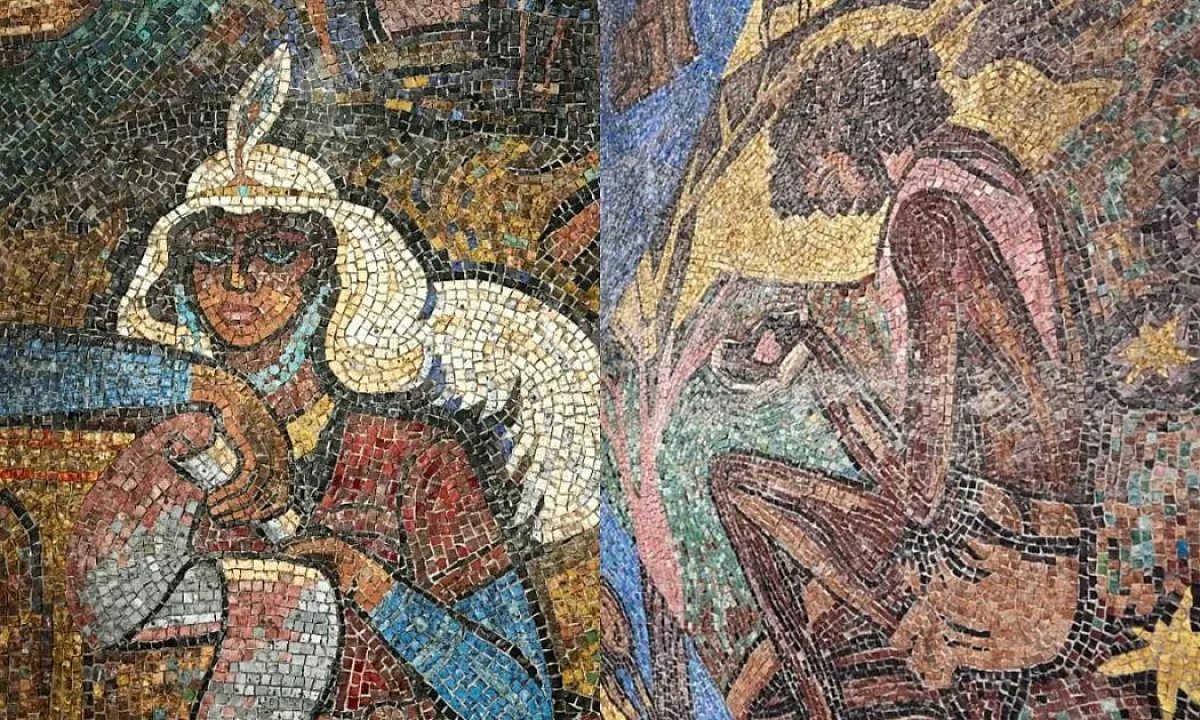
The mosaic was created by artist Elmas Huseynov in 1980. He is rightfully regarded as one of the prominent representatives of Azerbaijan’s school of monumental art. His works demonstrate meticulous attention to detail, carefully considered compositions, and a distinctive expressive artistic language. The artist made skilful use of a rich colour palette, giving his works a sense of vitality and emotional depth. Through visual imagery, he was able to convey complex storylines with subtlety and clarity, making his work a significant contribution to the development of Azerbaijan’s national art.
The composition is conceived as a unified narrative tableau, organically combining mythological, epic, and symbolic imagery. At its core are themes drawn from the works of the great poet Nizami Ganjavi, giving the piece particular cultural depth and a strong literary foundation. The overall composition is governed by a sense of balance and rhythm: central figures are complemented by secondary scenes, creating the impression of a continuous visual narrative.
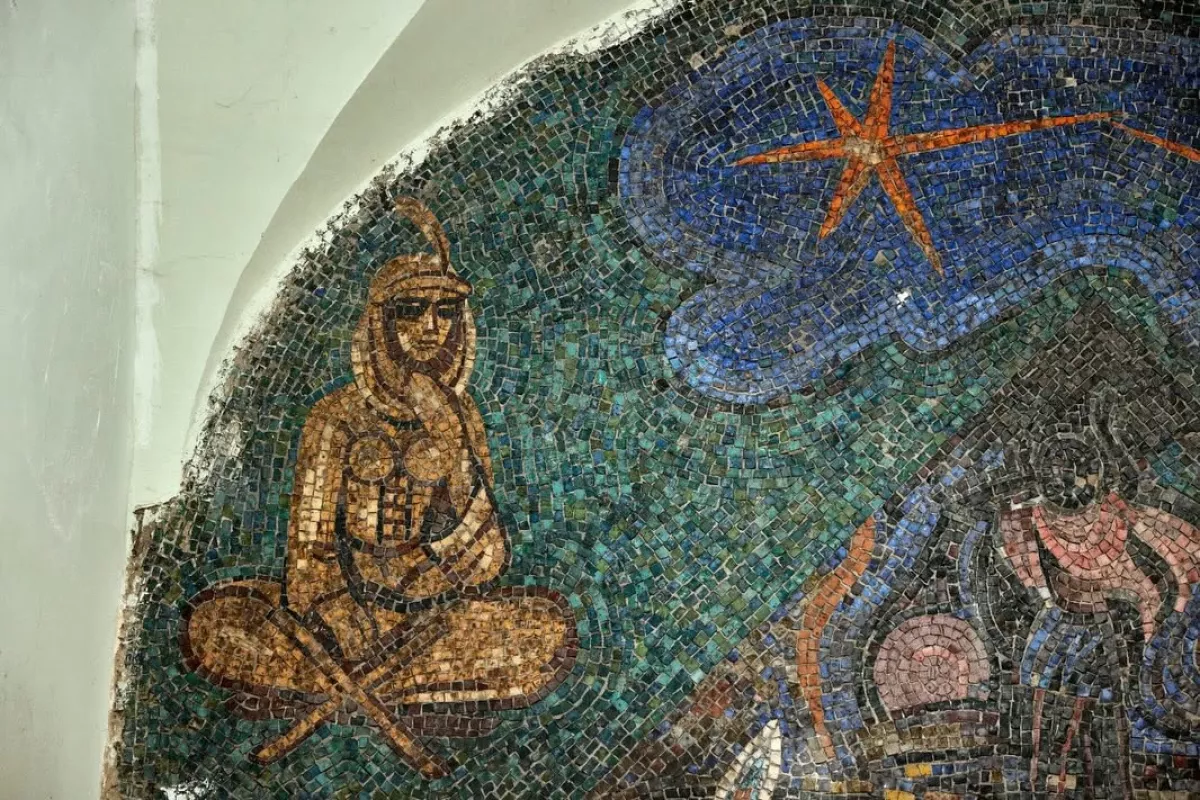
Upon closer examination, the mosaic reveals a wealth of intricate details. Each figure has been rendered with particular care: gestures, poses, clothing, and ornamental elements are depicted with a high degree of precision. The colour scheme is rich and vibrant, yet harmoniously unifies all parts of the composition. Individual scenes — whether depicting musicians, horsemen, or mythical creatures — come together to form a single artistic space. It is precisely this high level of detail that is one of the defining features of the work, allowing viewers to discover new nuances and meanings each time they look at it.
The history of the mosaic’s creation is linked to a complex period when many religious buildings temporarily lost their original function and were used for other public purposes. It was during this period that the composition appeared in the building’s interior, reflecting the cultural policies of the era and its effort to fill the space with new artistic content. At the same time, the mosaic does not conflict with the building’s spiritual context; rather, it draws on timeless themes rooted in the classical literature of the East.
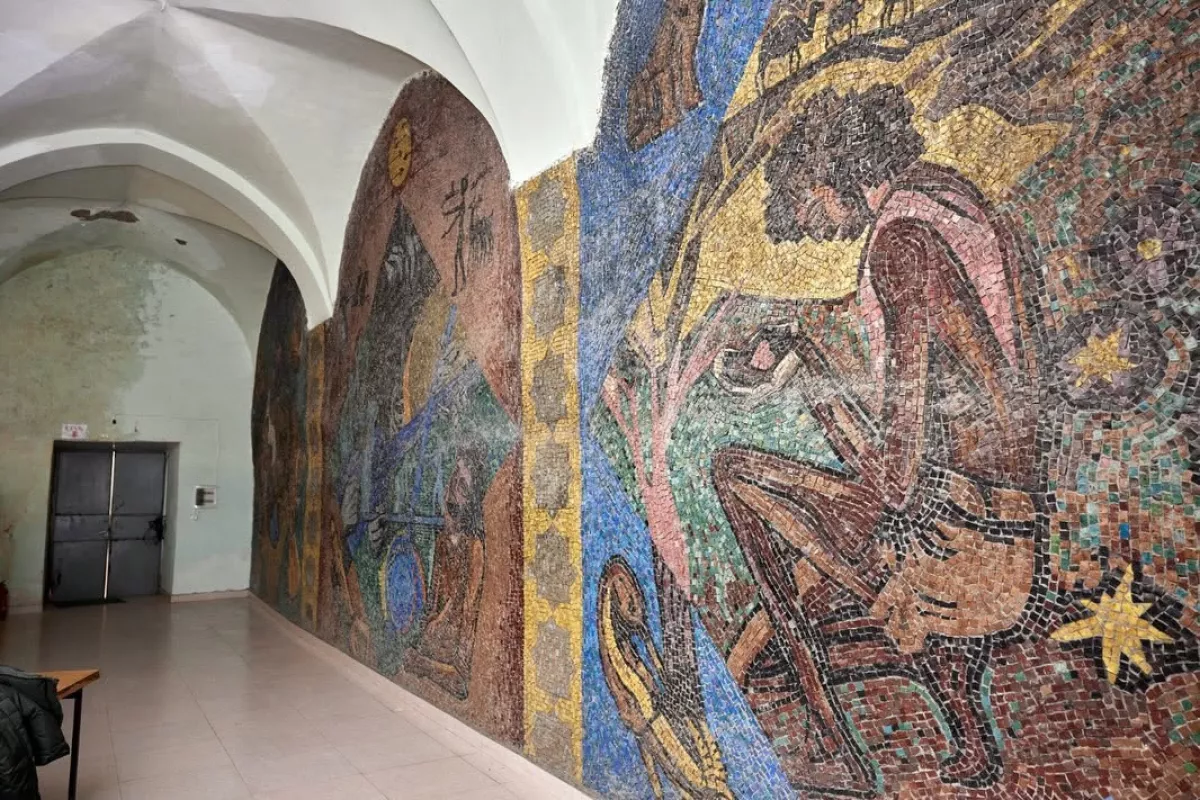
Today, the work remains largely unknown to the wider public and is hidden from the view of most visitors. Yet it represents a unique example of the synthesis of architecture, literature, and visual art. Works of this kind deserve careful attention and renewed appreciation as an important part of the country’s cultural heritage. It is precisely in such seemingly inconspicuous details that the true richness of a nation’s artistic tradition is revealed.
By Vahid Shukurov, specially for Caliber.Az







 editor@caliber.az
 +994 55 444-88-98
 Азербайджан, Баку, ул. Низами, 203, Af Business House, 5-й этаж