










Historian urges scholars to counter claims over Caucasian Albanian heritage PHOTO
Dr Hasan Hasanov, Doctor of Historical Sciences, has called on Azerbaijani scholars and journalists to challenge Armenian attempts to monopolise the heritage of Caucasian Albania.
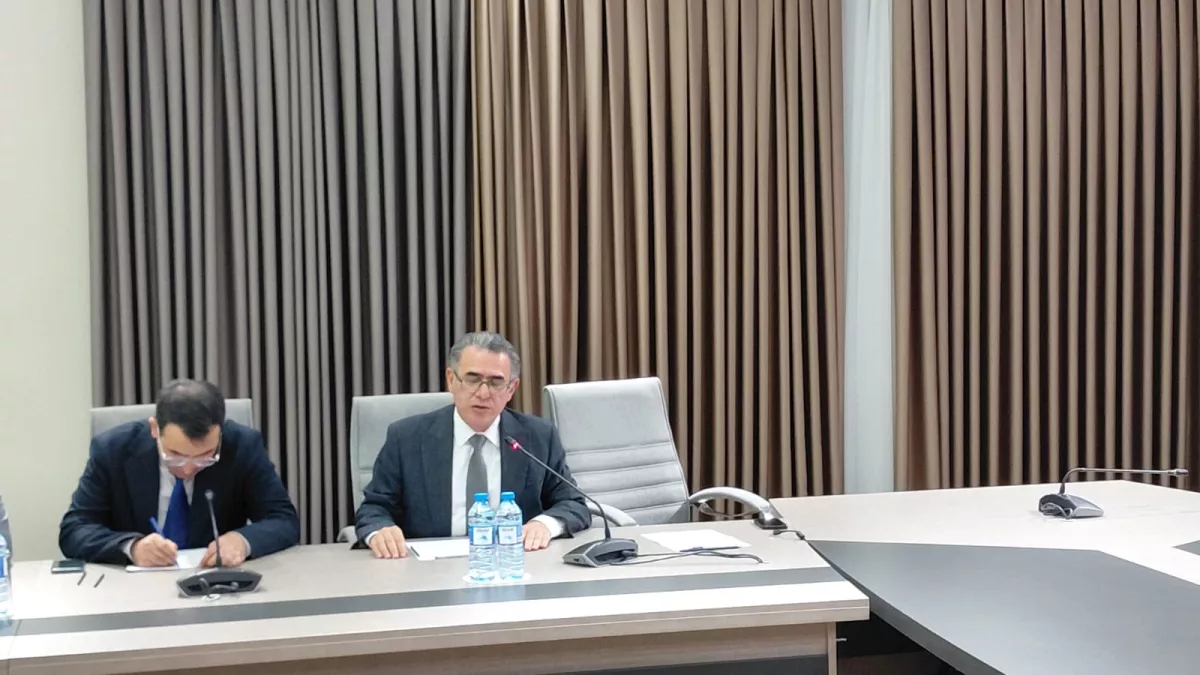
Hasanov made the remarks at the seminar “A Historical Perspective on the Heritage of Caucasian Albania”, organised on the initiative of the Media and Broadcasting Council, according to a Caliber.Az journalist who attended the event.
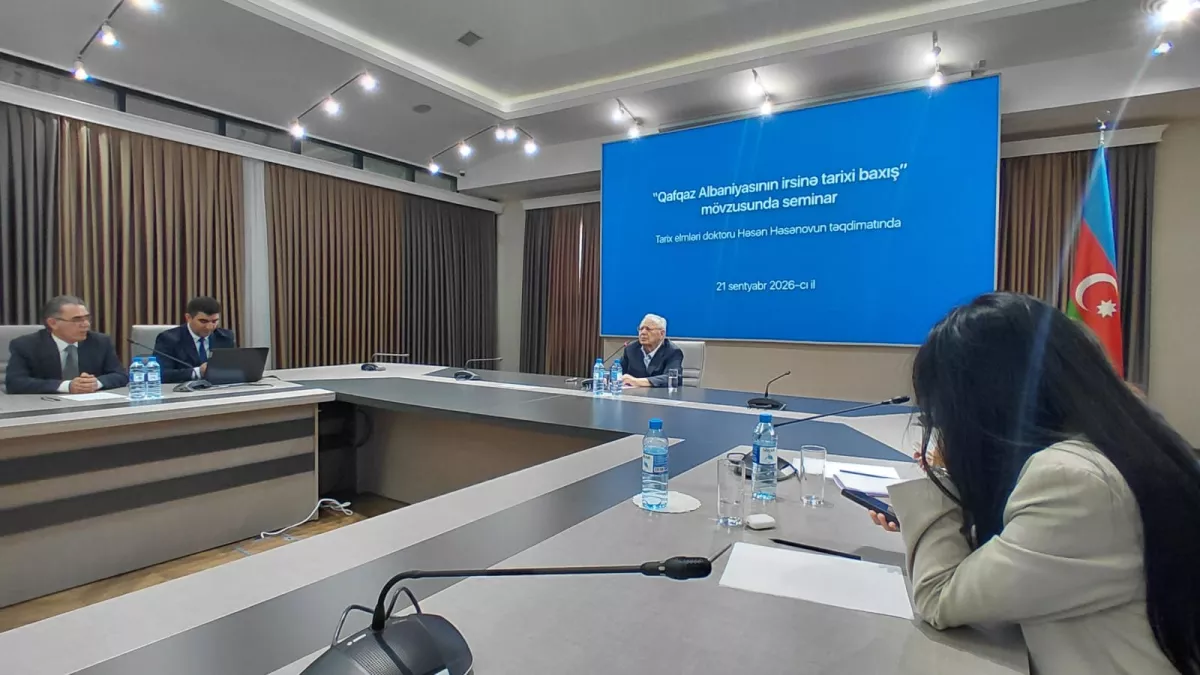
The historian delivered a presentation on the history of Caucasian Albania, Armenian claims concerning its heritage and attempts to distort the historical record.
“The war ended in our victory, but the information war continues,” Hasanov said, referring to continuing revanchist sentiment in parts of Armenian society following Azerbaijan’s victory and the liberation of its territories.
He said the reaction in some Armenian circles to visits by diplomats accredited to Azerbaijan to Karabakh demonstrated that “many there have not come to terms with our victory or the liberation of our lands.”
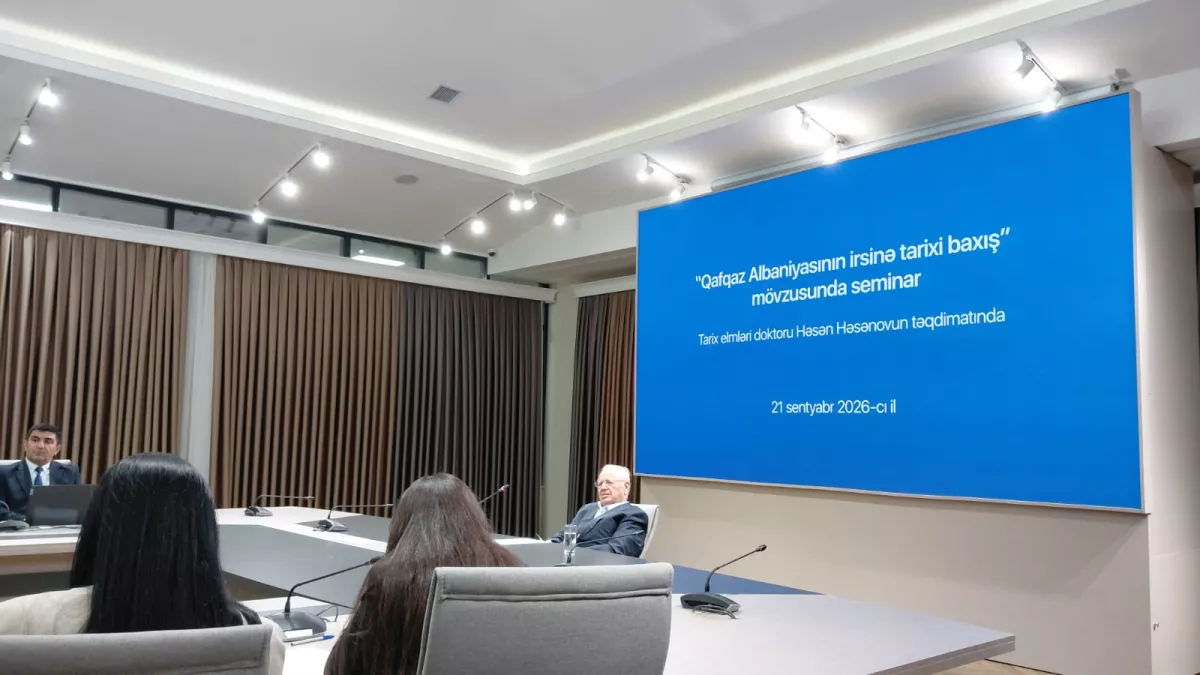
He said the name “Albania” had Turkic roots and meant “hero”, while Caucasian Albania had been part of Atropatene for seven centuries, from the 7th century BC to the 1st century BC, before gaining independence.
According to Hasanov, Christianity, Judaism and Tengrianism were among the religions practised in Caucasian Albania at different periods. He said followers of Tengrianism readily converted to Islam following its arrival in the region, while some Christians also converted and others became aligned with Armenian or Georgian religious traditions.
“I find it laughable when Armenians declare themselves the heirs of the ancient Albanians. The Albanians are Turks, a Turkic tribe. Today, Albanians live in China and Kazakhstan,” Hasanov said.
The scholar also rejected misconceptions about the religious history of Azerbaijan, saying Azerbaijanis had never been Zoroastrians. He said Nowruz was a Turkic spring festival and had no connection with fire worship.
“The Armenians have invented their own history, and have spun it so convincingly that they have come to believe it themselves. In their claims, they rely on researchers, whereas I rely on ancient sources and historians,” Hasanov said.
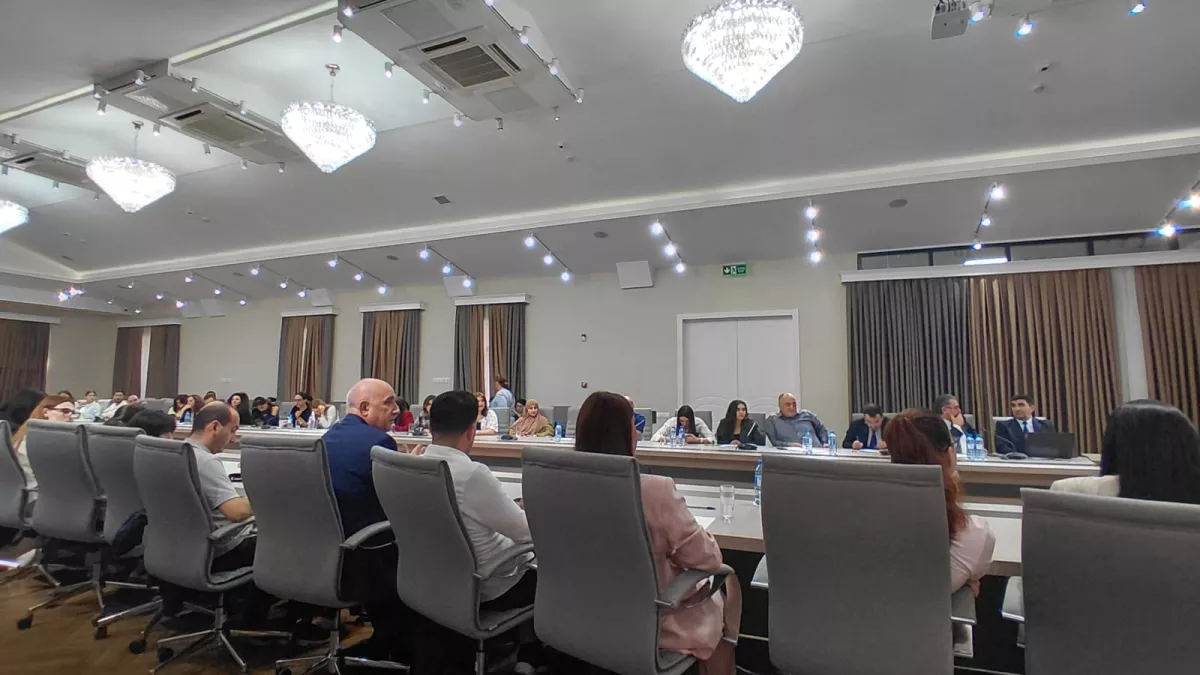
He expressed concern over what he described as insufficient awareness among Azerbaijani journalists about historical terminology and disputed narratives. Hasanov said that, among around 50 Azerbaijani journalists in the room, only three knew that the territory Armenians refer to as “Syunik” is known in Azerbaijan as Western Zangezur.
“Unfortunately, we have few speakers – scholars – like the Armenians do. And I am not sure that what I have said will resonate with even 5 per cent of the journalists sitting here. But the rest must speak out openly about the Armenians’ attempts to monopolise the heritage of Caucasian Albania. And by the way, I am opposed to declaring the Udis to be the sole heirs of the Christians of Caucasian Albania,” he said.
Hasanov also said he had identified 40 shortcomings in Azerbaijan’s history textbooks and had raised the issue with the Ministry of Science and Education but had received no response.
The historian further linked Armenian claims concerning the Ganjasar and Khudavang monasteries to continuing claims to Azerbaijani lands.
“I call for scholars and journalists to join forces to counter this,” Hasanov said.
By Sabina Mammadli







 editor@caliber.az
 +994 55 444-88-98
 Азербайджан, Баку, ул. Низами, 203, Af Business House, 5-й этаж