










How Khamenei's funeral displayed Tehran's multi-vector strategy toward Afghanistan
The funeral of slain Iranian leader Ali Khamenei, held over six days in mid-July, was intended by Tehran as what many experts regarded as a display of pageantry, defiance and determination to continue fighting despite pressure from the United States and Israel.
Iran invited delegations from nearly 100 countries, including government representatives from all three South Caucasus nations, Russia, Türkiye, India, Pakistan and many others. Among the neighbouring countries represented was Afghanistan, but what drew particular attention was Tehran’s decision to invite two sharply opposing Afghan delegations: one representing the Taliban government and another representing the republican opposition movement fighting against it.
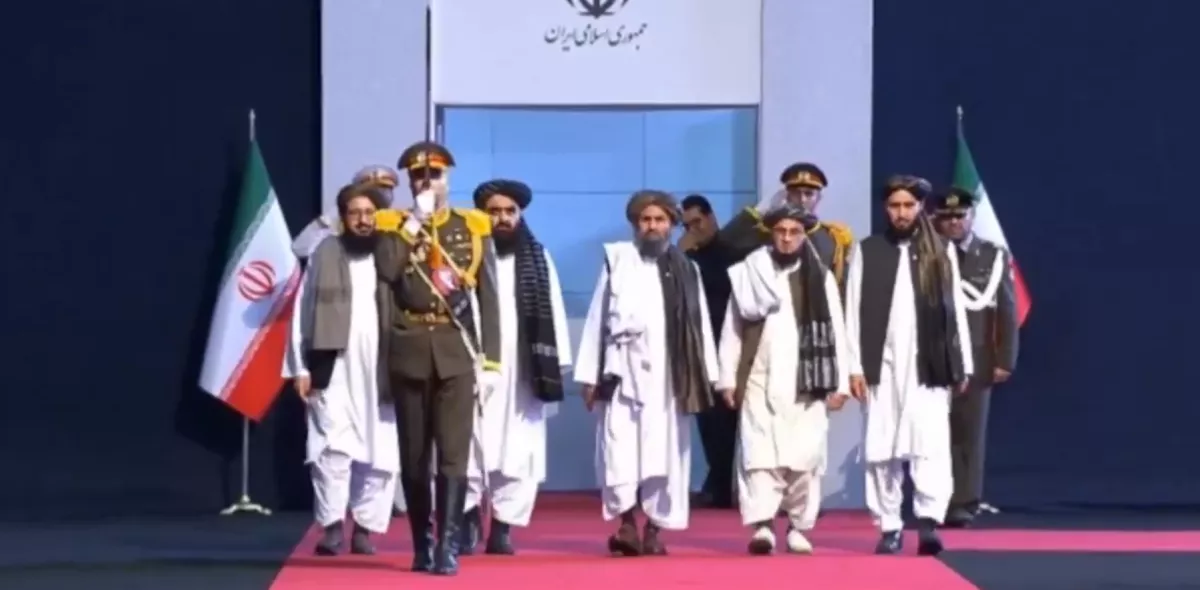
The presence of the rival delegations created a striking contrast during the procession, as an article by The National Interest recalled.
The Taliban delegation, led by senior officials Abdul Ghani Baradar and Amir Khan Muttaqi, was followed almost immediately by a second group headed by Ahmad Massoud, leader of the National Resistance Front (NRF), and Mohammad Mohaqiq, a prominent figure from Afghanistan’s historically anti-Taliban Hazara community.
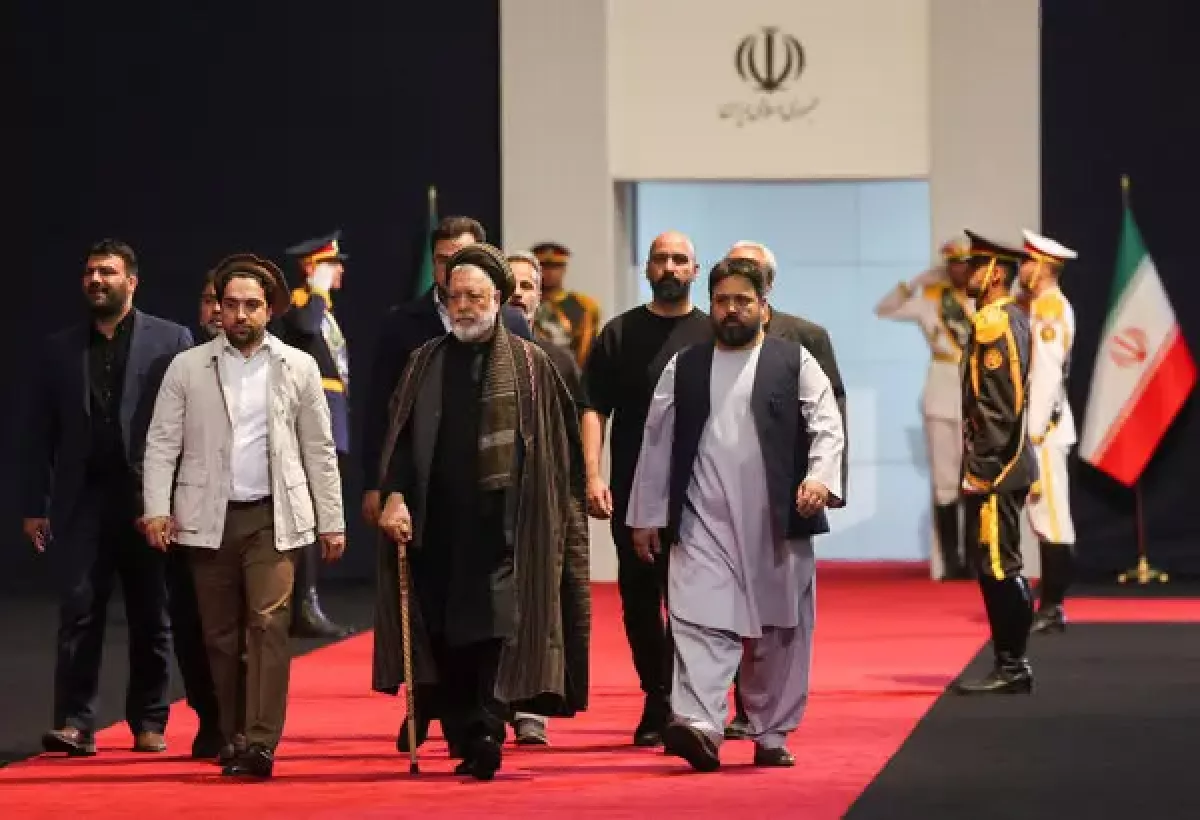
Perhaps the most significant aspect of the ceremony was not simply that Massoud had been invited, but the way Iran presented him once he arrived. Massoud entered the funeral hall at the head of his delegation, which the announcer welcomed as “the High Delegation of the Afghanistan Resistance.” The announcer went on to describe the delegation’s presence as a reminder of the historic ties between the two countries and their shared respect for “struggle, human dignity, and freedom.”
Back in Afghanistan and across the diaspora, the scenes attracted considerable attention from both Massoud’s supporters and his opponents. As the article notes, his supporters viewed the reception as a vindication of their leader and the broader anti-Taliban resistance. They circulated footage of his entrance on social media, often editing it with patriotic music and images of his father, Ahmad Shah Massoud, the legendary Afghan guerrilla commander who fought as commander for the country’s mujahideen during the 1979-1989 Soviet-Afghan War and later opposed the Taliban before his assassination by al-Qaeda militants in 2001.
The Taliban government and its supporters, meanwhile, reacted angrily to Massoud’s elevation to an official status. Abdul Latif Nazari, the Taliban’s Deputy Minister of Economy, accused Iran of attempting to play both sides of the Afghan conflict, while Kheirullah Shinwari, an official at the Taliban Foreign Ministry, accused Tehran on X of hosting figures who challenged Afghanistan’s “national sovereignty and independence.” Other Taliban-aligned accounts called on the government to summon Iran’s ambassador or respond by inviting exiled Iranian opposition figures, including Reza Pahlavi, or even members of the Balochistan-based militant group Jaish al-Adl, to Kabul.
According to the outlet’s analysis, Iran’s conduct at the ceremony underscored a longstanding feature of its relationship with Afghanistan. Given the historical weakness of successive central governments in Kabul, Tehran has traditionally sought to hedge its bets by maintaining ties not only with whoever controls the capital, but also with other political actors who could become influential in the future.
Historic precedent of multi-vector approach towards Kabul
When asked why Taliban opponents had been invited to the ceremony, Hassan Kazemi Qomi, Iran’s former envoy for Afghanistan, was cited by the outlet as saying that Afghanistan’s population has multiple representatives and that those currently governing the country represent only one part of society, while other groups remain outside the political system.
Nearly five years after the Taliban seized Kabul, its political and security structures remain overwhelmingly dominated by Pashtun men drawn from the movement’s religious and military networks. Tajiks, Hazaras, Uzbeks, women, secular professionals and even reform-minded Pashtuns have little meaningful representation in the current political order.
As Qomi put it, Iran’s approach was intended to encompass all Afghans rather than whichever political movement happens to control Kabul at a particular moment. Tehran’s message was not that it intends to overthrow the Taliban or turn the NRF into an armed proxy similar to Hezbollah or the Houthis. Rather, the invitation appeared to reflect Iran’s broader assessment that the Taliban government is the authority of the present moment, while its long-term dominance over Afghanistan cannot be taken for granted.
According to the journal's piece, Tehran therefore appears willing to work with the Taliban because it currently controls the country, while simultaneously maintaining relationships with political figures and movements that could become important if Afghanistan’s political landscape changes.
The funeral ceremony offered a highly visible demonstration of that strategy, showing that Iran is seeking to preserve influence across Afghanistan’s competing political camps rather than place all of its bets on the country’s current rulers.
By Nazrin Sadigova







 editor@caliber.az
 +994 55 444-88-98
 Азербайджан, Баку, ул. Низами, 203, Af Business House, 5-й этаж