










Iran’s solid-fuel missile at heart of latest regional strikes What to know about Khaybar Shekan missile
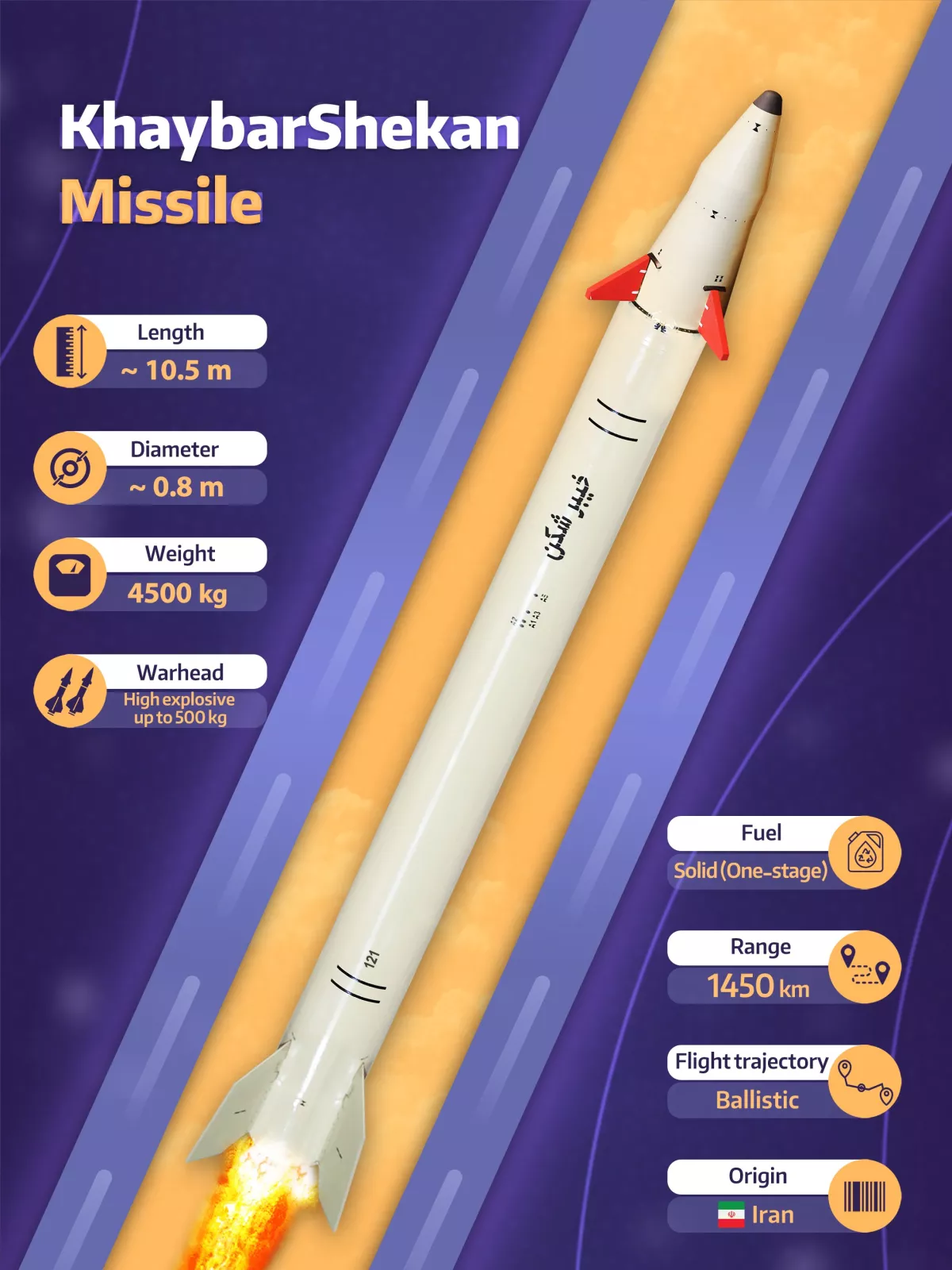
Iran’s Khaybar Shekan missile has emerged as one of the most closely watched weapons in the ongoing US-Israel war with Iran. The medium-range ballistic missile has reportedly been used by Iran in strikes against US military targets and infrastructure across the Middle East this week.
Following a period of relative calm in August, the conflict seemingly entered a new phase on August 31, when US forces struck rocket launchers on Iran’s Larak Island in the Strait of Hormuz, near the strategic port of Bandar Abbas. Iran responded with a retaliatory strike targeting American military assets in Jordan.
The United States has since carried out additional attacks on Iranian targets. Reports of civilian casualties have also emerged after a wedding party was reportedly struck in Iran, while Tehran again responded by targeting several US bases in the region, including facilities in Jordan and the United Arab Emirates (UAE).
Iran's Islamic Revolutionary Guard Corps announced it had "targeted the technical and maintenance infrastructure as well as fighter-jet bases at the two facilities, causing significant damage" at the bases, according to Iran's IRGC-affiliated Tasnim News Agency.
The Khaybar Shekan, whose name translates as “Castle Breaker” in Persian, has featured prominently in these exchanges. Developed by Iran’s Islamic Revolutionary Guard Corps (IRGC), it is part of the country’s broader ballistic missile program, as an in-depth feature on the weapon by the American media outlet USA Today notes.
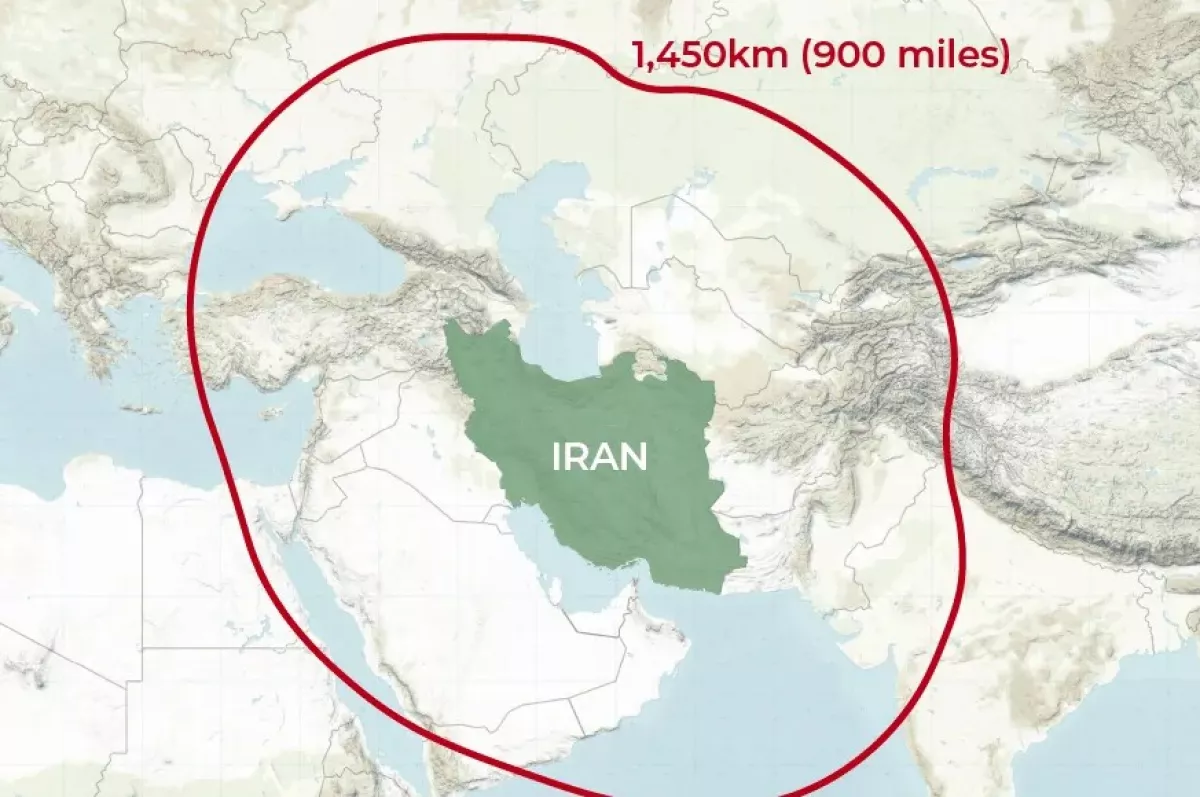
It is one of Iran’s newer medium-range missile systems. It has an estimated range of approximately 1,450 kilometers and can carry a warhead weighing between 449 and 590 kilograms.
The missile was unveiled in 2022 and takes its name from Khaybar, a fortified settlement associated with early Islamic history. “Shekan” means breaker or destroyer.
One of its key characteristics is its solid-fuel propulsion, which allows it to be launched within minutes during a crisis. Unlike liquid-fuel missiles, which generally require fueling shortly before launch, solid-fuel systems are preloaded with propellant. This makes them easier and safer to operate, potentially harder to detect and less dependent on logistical support for transporting fuel.
Solid propellant is dense and burns rapidly, producing a short but powerful burst of thrust. It can also be stored for long periods without significant degradation, unlike some liquid fuels, which are more susceptible to deterioration.
At the same time, the US has introduced Precision Strike Missiles (PrSM) during the conflict. Their manufacturer, Lockheed Martin, describes the system as a long-range precision-strike missile capable of engaging targets at distances ranging from 60 kilometers to more than 499 kilometers.
Some experts have interpreted Iran’s intensified missile strikes as an effort by Tehran to demonstrate that its missile arsenal remains substantial despite six months of intermittent US and Israeli attacks.
Expansive range of missiles
Iran has repeatedly said it has used Khaybar Shekan missiles against US military positions in the region since the conflict began.
Iranian state broadcaster IRIB reported that Iranian forces deployed the missile in retaliatory attacks against US assets in Jordan this week.
On July 20, the IRGC released footage showing Khaybar Shekan alongside Fateh-110, Zolfaghar and Emad ballistic missiles being used in attacks against US military targets.
Four days earlier, the IRGC said it had used Khaybar Shekan missiles to target a US jet maintenance facility and a new command-and-control center in Jordan’s Azraq.
Tehran’s missile arsenal
Iran maintains a diverse missile arsenal comprising short-, medium- and longer-range systems.
Short-range ballistic missiles, with ranges of roughly 150 to 800 kilometers, are designed to strike nearby military targets and support rapid regional attacks.
Key systems include Fateh variants, Zolfaghar, Qiam-1 and older Shahab-1 and Shahab-2 missiles. Their relatively short ranges can be advantageous during a crisis because they can be launched in salvos, reducing warning times and complicating efforts to intercept or pre-empt attacks.
Medium-range ballistic missiles, generally capable of traveling roughly 1,500 to 2,000 kilometers, include the Shahab-3, Emad, Ghadr-1, Khorramshahr variants and Sejjil, as well as newer systems such as Khaybar Shekan and Haj Qassem. These weapons can reach targets in Israel and US-linked sites across the Gulf.
Iran also possesses a range of cruise missiles, including Soumar, Ya-Ali, Quds variants, Hoveyzeh, Paveh and Ra’ad. The Soumar is reported to have a range of up to 2,500 kilometers.
By Nazrin Sadigova







 editor@caliber.az
 +994 55 444-88-98
 Азербайджан, Баку, ул. Низами, 203, Af Business House, 5-й этаж