










Lost years The war that changed Ukraine
The Russian–Ukrainian confrontation, which began in 2014 and escalated into a full-scale war in February 2022, has become one of the most devastating conflicts in Europe since the Second World War. Over the past twelve years, Ukraine has endured an unrelenting demographic, economic, and social crisis, the full scale of whose consequences is only now becoming increasingly apparent.
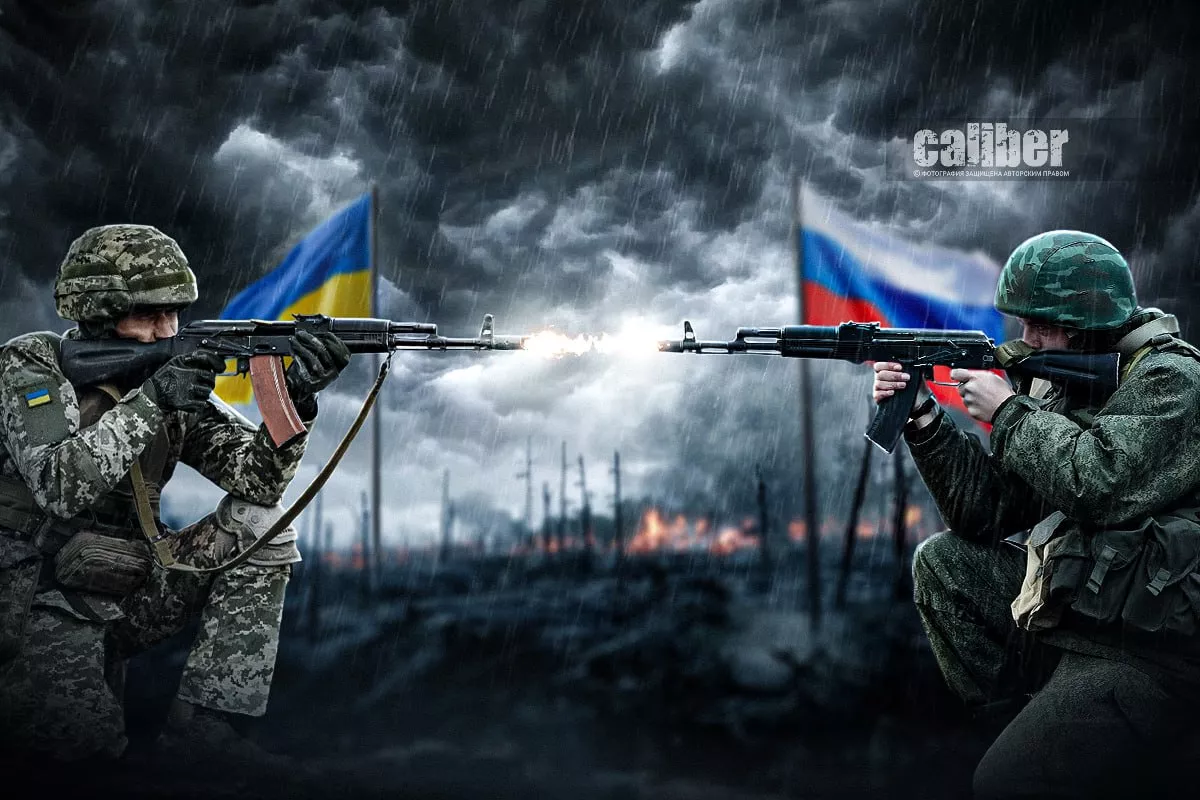
At the same time, international discussions often focus on the damage suffered by the Russian Federation—sanctions, technological isolation, and the outflow of capital and skilled professionals. While these losses are indeed substantial, they remain incomparable to what Ukraine has endured. For Ukraine, the war has become an existential challenge, affecting the very foundations of its statehood and future development.
In this context, one factor deserves particular attention: by losing control over certain territories, Ukraine has also lost key industrial regions, critical infrastructure, natural resources, and millions of citizens who now live outside Kyiv's jurisdiction. This reality inevitably carries long-term consequences, foremost among them the need to fundamentally restructure the country's economic model.
This is compounded by the persistent security threat. Even in the regions that remain under Kyiv's control, businesses and citizens operate in an atmosphere of uncertainty, discouraging investment, limiting long-term planning, and slowing development.
One of the clearest illustrations of this reality is the decline in the country's quality of life. According to the latest ranking by The Economist, Kyiv is now among the least livable cities in the world, placing 166th out of 173. Before the war, however, the Ukrainian capital ranked in the middle of the index, occupying 117th place. This dramatic decline reflects not only the destruction of infrastructure and the deterioration of security, but also a systemic crisis affecting virtually every aspect of life—from healthcare and education to the cultural environment.

The war, however, has dealt its most severe blow to Ukraine's demographic outlook. According to estimates by Ukrainian analysts, the country is losing around 800,000 people each year. Of these, approximately 500,000 represent net migration, as citizens leave in search of safety and stability, while about 250,000 are attributable to natural population decline, with deaths significantly outnumbering births.
These figures reflect far more than a shrinking population—they point to a profound loss of human capital. Those leaving the country are typically the most mobile, well-educated, and economically active citizens, precisely the people who could have played a leading role in Ukraine's postwar reconstruction. At the same time, large-scale emigration directly weakens consumer purchasing power, further constraining business activity. Companies face not only declining demand but also an acute shortage of labour.
Moreover, chronic stress, insomnia, and a constant sense of anxiety have become an inescapable part of daily life for Ukrainians, inevitably taking a heavy toll on public health. As a result, the World Health Organisation (WHO) has released deeply concerning figures: nearly 70 per cent of Ukrainians report that their health has deteriorated compared to the pre-war period; 72 per cent suffer from sleep disorders; 59 per cent experience recurring headaches; and 54 per cent struggle with anxiety disorders, depression, or symptoms of post-traumatic stress disorder (PTSD). Particularly alarming are the statistics on acute medical emergencies: hospitalisations due to stroke have increased by 11 per cent, while heart attack admissions have risen by 7 per cent.

Furthermore, the number of neurological disorders has more than tripled compared with 2022. In just one year alone, more than 460,000 people sought professional mental health support. These challenges are compounded by growing epidemiological risks: the WHO has warned of a possible measles outbreak, as well as the potential spread of diphtheria, polio, and rabies.
Against the backdrop of a devastated healthcare system and the mass displacement of the population, these threats become particularly acute. Taken together, they indicate that Ukraine is facing not merely a public health crisis, but a long-term erosion of its human capital.
Collectively, the figures presented above are far more than just statistics. They measure the scale of a multidimensional crisis that has ensnared Ukraine's demographic outlook, economy, healthcare system, and society as a whole. Even after the war comes to an end, rebuilding the country will require immense resources and many years of sustained effort, posing a formidable challenge for a nation whose people have, for far too long, been deprived of the experience of living under peaceful skies.







 editor@caliber.az
 +994 55 444-88-98
 Азербайджан, Баку, ул. Низами, 203, Af Business House, 5-й этаж