










Macron’s ambitions hit a wall in Iran, China and Africa The Washington Times article
The American newspaper The Washington Times has published an article dedicated to the weakening of France’s influence on the international stage. Caliber.Az reprints the article with minor adaptations.
When it comes to geopolitics, few ideas have been as persistent as France’s long-running quest for “strategic autonomy” from the United States.
For decades, successive governments in Paris have envisioned themselves as Europe’s indispensable power.
That impulse has been given new life of late. Over the past year and a half, the Trump administration has presided over a very public parting of the ways with Europe, citing insufficient military burden-sharing, societal decay in Europe and other issues.
The result has been a resurgence of European plans for “autonomy” and a renewed push by France to carve out a “third way” in world affairs.
In practice, however, this high-minded vision is delivering diplomatic irrelevance, economic vulnerability and political marginalization.
The most glaring example has been France’s handling of the conflict with Iran. When Israel and the United States moved militarily once again this spring to target the Islamic republic, France found itself sidelined — “neither informed nor involved,” as the French president acknowledged.
Paris’ reaction was telling. Rather than rallying to Washington’s side as its longtime political ally, Mr. Macron’s administration opted for procedural complaints and coordinated with Moscow and Beijing to complicate the U.S.-Israeli effort.
France also adopted an obstructionist stance that blocked American overflights and complicated military coordination, earning the White House’s ire without any real dividends.
That same logic took Mr. Macron to Beijing in December on a much-publicized state visit. The goals of that trip were extensive: to rebalance trade, secure Chinese help in containing Russia and showcase France’s independent clout.
Still, the tangible results were scant, reflecting that, for China, France is less a serious partner than a useful foil to drive a further wedge between the U.S. and Europe.
France’s traditional influence in Africa has mostly evaporated as well. The country, which previously boasted an extensive military footprint has suffered a dramatic collapse in its regional position in recent years.
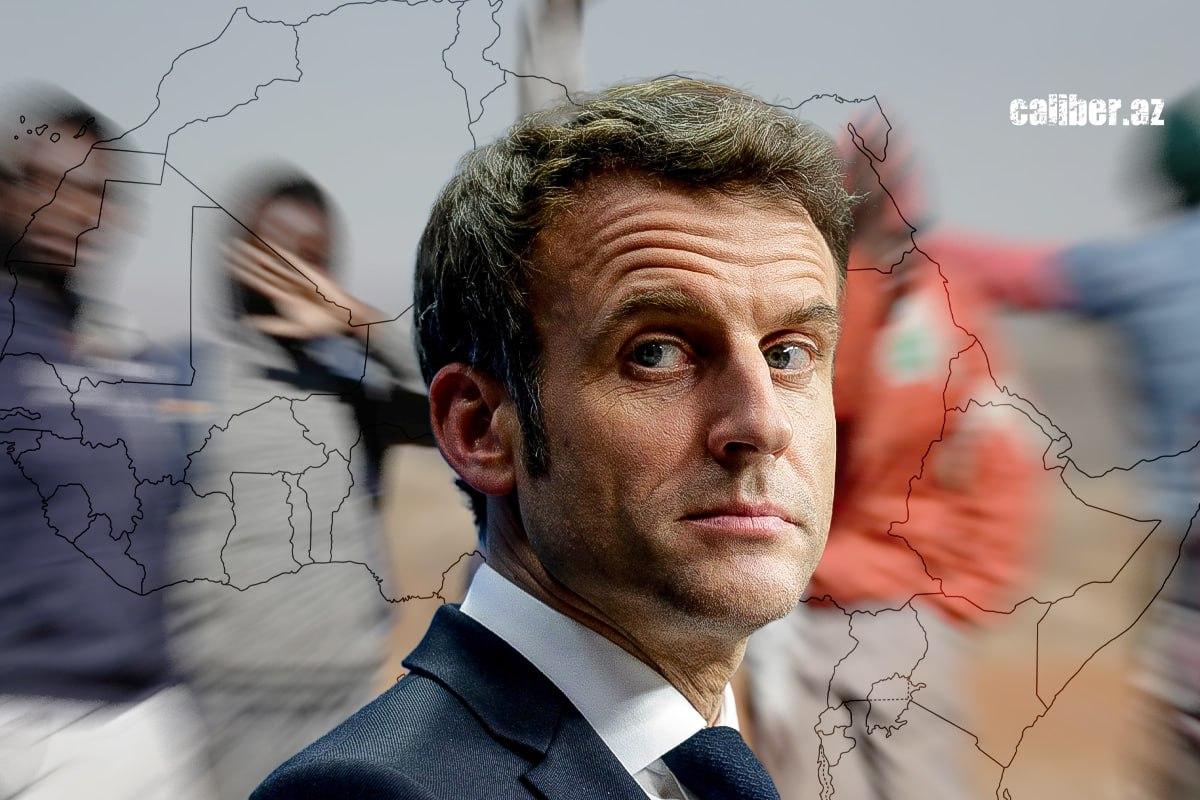
Since 2022, France has been ejected from countries such as Mali, Burkina Faso, Niger, Chad, Senegal and the Ivory Coast.
So rapid has this decline been that it has even acquired a label: the end of Francafrique. Although Paris is still attempting to court the rest of the continent, there is no question that France’s footprint there is now a mere shadow of its former self.
France is facing problems in its remaining colonial holdings as well. In its overseas Pacific territory of New Caledonia, it is clinging to the area despite indigenous unrest and severe United Nations criticism. Though subject to fluctuations in the global market, New Caledonia represents a strategic prize because of its rich nickel deposits.
Just two years ago, French security forces suppressed riots there, causing fatalities and many injuries. There are fears that it may happen again.
Paris now maintains some 2,000 military sovereignty forces in New Caledonia to preserve its national standing, even as it has preached decolonization elsewhere. Needless to say, such a contradictory stance serves only to undermine the moral authority that France has sought so assiduously to cultivate.
The problem is that Mr. Macron’s gambit rests on a fundamental miscalculation. It presupposes that France has the economic heft, military capabilities and political legitimacy to chart a truly independent course in world affairs.
Reality, however, tells a very different story. No matter how much it might chafe against it, France’s history of chronic underinvestment in defense, its lingering energy dependence and its deep domestic political divisions make partnership with Washington a much more sustainable way for Paris to secure a global position.
What remains is for France to demonstrate its worth to the United States.
Editor’s note: The author of the article, Ilan Berman, is a senior vice president of the American Foreign Policy Council (AFPC) in Washington.







 editor@caliber.az
 +994 55 444-88-98
 Азербайджан, Баку, ул. Низами, 203, Af Business House, 5-й этаж