










Museum thieves grow bolder as Europol warns of more violent heists
A major art theft from a French museum earlier this week, in which four paintings by Impressionist master Pierre-Auguste Renoir were stolen, has made international headlines. Yet the heist came just days after Europol warned that museum thieves across Europe were becoming increasingly bold and were changing both their methods and the types of objects they target.
In a spotlight report titled “Changing tactics, changing targets: the evolving nature of museum heists”, the European policing agency examined recent developments in museum thefts and highlighted a growing use of violent and forceful methods alongside an increasing focus on valuable objects such as precious metals, gemstones and culturally significant artefacts.
Europol's analysis points to several recent high-profile cases, including the theft of Dacian artefacts in the Netherlands in 2025, the Louvre heist in France in 2025 and the attack on the Cognacq-Jay Museum in France in 2024.
The report identifies several major trends in museum thefts:
Increasing violence: Offenders are increasingly using force to break into museums, with sledgehammers, explosives and firearms among the tools used to breach premises and intimidate staff.
Targeted high-value items: Thieves are showing greater interest in precious metals, gemstones and culturally significant artefacts because of strong market demand and the relative ease with which such items can be sold illegally.
Emerging criminal profiles: Europol says new types of criminals are becoming involved, including ad-hoc groups recruited through social media rather than the traditional non-violent networks associated with cultural property trafficking.
Cross-market opportunities: Some offenders appear to be criminals from other sectors who are turning to museum thefts because they see them as offering potentially high profits with relatively low risks.
The findings echo concerns raised by people working in the art world and law enforcement. Internationally known art detective Arthur Brand recently told the BBC that more high-profile museum burglaries were likely, particularly following the successful robbery of the Louvre in Paris last October.
“We will see more of this,” Brand said, arguing that the Louvre robbery had shown criminals around the world that major museums could be targeted. He suggested that thieves could begin looking at local museums in search of valuable gold and silver objects.
The Louvre robbery shocked France and attracted worldwide attention, while jewellery worth €88 million remains missing nearly a year after the theft.
Since then, criminals have stolen a diamond necklace in Vienna, Bronze Age artefacts in Spain and artworks from two Italian museums, among other incidents.
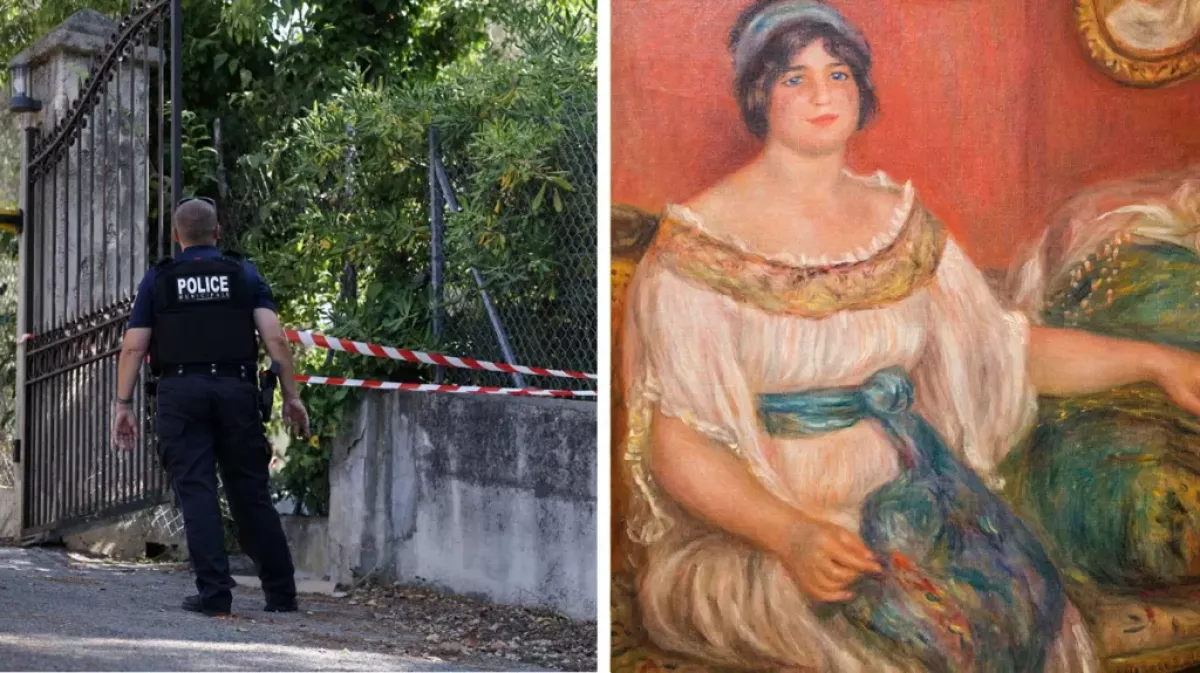
The latest case occurred at the Renoir Museum in Cagnes-sur-Mer, where four paintings were taken earlier this week. Two of the works were quickly recovered after the thieves abandoned them in the museum garden, but investigators are still searching for the remaining multi-million-pound paintings.
Europol told the BBC that the number of museum theft cases reported across Europe began increasing around two years ago. Its latest report indicates that the change involves not only the frequency of thefts but also the methods used and the objects being targeted, with more forceful tactics increasingly being combined with a focus on precious metals and gemstones.
Brand believes many of the thefts following the Louvre robbery may be copycat crimes.
“Every museum in the world is stressing now,” he said. “In every museum there have been meetings with the security officer or with the police.”
According to Brand, museums can be easier targets than heavily protected jewellery shops and banks, which in recent years have also held less cash. Museum directors have historically “never have enough money for security” or may choose to spend available funds on exhibitions instead, while many museums operate from older buildings that are difficult to secure.
The Denis Diderot Maison des Lumières, or House of Enlightenment, for example, was burgled only hours after the Louvre robbery and is located in two 18th-century mansions in Langres.
Museums are also public spaces with comparatively limited access controls, meaning criminals can enter while posing as ordinary visitors, said Kumar Sokka, CEO of Acre Security, which works with museums in Europe.
Even museums with strong security measures can be vulnerable to armed attacks, Brand said, while stationing police officers permanently inside galleries would not be practical.
Many museum burglaries are completed within minutes, leaving perpetrators gone by the time police arrive. The Renoir theft, for example, was carried out in about five minutes.

Europol's report also notes that museum thieves once relied more heavily on deception, whereas recent burglaries have increasingly involved violence. Offenders have used sledgehammers, axes, crowbars and, in some cases, explosives to force their way inside, creating additional risks for museum employees and visitors.
“An armed incident during opening hours, like the one we experienced, creates a situation in which the immediate priority is to keep our audience and staff safe,” said Lilli Hollein, director of the Museum of Applied Arts (MAK) in Vienna, which was burgled last month.
The objects being stolen are changing as well. Paintings remain targets, but their size and visibility can make them more difficult to sell, prompting thieves about a decade ago to increasingly turn toward smaller and more easily disposable objects, Brand said.
Europol's report now identifies precious metals, gemstones and culturally significant artefacts, including Chinese porcelain, among the items increasingly attracting criminals.
“Precious metals can be easily melted down, leaving no trace for law enforcement, and facilitating illicit sales during the fencing process,” the report says. “Precious stones in jewellery, on the other hand, can be easily removed and sold further.”
Chinese porcelain, meanwhile, can be sold relatively easily on the art market because of strong demand, according to Europol.
The Association for Research into Crimes against Art (ARCA) said the recent cases demonstrate “a repeated preference for small, portable, immediately accessible objects and for attacks designed to be completed in minutes”.
By Nazrin Sadigova







 editor@caliber.az
 +994 55 444-88-98
 Азербайджан, Баку, ул. Низами, 203, Af Business House, 5-й этаж