










Novel "fridge-free" vaccine technology seeks to tackle global vaccine waste
Nearly half of all vaccines delivered worldwide are discarded each year after becoming unusable because they must remain refrigerated or frozen throughout storage and transport until administration. Seeking to reduce this enormous waste, researchers have successfully completed the first human trial of a vaccine formulation that remains stable at room temperature without the need for refrigeration.
British biotechnology company Stablepharma has completed the first human trial of its "fridge-free" vaccine technology, as highlighted in a BBC article.
The study, which involved 60 volunteers, converted a conventional liquid tetanus-diphtheria vaccine into a dry powder that remained stable at room temperature for a year before being reconstituted with water and administered to participants.
The technology draws inspiration from so-called resurrection plants, which survive prolonged drought by producing large amounts of the natural sugar trehalose. The sugar protects the plants' cells while dehydrated, allowing them to recover when water becomes available again.
Researchers applied the same principle by drying the vaccine in the presence of trehalose, preserving its active components without the need for refrigeration.
The development could help address one of the biggest challenges in global immunization campaigns. Vaccines often require uninterrupted refrigeration throughout storage and transport—a process known as the "cold chain." If temperatures fall outside the required range, vaccines can become ineffective and must be discarded. The removal of the need for refrigeration would also improve access to immunizations in remote and low-resource regions.
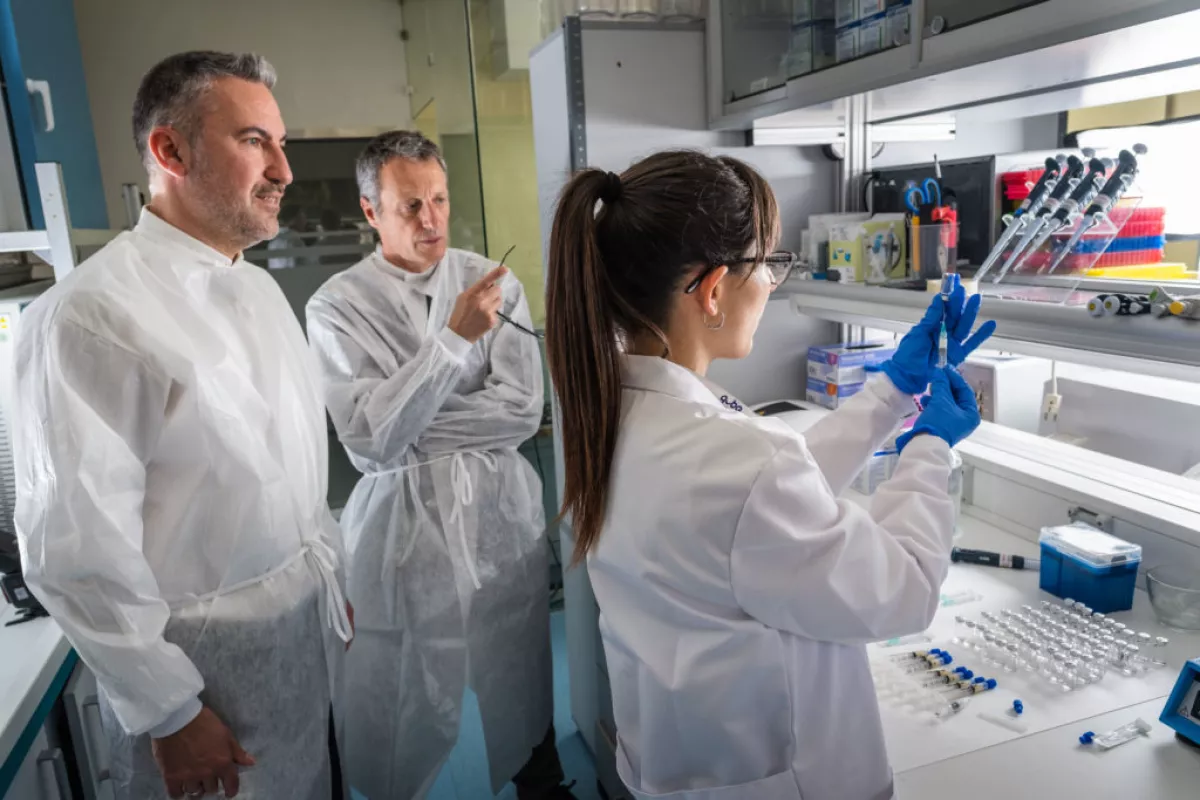
Özgür Tuncer, Chief Executive and Executive Director of Stablepharma, described the technology as "a game changer for the industry, for countries and governments where access to life-saving vaccines and pharmaceuticals is critical, and in addition, the cost and environmental impact of delivery logistics and refrigerated storage is high."
He noted that logistics account for the majority of vaccine-related expenses, adding that even in Europe only around 30% of vaccine costs relate to the product itself, while the remaining 70% is associated with maintaining the cold chain from manufacturing to administration.
The challenge is even greater in remote communities, low-income countries and conflict zones, where refrigeration equipment and reliable electricity supplies are often unavailable.
Professor Jonathan Van-Tam, the former deputy chief medical officer for England who now advises Stablepharma, recalled the difficulties of delivering vaccines in remote field clinics.
"I can remember taking out vaccines in cool boxes… doing that on really inhospitable roads where one couldn't predict getting from A to B in a short period of time and there was always this nervousness about maintaining the cold chain in time to get the vaccines into arms of waiting children."
While the technology is not currently suitable for mRNA vaccines, researchers believe many existing vaccines could potentially be stabilized using the trehalose-based approach.
The trial was conducted with support from the National Institute for Health and Care Research (NIHR). Professor Saul Faust said the room-temperature vaccine produced "equivalent" immune responses to the conventional formulation and was "safe and well tolerated" in the early-stage study.
A larger clinical trial involving 160 participants is expected to begin in the coming months. Because the underlying tetanus-diphtheria vaccine is already licensed, researchers say the remaining testing requirements are less extensive than those needed for an entirely new vaccine.
The research also supports the World Health Organization goal of developing vaccines capable of remaining stable at temperatures of up to 30°C and 75% relative humidity, potentially making immunization campaigns more accessible and less costly around the world.
By Nazrin Sadigova







 editor@caliber.az
 +994 55 444-88-98
 Азербайджан, Баку, ул. Низами, 203, Af Business House, 5-й этаж