










Philippines’ move towards US unlikely to be last twist in Manila’s foreign policy
The Philippines has a number of agreements with the US, Japan, and Australia, but the durability of this change is far from certain, according to a South China Morning Post story. Caliber.Az reprints the article.
“The problem is between China and us. If Americans come in, it’s bound to fail,” Ferdinand “Bongbong” Marcos Jnr said at the height of the Philippines presidential election last year, insisting on a neutral foreign policy amid rising geopolitical tensions in Asia.
Throughout the elections, Marcos warned that invoking the Philippines’ military alliance with the United States to protect the country’s sovereign rights in the South China Sea was a recipe for disaster. Instead, he advocated for dialogue, calling continued engagement with China as the only way to prevent an armed confrontation in the region.
As a presidential candidate, Marcos either downplayed the significance of the Philippine-US alliance or warned of the dangers of siding with one superpower against the other.
Less than a year into his presidency, however, he has overseen nothing short of a renaissance in strategic relations with the US. As his cousin and Philippine Ambassador to the US Jose “Babe” Romualdez said, “I think our relationship with the United States is at its best right now.”
If anything, the Philippines under Marcos has emerged as the new darling of the West in recent months. Expanding defence cooperation with Washington has gone hand in hand with deepening military ties with fellow US allies Japan and Australia. The upshot is the gradual emergence of a new quadrilateral alliance, with the Philippines forming an essential component of a US-led “integrated deterrence” strategy against an ascendant China.
Yet, the sustainability of the Philippines’ strategic shift is far from assured. Aside from domestic opposition from Beijing-friendly forces, including the president’s sister, Senator Maria Imelda “Imee” Marcos, there are some doubts over the West’s ability to help the Philippines rapidly develop its basic infrastructure or modernise its under-equipped armed forces.
Blossoming ties between Manila and its traditional allies come after six years of Rodrigo Duterte’s presidency. He repeatedly threatened to end the country’s alliance with the US while courting closer ties with China and Russia.
It also comes amid growing tensions within members of the Quadrilateral Security Dialogue, or Quad. Russia’s invasion of Ukraine has exposed rifts between India, which has maintained warm ties with Moscow, and the US, Australia and Japan, which have imposed sweeping sanctions on Russia.
Despite Western pressure, India has refused to vote against Russia at the United Nations while increasing its energy imports from Moscow. As this year’s Group of 20 president, New Delhi has tried to downplay and rebrand the war in Ukraine as a “crisis” and “challenge” in an apparent nod to Russia and much to the chagrin of Western member states.
The Philippines has transformed into a new star ally of the West by moving in the opposite direction of India. Last month, Manila hosted two top Western officials – US Defence Secretary Lloyd Austin and Australian Deputy Prime Minister Richard Marles. Meanwhile, Marcos Jnr visited Tokyo for a five-day official visit.
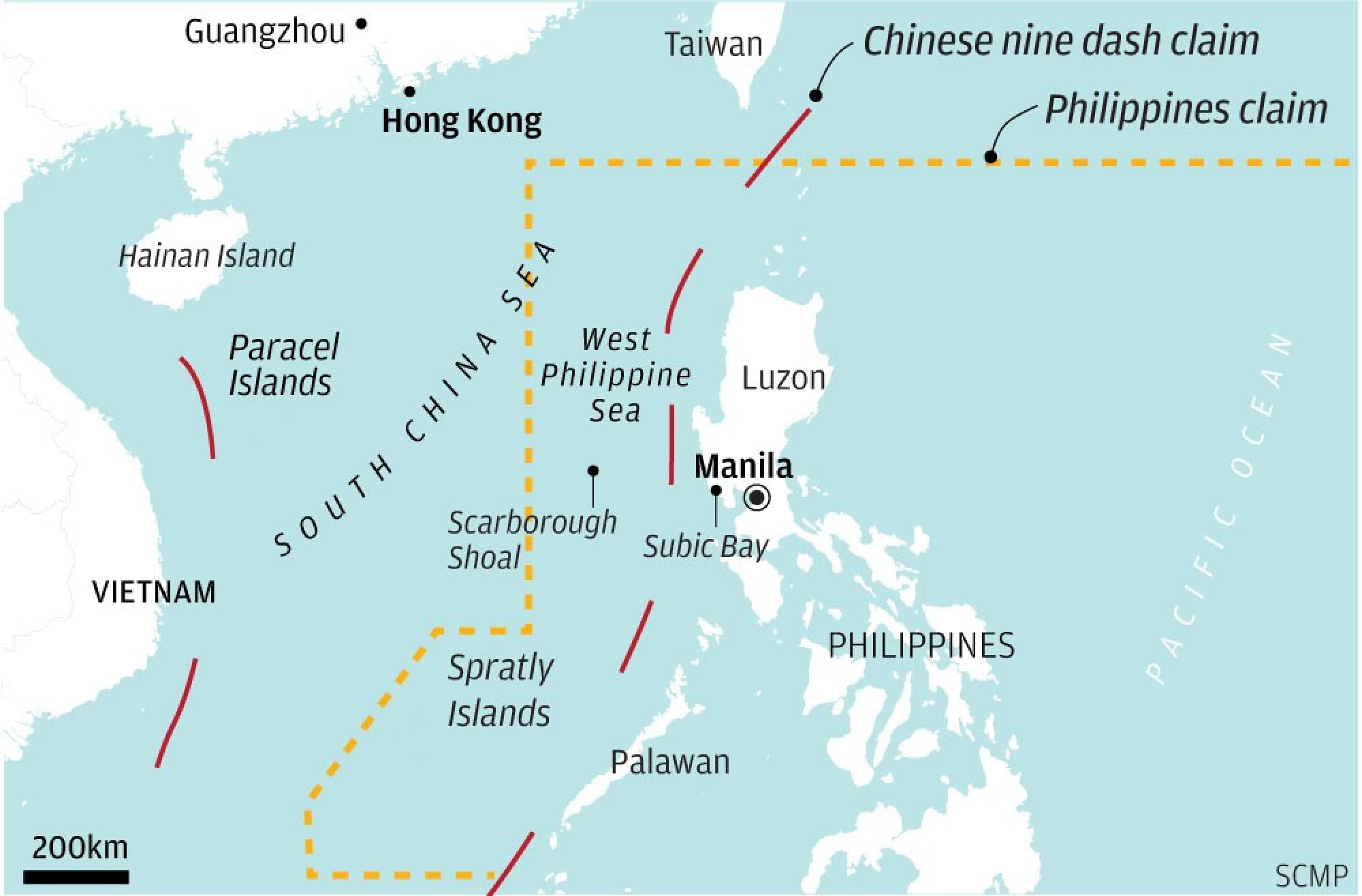
The flurry of high-level meetings brought about a series of agreements. Among them was the full and expanded implementation of the Enhanced Defence Cooperation Agreement, granting US forces extensive access to bases near both the South China Sea and Taiwan; intensified negotiation of Acquisition and Cross Servicing Agreements and a Visiting Forces Agreement with Japan to facilitate more joint drills and arms transfers; and, planning institutionalised defence dialogues and potential joint patrols with Australia in the South China Sea.
The Philippines is also exploring a quadrilateral defence framework with the US, Australia and Japan. “We’re now in discussions with both the United States and Japan – and even Australia is now coming into the picture, so it might end up as a [quadrilateral] agreement,” Romualdez has said.
Despite the sudden burst of enthusiasm over a potential new Quad, the future of Philippines foreign policy is still uncertain. The past two decades alone show that the country has a tendency to swing wildly between rival superpowers, depending on domestic political conditions and the preferences of the ruling elite.
His sister, Senator Imee Marcos, an advocate of warm ties with Beijing, has publicly berated top defence officials for potentially granting US forces access to bases close to Taiwan, saying such a move could provoke unnecessary conflict with China.
Her spirited opposition has encouraged frontline governors, especially in the northern provinces of Isabela and Cagayan, to oppose any major US military presence in their area. In response, the Philippine military is reassessing its joint drills with the Pentagon in northern portions of the country. Moreover, any hard pivot towards the West also risks driving away potential Chinese investment.
Earlier this year, the Philippines announced an ambitious US$372 billion infrastructure development programme. But with the country facing a fiscal crunch, it is likely to have to rely on a wide network of investors, especially from China, to sustain domestic infrastructure spending. While Japan has consistently been a major source of foreign financing, the US and other Western powers have yet to provide assurances they can fill any potential vacuum of Chinese investment.
Ultimately, the Philippines risks lapsing back into strategic overdependence on the US unless it rapidly modernises its own armed forces. So far, however, it is unclear whether the US, Australia or Japan are willing or able to provide cutting-edge military hardware at an affordable cost in exchange for access to Philippine bases. In short, there are likely to be new plot twists in Philippine foreign policy in the coming years.







 editor@caliber.az
 +994 55 444-88-98
 Азербайджан, Баку, ул. Низами, 203, Af Business House, 5-й этаж