










Record-low Danube reveals remains of WWII German soldiers in Budapest PHOTO
Exceptionally low water levels on the Danube River, driven by this summer's prolonged heatwave across Europe, have exposed remarkable wartime discoveries in Budapest, including the remains of two World War II soldiers alongside military equipment that had lain hidden beneath the riverbed for eight decades.
The recovery operation was carried out by Germany's War Graves Commission in cooperation with Hungarian specialists from the Institute and Museum of Military History. The remains are believed to belong to soldiers of the German Wehrmacht, the armed forces of Nazi Germany during the Second World War, as German media reports.
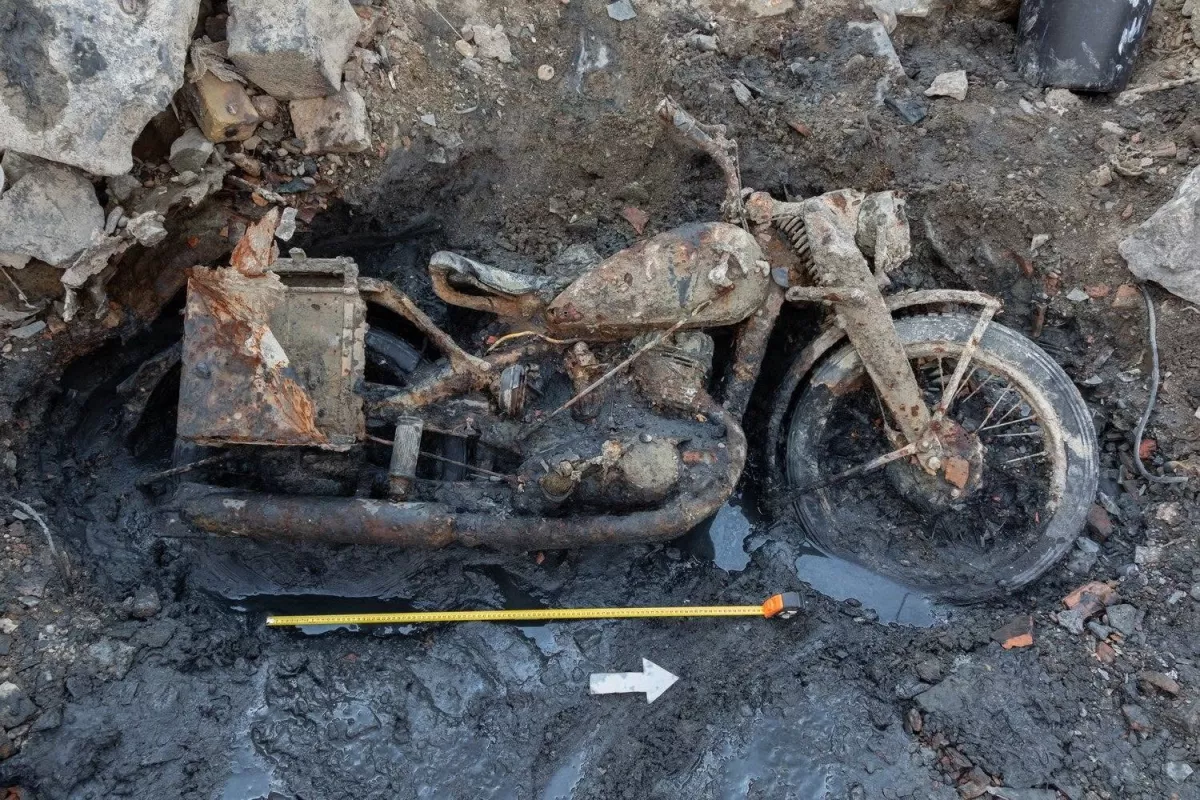
Among the finds were a military motorcycle and several German Tellermine 35 anti-tank mines, which complicated the recovery effort because of the explosives. The motorcycle is believed to be a DKW NZ 350-1 model, which entered production in 1944.
One of the soldiers was also found wearing a sleeve shield bearing the inscription "Kuban" — a military campaign award presented to Wehrmacht soldiers who fought at the Kuban bridgehead in the Caucasus during the war.
Many of the recovered objects were exceptionally well preserved after decades beneath the riverbed. According to Germany's War Graves Commission, a combination of mud and diesel fuel present in the ground created ideal conditions for preserving both equipment and human remains.
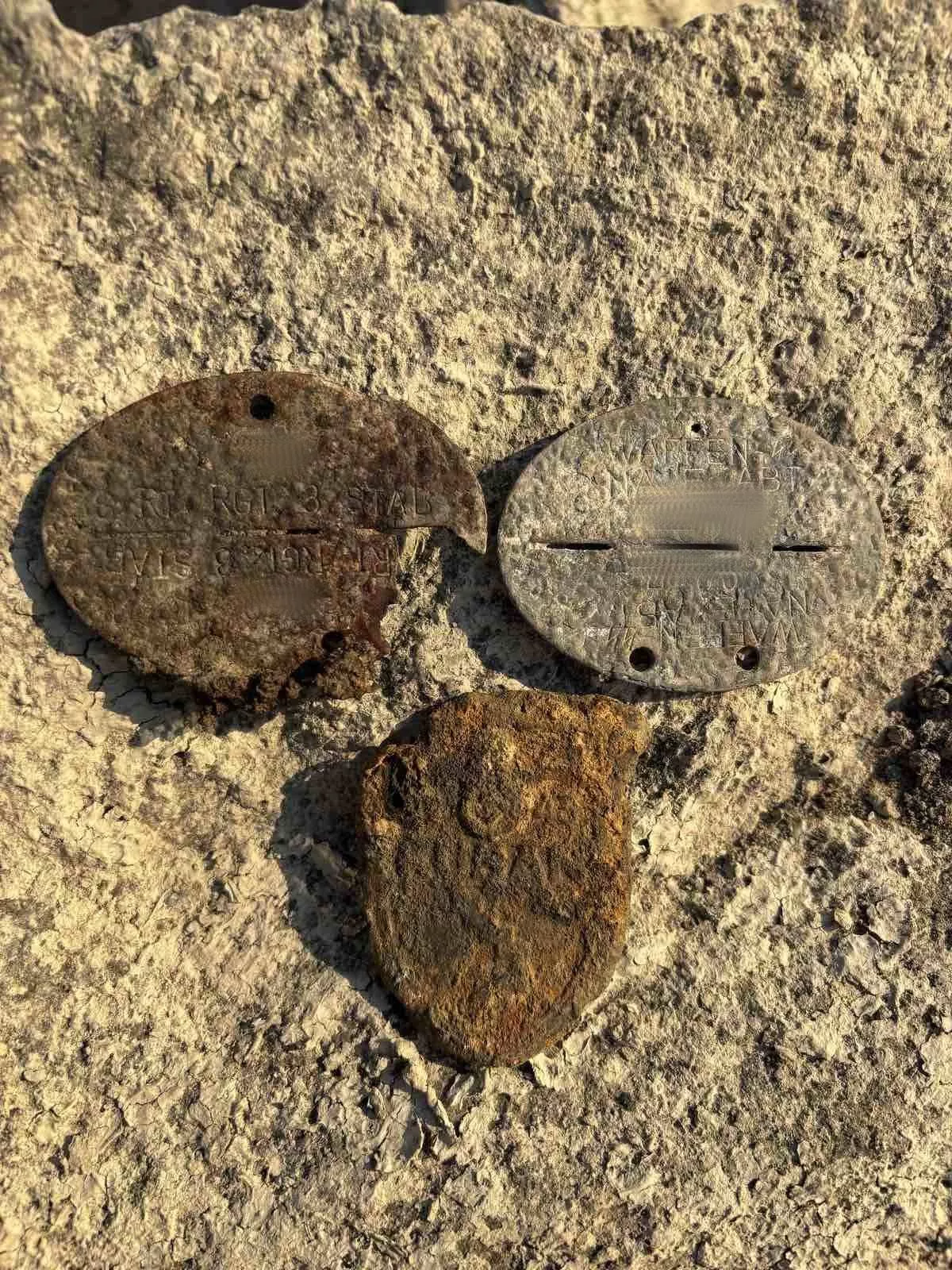
The same conditions also protected the soldiers' identification discs, leaving the engraved letters and numbers clearly legible. The identification discs served as military ID cards. Each soldier carried a two-part disc, with one half intended to be sent to the Wehrmacht information office upon a soldier's death so that relatives could be notified. The commission noted that both halves of the discs remained together, indicating that no official death report was ever submitted and their families were likely never formally informed of their fate.
Budapest witnessed some of the fiercest fighting of the Second World War in early 1945 as Soviet forces battled German troops occupying Hungary during the Siege of Budapest.
Following forensic examination, the two soldiers will be reburied at the German military cemetery in Budaörs, on the outskirts of the Hungarian capital.
Experts from Germany's War Graves Commission believe the continuing drought could expose additional wartime wrecks and human remains elsewhere along the Danube if water levels remain exceptionally low. Any discoveries would initially fall under the jurisdiction of the country in which they are found, although the commission would assist if the remains are identified as those of German soldiers.
By Nazrin Sadigova







 editor@caliber.az
 +994 55 444-88-98
 Азербайджан, Баку, ул. Низами, 203, Af Business House, 5-й этаж