










Single bone leads to discovery of brand new dinosaur species in Thailand
Palaeontologists in Thailand have identified a new species of long-necked dinosaur from fossils unearthed in the country's north-east, marking the first discovery of a member of the Mamenchisauridae family in Thailand.
The newly described herbivorous dinosaur, named Uragasaurus kalasinensis, is believed to have lived around 150 million years ago during the Late Jurassic period. Researchers estimate it measured up to 20 metres in length and possessed an unusually long neck, a defining feature of mamenchisaurid sauropods, as reported by Science Alert.
The discovery is based on fossils recovered from the Phu Noi fossil site in Kalasin Province, an area first identified in 2008 after a local resident found fragments that resembled serpent scales.
The findings were published earlier this week in the prestigious Nature journal.
Subsequent excavations revealed one of Thailand's richest dinosaur fossil deposits. More than 90 percent of the fossils recovered from the site belong to dinosaurs, alongside numerous fossilised teeth and bones from other prehistoric animals.
The fossil that ultimately led researchers to identify a new species was a dorsal vertebra—a bone from the middle section of the spine—which displayed anatomical features unlike those seen in previously known dinosaurs.
A CT scan confirmed the specimen belonged to the Mamenchisauridae family, a group of sauropods renowned for their exceptionally long necks, which likely enabled them to feed on vegetation at different heights.
While most known mamenchisaurid fossils have been discovered in China, this is the first confirmed member of the family found in Thailand, extending the group's known geographic range.
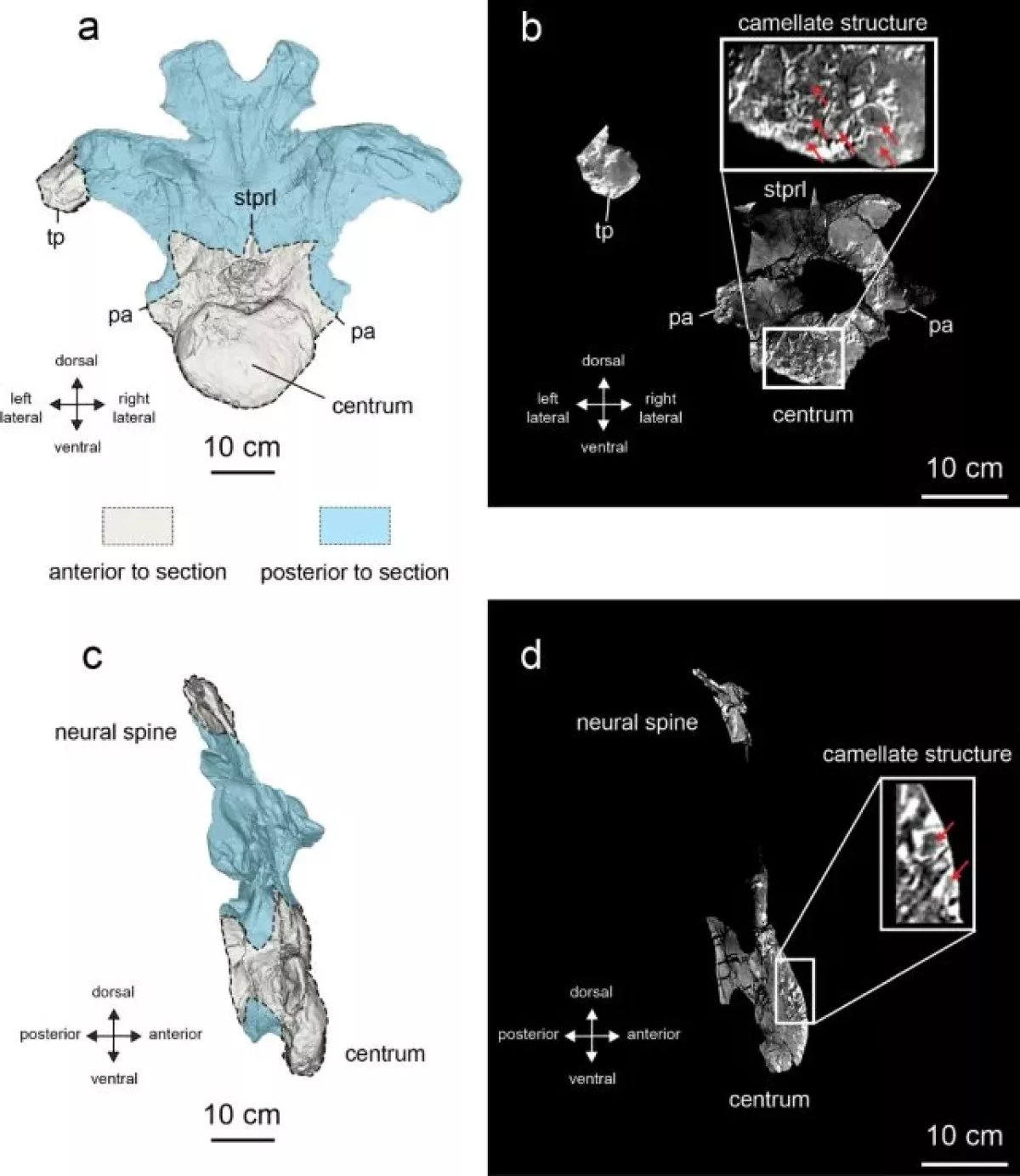
The scan also revealed several distinctive characteristics, including a unique Y-shaped arrangement of supporting bones, known as laminae, and an unusual pattern of internal air cavities within the vertebra.
Dr Apirat Nilphanaphan of Mahasarakham University, the study's lead author, told BBC Thai that the fossil's anatomy was unlike anything previously documented.
The unique air-cavity structure was "unlike any other dinosaur in the world... That's what sets it apart," he said.
Nilphanaphan said he was so surprised by the discovery that he accidentally smashed his keyboard after realising the team had identified a previously unknown species, describing the moment as both "exhilarated and relieved."
The discovery follows another major dinosaur announcement in Thailand earlier this year. In May, researchers unveiled Nagatitan, a different species of long-necked herbivorous sauropod that is regarded as the largest dinosaur yet discovered in Southeast Asia. The animal is estimated to have weighed around 27 tonnes—roughly equivalent to nine adult Asian elephants—and measured about 27 metres in length.
By Nazrin Sadigova







 editor@caliber.az
 +994 55 444-88-98
 Азербайджан, Баку, ул. Низами, 203, Af Business House, 5-й этаж