










Togolese activist: CFA franc keeps Africa trapped in France’s financial orbit PHOTO
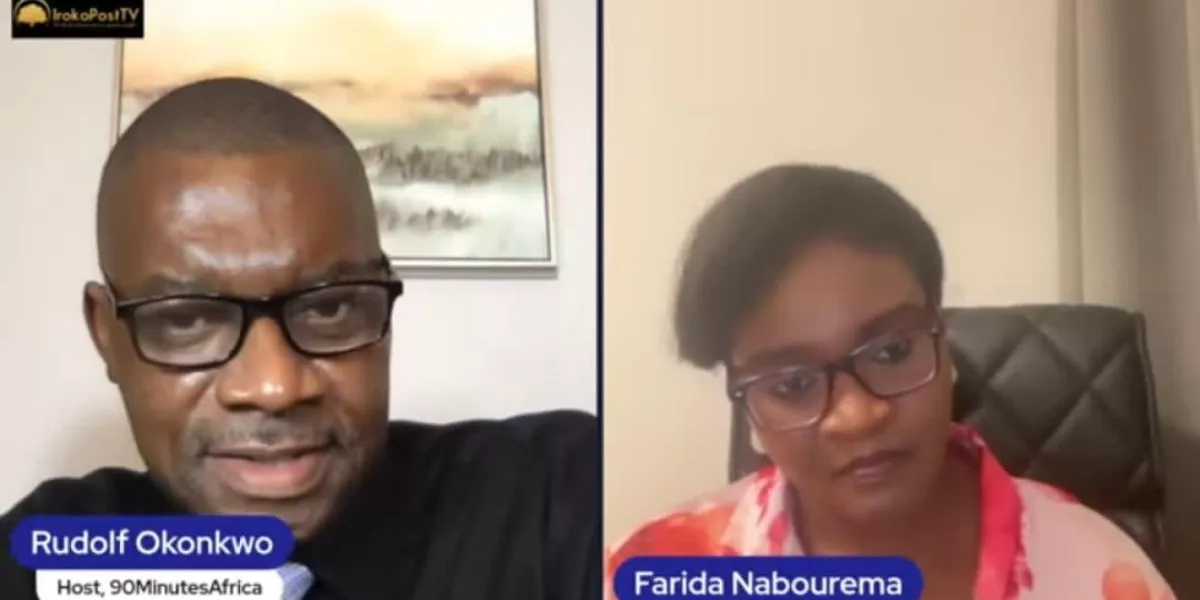
Togolese writer and human rights activist Farida Bemba Nabourema has reignited a long-running debate over France’s historical and contemporary influence in Africa, criticising the CFA franc monetary system and questioning international perceptions of democracy, Sahara Reporters writes.
Speaking in an interview with Rudolf Okonkwo on 90MinutesAfrica, Nabourema argued that the structure of the CFA franc system reflects elements of external financial control that have shaped relations between France and its former African colonies for decades.
Nabourema, founder of the “Faure Must Go Movement” and Director of The Katutu Civil Rights Center, claimed that the monetary arrangements introduced in France’s African colonies after the Second World War concentrated control over financial reserves in Paris, giving France significant influence over economic decisions in the region.
She argued that the system resembled monetary restrictions imposed on France during the Nazi occupation in the early 1940s, when German authorities exercised control over French financial affairs.
According to Nabourema, France’s weakened financial position after the war, including depleted gold reserves and a damaged banking sector, contributed to the creation of a system that allowed Paris to maintain influence over the reserves of its African colonies.
She said that by managing the reserves of several African countries, France was able to strengthen its own financial position while preserving geopolitical influence in the post-war era.
The CFA franc, which is currently used by 14 African countries in West and Central Africa, has remained one of the continent’s most controversial monetary arrangements. Supporters say the currency has helped maintain exchange-rate stability and limit inflation, while critics argue that it restricts economic sovereignty and reflects aspects of France’s colonial-era influence.
Nabourema also challenged what she described as narrow interpretations of democracy, arguing that elections alone do not determine whether a country is truly democratic.
"The measure of democracy should be whether the citizens are free to exercise their civic liberties, can participate in governance, and can hold their government accountable," the Pan-Africanist said, adding that governments lacking accountability cannot genuinely be described as democratic, regardless of whether civilians or the military leads them.
She criticised the international community for frequently equating civilian governments with democratic rule while overlooking restrictions on rights and accountability in some elected administrations.
"The measure of democracy should be whether the citizens are free to exercise their civic liberties, can participate in governance, and can hold their government accountable," the Director of The Katutu Civil Rights Center argued, adding that governments lacking accountability cannot genuinely be described as democratic, regardless of whether civilians or the military leads them.
Nabourema also addressed the impact of sanctions introduced after Russia’s invasion of Ukraine in 2022, arguing that some African countries faced economic consequences despite having limited involvement in the conflict.
"Because francophone countries had their money in the Central Bank of France, the French government blocked them from buying wheat from Russia," she stated.
She argued that the situation demonstrated broader inequalities in the international system, claiming that African countries often experience the economic consequences of global geopolitical disputes.
By Aghakazim Guliyev







 editor@caliber.az
 +994 55 444-88-98
 Азербайджан, Баку, ул. Низами, 203, Af Business House, 5-й этаж