










Transatlantic rupture: Paris and Brussels against Washington Article by Matanat Nasibova
The concept of the EU’s strategic autonomy, championed primarily by France under President Emmanuel Macron, is receiving increasingly concrete support from the European Commission (EC) — one of the key institutions shaping the policies of the bloc.
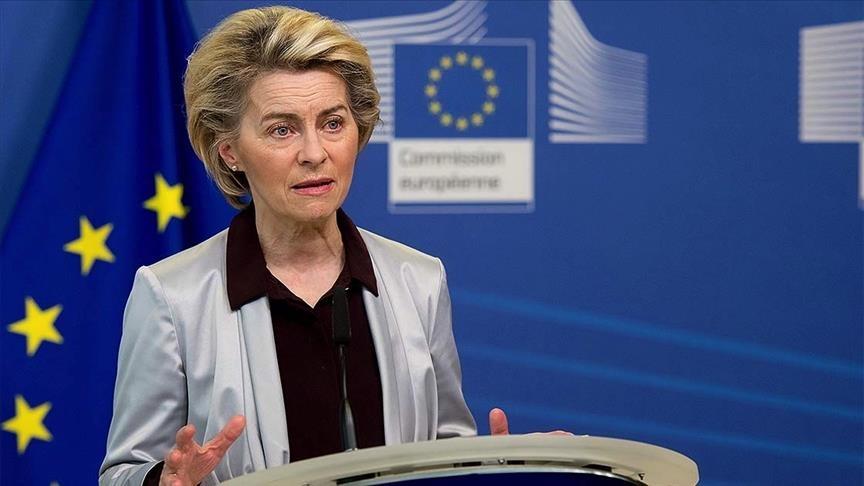
Thus, European Commission President Ursula von der Leyen stated at a press conference ahead of the G7 summit in the French city of Évian that, within the framework of the Security Action for Europe (SAFE ) programme, the European Commission is providing the Fifth Republic with a €15 billion loan for defence needs: “We will sign an agreement with France for a €15 billion loan (the document was signed on June 17 — ed.).Thanks to its strong defense France is a key actor of European security. SAFE helps member states to strengthen their capacities, support their defense industries and help Ukraine.”
According to international experts, this loan represents the largest financial allocation among member states under the European initiative aimed at reducing dependence on external defence suppliers. The allocated €15 billion will be directed toward several objectives: strengthening France’s defence capabilities, developing the defence industry and joint European military procurement, as well as financing capabilities for providing military support.
In a broader context, these developments represent yet another “contribution” to the “Cold War” that has erupted between the United States, Macron’s France, and the European Union in the form of the European Commission. To understand the cause-and-effect relationship, it is first necessary to clarify the reasons that gave rise to this confrontation. In this regard, the economic factor appears to have played one of the key roles — the sides have been periodically exchanging blows in the trade and financial spheres.

A clear example of this is the recent trade dispute between Paris and Washington. In particular, Donald Trump threatened to impose 100 per cent tariffs on French alcoholic products, prompted by the 3 per cent digital tax that Paris introduced on major American technology companies — Google, Apple, and Amazon. In response, Macron issued a sharp statement that effectively represented another challenge to the White House administration.
“It is not the United States that decides on the rights of Europeans or the French. That's normal, and it won't be any different as long as I'm here,” the French leader responded, adding that he intended to have a “respectful but firm discussion” with the head of the White House on the sidelines of the G7 summit.
As for the position of the European Commission, the intention to provide financial assistance to France speaks for itself, and this decision is primarily driven by the personal stance of its President, Ursula von der Leyen, who actively supports the course of “de-risking” and strategic autonomy promoted by Macron. She has stated the need to reduce the European Union’s critical dependence on supplies from China and protectionist measures from the United States. In practice, she is advocating not only for the aforementioned strategic autonomy but also for the EU’s economic independence, promoting any initiatives aimed at making the bloc more independent from external actors.
The second root cause of the “confrontation between the two sides of the Atlantic” is the fundamental divergence in approaches to global issues, with the trigger being the new US National Security Strategy, which produced the effect of a “nuclear strike” in European capitals. Thus, von der Leyen almost immediately criticised the document, pointing out that its provisions could harm European security. She also urged the U.S. president not to interfere in Europe’s internal affairs and rejected his statements about “weak” European leaders and the impending decline of European civilisation.
For his part, Emmanuel Macron, while strongly condemning the United States’ national strategy, characterised the American course under the Trump administration as “openly anti-European” and aimed at “dismemberment” of the European Union. At the same time, however, he skillfully used this document to advance the idea of European autonomy, which in fact dates back to the era of Charles de Gaulle.
However, while de Gaulle’s concept of a “Europe of Nations” envisioned the creation of a European union independent of both the United States and the Soviet Union, where sovereign nation-states rather than supranational bureaucratic institutions would play the leading role, Macron’s goal is to secure France’s position as the leading power within the European Union, taking responsibility for ensuring the defense and security of the entire bloc. This fully aligns with his ambitions to try on the bicorne hat of Napoleon.
The question, however, is what modern-day France under Macron can actually offer Europe in terms of security guarantees if it is unable to resolve its own domestic challenges. It is widely known that the public debt of the Fifth Republic exceeded €3.5 trillion by the end of 2025, surpassing EU thresholds, while the budget deficit remains high (around 5.1 per cent of GDP, significantly above the EU’s established limit of 3 per cent). This should also be coupled with the country’s systemic crisis, highlighted by rating agencies that have downgraded not only Macron himself but also France as a whole, thereby raising doubts about the country’s ability to manage its finances.
Moreover, Macron’s idea of strategic autonomy lacks consensus within the EU due to the skeptical stance of Poland, Estonia, and Latvia, which continue to rely on the US nuclear and military umbrella, as well as the cautious approach of Italy and Germany. Paris is unlikely to have sufficiently convincing arguments to persuade these countries to change their position.
Nor should Europe’s deep military-technological dependence on the United States be overlooked. According to military analysts, eliminating key capability gaps and fully moving away from American control would require European countries to invest approximately €500 billion over a decade — a task that demands enormous political will. At the same time, ambitious initiatives for joint arms production, such as the Future Combat Air System (FCAS) project, are facing difficulties due to unresolved disagreements between major industrial players, indirectly indicating that European cooperation is fraught with serious challenges.
In light of this, it can be concluded that Macron’s vision of European autonomy independent of the United States is unlikely to succeed either in the foreseeable future or in the long term. Meanwhile, the “Cold War” between Macron and the EU, represented by the European Commission on one side, and the United States under Trump’s leadership on the other, is likely to continue. This is also reflected in the recent meeting between the two presidents — the American and the French — which some media outlets described as a “showdown of power” in the literal sense of the term.







 editor@caliber.az
 +994 55 444-88-98
 Азербайджан, Баку, ул. Низами, 203, Af Business House, 5-й этаж